What Are The Different Types Of Laser Marking Machines

This article provides an overview of laser marking machine types, covering fiber, CO2, UV, green, and ultrafast systems, as well as applications, features, selection factors, and practical applications in manufacturing.
Home » Blog » What Are The Different Types Of Laser Marking Machines
What Are The Different Types Of Laser Marking Machines
Laser marking machines have become an essential tool in modern manufacturing because they offer a fast, precise, and permanent way to add information to a wide range of materials. From serial numbers and barcodes to logos, QR codes, and decorative patterns, laser marking is widely used across industries such as automotive, electronics, medical devices, aerospace, jewelry, and packaging. Unlike traditional marking methods, laser technology does not rely on direct contact, ink, or excessive mechanical force, which helps reduce wear, improve consistency, and support high-speed production.
As product traceability, branding, and quality control become more important, businesses are increasingly looking for marking solutions that are reliable, clean, and easy to automate. This is where laser marking machines stand out. They can produce sharp, durable marks on metals, plastics, ceramics, glass, leather, and other materials with minimal maintenance and excellent repeatability. However, not all laser marking machines are the same. Different machine types are designed for different materials, production environments, marking depths, and precision requirements.
Understanding the different types of laser marking machines is important for choosing the right system. The most common categories include fiber laser, CO2 laser, UV laser, and green laser marking machines, each with its own strengths, limitations, and ideal applications. Some are better suited for metals, while others perform best on plastics, wood, glass, or heat-sensitive materials. In addition, laser marking itself can involve different processes, such as engraving, etching, annealing, and foaming.
In this article, we will explore the different types of laser marking machines, how they work, where they are used, and what makes each one suitable for specific marking tasks. By understanding these differences, businesses can make more informed decisions and choose a machine that fits their production needs and material requirements.
What Are The Different Types Of Laser Marking Machines

What “Laser Marking” Means

Laser marking is best understood not as a single technique, but as a family of closely related processes that use a concentrated beam of light to create permanent marks on a material’s surface. Unlike traditional methods such as ink printing, labeling, or mechanical engraving, laser marking does not rely on physical contact or added consumables. Instead, it works by directing energy into a material in a highly controlled way, causing a localized change that becomes visible as a mark.
At a basic level, a laser generates light that is amplified and focused into a very small spot. This focused beam delivers energy with extreme precision. When it interacts with a material, several things can happen depending on the intensity, duration, and wavelength of the laser. The surface might heat up and change color, a thin layer might be removed, or the structure of the material might expand slightly to form a raised mark. These effects are not random. They are carefully controlled to produce consistent, repeatable results.
What makes laser marking especially powerful is that the mark is not something applied on top of the surface. It becomes part of the material itself. This is why laser marks are typically resistant to wear, chemicals, heat, and environmental exposure. In industries where durability is critical, such as automotive components exposed to high temperatures or medical devices that must withstand sterilization, this permanence is a major advantage.
Another defining feature of laser marking is its level of precision. Modern systems can create extremely fine details, down to very small fonts or complex codes that can only be read by machines. This makes it possible to include large amounts of information in a very small space. For example, manufacturers can mark serial numbers, QR codes, batch information, and branding elements all on a single compact surface without sacrificing clarity.
This precision also supports traceability. Many industries now require products to be tracked throughout their entire lifecycle. Laser marking enables this by producing clear, durable identifiers that remain readable over time. Whether it is a tiny electronic component or a large industrial part, the ability to trace its origin and history has become an essential requirement rather than an added benefit.
In addition to precision and durability, laser marking offers strong consistency. Because the process is controlled digitally and does not depend on physical tools that wear out, the quality of the marks remains stable over long production runs. Once the parameters are set, the system can reproduce the same result thousands or even millions of times with minimal variation. This reliability is one of the reasons laser marking is widely used in automated production environments.
However, this is where a common misunderstanding arises. While the term “laser marking” sounds simple, it actually includes multiple distinct technologies. These technologies differ in how the laser is generated, how the energy is delivered, and how it interacts with different materials. As a result, there is no single laser marking machine that works best for every application.
Different types of laser marking machines use different laser sources, such as fiber, CO2, and UV. Each of these operates at a different wavelength, which determines how the laser energy is absorbed by a material. This detail may seem technical, but it has very practical consequences. A material that absorbs one wavelength efficiently will respond well to that laser, producing a clean and high-contrast mark. The same material might barely react to a different wavelength, leading to poor results or requiring excessive power.
Material compatibility is only one part of the equation. The type of machine also affects the style of marking you can achieve. Some systems are better suited for deep engraving, while others are designed for surface-level marking with minimal impact on the material. There are also machines optimized for speed, capable of marking parts rapidly on a production line, and others focused on ultra-fine detail for delicate or high-precision components.
These differences directly influence performance in real-world use. The wrong choice of machine can lead to several issues. Marks may lack contrast and be difficult to read. The process may be slower than necessary, reducing overall efficiency. In some cases, the material itself may be damaged, especially if the laser delivers too much energy or is not suited to that material type.
Cost is another factor tied closely to machine type. Different laser technologies come with different initial investments, maintenance needs, and operating costs. For example, a system designed for high-speed industrial use may offer long-term savings through efficiency, while a more specialized machine might be more appropriate for niche applications despite a higher upfront cost. Understanding these trade-offs is essential for making a sound decision.
It is helpful to think of laser marking as a toolkit rather than a single tool. Each type of laser marking machine is designed with a specific purpose in mind. Some prioritize speed, others precision, and others flexibility across materials. The key is to match the capabilities of the machine with the requirements of the task.
Laser marking is a precise, durable, and highly adaptable method of creating permanent marks by altering the surface of a material with a focused beam of light. Its advantages come from its ability to deliver consistent results without physical contact and to work across a wide range of materials and applications. However, these benefits depend heavily on choosing the right type of laser marking machine. Understanding what laser marking means and why the differences between machine types matter lays the foundation for selecting the right technology and achieving reliable, high-quality results in any application.

Types of Laser Marking Machines by Laser Source

Laser marking machines are most logically classified by their laser source because the source determines the wavelength, pulse duration, beam quality, and energy delivery method. These characteristics directly control how the laser interacts with a material’s surface, whether through heat, photochemical reactions, or ultra-fast energy transfer. As a result, the laser source is the single most important factor influencing marking quality, precision, speed, and material compatibility.
In industrial applications, this classification is not just theoretical. It shapes real production decisions. A factory marking stainless steel surgical tools will require a very different laser marking system than a packaging company printing expiration dates on plastic films. Similarly, industries that demand micro-scale precision, such as semiconductor manufacturing, rely on fundamentally different laser interactions than heavy industries performing deep engraving.
Another important distinction lies in thermal versus non-thermal processing. Traditional laser marking systems, such as fiber and CO2 lasers, rely on heat to modify or remove material. In contrast, UV and ultrafast lasers minimize or eliminate heat effects, making them suitable for sensitive materials. Between these extremes are specialized sources like green lasers, which optimize absorption for specific materials, and hybrid systems that combine multiple capabilities.
The following sections provide a comprehensive and detailed overview of each major laser source category, including how they function, the type of marks they produce, and their strengths and limitations in real-world applications.

Fiber Laser Marking Machines

Fiber laser marking machines are solid-state systems that use an optical fiber doped with rare-earth elements, most commonly ytterbium, as the gain medium. The fiber itself serves both as the medium for generating the laser and as the transmission path for the beam.

  • Working Principle: When electrical energy is supplied, it excites the ytterbium ions within the fiber, causing them to emit photons. These photons are amplified as they travel through the fiber via stimulated emission. The result is a highly stable, high-intensity laser beam with excellent beam quality. The beam is directed through a galvanometer scanning system and focused onto the workpiece. The interaction is primarily thermal, with localized heating causing oxidation, melting, or vaporization depending on the energy density and pulse duration.
  • Typical Marking Effect: Fiber lasers are capable of producing a wide range of marking effects. These include surface etching, deep engraving, annealing (which produces color changes without removing material), and high-contrast black marking on stainless steel. The marks are sharp, permanent, and highly resistant to wear. Fine details such as micro-text, logos, and machine-readable codes are reproduced with exceptional clarity.
  • Advantages: Fiber lasers are highly efficient, converting a significant portion of electrical energy into laser output. They have long operational lifespans, often exceeding 100,000 hours, and require minimal maintenance due to their sealed design. They offer high marking speeds, making them ideal for mass production. Their compact size allows easy integration into automated manufacturing systems, and their beam quality ensures consistent results.
  • Disadvantages: Their wavelength is not ideal for transparent materials or certain organic substances, limiting their versatility outside of metals and some plastics. Reflective materials can also pose challenges without proper parameter adjustments. Initial investment costs can be relatively high.
  • Applications: Fiber laser marking machines are widely used in automotive, aerospace, electronics, metal fabrication, jewelry, and medical industries. They are especially valuable for traceability applications, including serial numbers, barcodes, and permanent identification marks on metal components.

CO2 Laser Marking Machines

CO2 laser marking machines are gas-based systems that use a mixture of carbon dioxide, nitrogen, and helium as the laser medium.

  • Working Principle: An electrical discharge excites the gas mixture inside a sealed tube, generating laser beams in the infrared spectrum, typically at a wavelength of 10.6 micrometers. The beam is guided using mirrors and focused onto the material surface. The energy is absorbed as heat, causing material removal or surface modification through vaporization or chemical change.
  • Typical Marking Effect: CO2 lasers produce marks that are typically burned, engraved, or frosted in appearance. On organic materials like wood and leather, the marks are dark and textured. On plastics and glass, the marks may appear lighter or matte due to surface changes.
  • Advantages: CO2 lasers are highly effective for non-metal materials and are generally more affordable than many other laser types. They can process large areas efficiently and operate at high speeds. Their versatility across organic and polymer-based materials makes them widely used.
  • Disadvantages: They are not suitable for marking most metals without special coatings. Maintenance requirements are higher due to the gas tube and optical components, which degrade over time and require replacement.
  • Applications: CO2 laser marking machines are commonly used in packaging, textiles, woodworking, signage, and consumer goods manufacturing. They are ideal for marking materials such as paper, cardboard, wood, rubber, leather, acrylic, and glass.

UV Laser Marking Machines

UV laser marking machines operate at ultraviolet wavelengths, typically around 355 nm, and are designed for high-precision, low-thermal-impact marking.

  • Working Principle: UV lasers use high-energy photons to break molecular bonds directly in a photochemical process. This “cold marking” method removes or alters material without significant heat generation, preserving the surrounding structure.
  • Typical Marking Effect: The marks produced are extremely fine, smooth, and precise, with no visible burning or deformation. Even delicate materials retain their original structure, making the results visually clean and highly detailed.
  • Advantages: UV lasers offer exceptional precision and minimal heat-affected zones. They are ideal for marking sensitive materials and producing micro-scale features. They also provide excellent contrast on certain plastics and glass.
  • Disadvantages: They have lower power output compared to thermal lasers, limiting their ability to perform deep engraving. System costs are higher, and processing speeds may be slower in some cases.
  • Applications: UV laser marking machines are widely used in electronics, semiconductor manufacturing, medical devices, and high-end plastics. They are also commonly used for marking glass and delicate coatings.

Green Laser Marking Machines

Green laser marking machines operate at a wavelength of approximately 532 nm, typically generated by frequency doubling an infrared laser source.

  • Working Principle: An infrared beam is passed through a nonlinear crystal, which converts it into green light. This shorter wavelength improves absorption in reflective and heat-sensitive materials, enabling more efficient marking.
  • Typical Marking Effect: Green lasers produce clean, high-contrast marks with minimal thermal distortion. They are especially effective for fine markings on reflective metals and delicate components.
  • Advantages: They provide better absorption for materials such as copper, gold, and certain plastics. Their shorter wavelength allows for higher precision and reduced thermal damage. They are well-suited for applications requiring fine detail and minimal surface alteration.
  • Disadvantages: Green laser marking systems are more complex and expensive. Their components can have shorter lifespans, and overall system efficiency is lower compared to fiber lasers.
  • Applications: Green lasers are used in electronics, solar cell manufacturing, precision instruments, and marking of reflective metals and sensitive materials.

Nd:YAG Laser Marking Machines

Nd:YAG laser marking machines use a solid-state crystal composed of neodymium-doped yttrium aluminum garnet as the laser medium.

  • Working Principle: The crystal is excited by a flash lamp or diode pump, generating laser beams that can operate in pulsed or continuous modes. The beam is directed through optical components and focused onto the material surface for marking.
  • Typical Marking Effect: Nd:YAG lasers produce strong, high-contrast marks and are capable of deep engraving. They can perform both surface marking and material removal with good precision.
  • Advantages: They are versatile and capable of handling a wide range of marking and engraving tasks. Their relatively high power output allows for deeper penetration into materials.
  • Disadvantages: They are less energy-efficient than fiber lasers and require more maintenance. The systems are bulkier and have shorter lifespans, which has led to their gradual replacement in many industries.
  • Applications: Nd:YAG lasers are used in industrial engraving, mold marking, and metal processing. They are still found in certain legacy systems and specialized applications.

Ultrafast Laser Marking Machines

Ultrafast laser marking machines use extremely short pulse durations, typically in the picosecond or femtosecond range.

  • Working Principle: These lasers deliver energy in ultra-short pulses that remove material through cold ablation. Because the pulses are so brief, there is almost no time for heat to transfer to the surrounding material.
  • Typical Marking Effect: The marks are extremely precise, with clean edges and no heat-affected zone. Even at microscopic scales, the material remains undistorted.
  • Advantages: Ultrafast lasers provide the highest level of precision and material integrity. They are ideal for delicate materials and applications requiring extreme accuracy.
  • Disadvantages: They are among the most expensive laser marking systems and require advanced control systems. Their processing speed may be lower for large-scale marking tasks.
  • Applications: They are widely used in microelectronics, medical devices, precision optics, and scientific research.

Hybrid and Specialty Sources

Hybrid and specialty laser marking machines combine multiple laser technologies or use customized laser sources designed for specific industrial applications.

  • Working Principle: These systems may integrate different wavelengths or combine thermal and non-thermal processes in a single platform. This allows them to adapt to a wide range of materials and marking requirements.
  • Typical Marking Effect: The marking effect varies depending on the configuration, ranging from deep engraving to ultra-fine surface marking.
  • Advantages: They offer exceptional flexibility and can process multiple materials without switching machines. This improves efficiency in complex production environments.
  • Disadvantages: They are more expensive and complex to operate. Skilled personnel are required for setup, operation, and maintenance.
  • Applications: Hybrid systems are used in advanced manufacturing, research and development, and industries requiring multi-material processing, such as electronics assembly and specialized fabrication.
When laser marking machines are categorized by their laser source, a clear pattern emerges: each type is optimized for a specific combination of materials, precision requirements, and production conditions. Fiber lasers have become the dominant solution for metal marking due to their efficiency, durability, and high-speed capabilities. CO2 lasers continue to play a central role in marking non-metal and organic materials, offering a practical and cost-effective option for many industries.
At the same time, technological advancements have led to the development of UV and ultrafast lasers, which address the growing demand for high-precision, low-thermal-impact processing. These systems are essential in industries where even minimal heat can compromise product quality. Green lasers provide a specialized solution for reflective and heat-sensitive materials, while Nd:YAG lasers, although gradually being replaced, still maintain relevance in certain industrial applications.
Hybrid and specialty systems represent a shift toward greater flexibility, allowing manufacturers to handle diverse materials and marking requirements within a single platform. This is particularly valuable in modern production environments where efficiency and adaptability are critical.
Ultimately, selecting the right laser marking machine is a matter of aligning the laser source with the material properties, marking requirements, and operational goals. A thorough understanding of these laser types enables manufacturers to make informed decisions, optimize performance, and achieve consistent, high-quality results across a wide range of applications.

Types of Laser Marking by Pulse Technology and Beam Control

In addition to the laser source, one of the most practical and technically meaningful ways to classify laser marking machines is by pulse technology and beam control. This approach focuses on how laser energy is delivered over time and how precisely that delivery can be adjusted to suit different materials and marking requirements.
At a basic level, all laser marking relies on concentrating energy onto a small point on the material surface. However, the timing of that energy delivery is just as important as the total energy itself. A continuous beam applies steady heat, while pulsed systems compress energy into short bursts with high peak power. This difference directly affects marking depth, edge quality, contrast, and the size of the heat-affected zone.

Three parameters are especially important in this context:

  • Pulse duration (how long each pulse lasts)
  • Pulse frequency (how many pulses are emitted per second)
  • Peak power (the intensity of each pulse)
By adjusting these parameters, manufacturers can control whether the process favors deep engraving, surface marking, color effects, or minimal thermal damage. Beam control systems, especially in modern lasers, allow fine tuning of these variables, making it possible to adapt a single machine to a wide range of materials and applications.
From a practical standpoint, this classification reflects the evolution of laser technology. Early systems prioritized power and simplicity, while newer systems emphasize precision, flexibility, and material compatibility. The following sections examine the main types of laser marking machines based on pulse technology and beam control.

Continuous Wave (CW) Marking Machines

Continuous Wave (CW) laser marking machines emit a constant, uninterrupted laser beam with stable output power throughout the marking process.

  • Working Principle: In CW laser marking systems, the laser medium is continuously energized, producing a steady beam that remains on as long as the machine is operating. The material is exposed to a continuous flow of energy, which generates sustained heat. This heat gradually modifies the material through melting, oxidation, or vaporization.
  • Typical Marking Effect: CW lasers typically produce deep, smooth marks with a uniform appearance. Because the energy is applied continuously, the marking process resembles controlled melting or cutting. However, the extended heat exposure often results in a larger heat-affected zone, which may cause discoloration, edge rounding, or distortion in sensitive materials.
  • Advantages: CW laser marking systems are mechanically and electronically simple, making them highly reliable and easy to maintain. Their continuous energy output is well-suited for applications that require deep penetration or large-area processing. They also perform consistently in demanding industrial environments.
  • Disadvantages: The main limitation of CW lasers is the lack of control over heat input. Continuous heating reduces precision and increases the risk of thermal damage. Fine details, sharp edges, and micro-scale features are difficult to achieve. As a result, CW laser marking systems are not ideal for high-precision marking tasks.
  • Applications: CW laser marking machines are primarily used in heavy industrial applications such as deep engraving, welding, cutting, and surface hardening. They are suitable for marking large metal components where durability and depth are more important than visual precision.

Pulsed (Nanosecond) Marking Machines

Pulsed (nanosecond) laser marking machines emit energy in short bursts, typically lasting a few nanoseconds (10⁻⁹ seconds).

  • Working Principle: In these systems, the laser rapidly switches between active and inactive states, generating a sequence of pulses. Each pulse delivers a concentrated amount of energy in a very short time, followed by a brief pause. This intermittent operation allows partial cooling between pulses, reducing overall heat accumulation.
  • Typical Marking Effect: Nanosecond pulsed lasers produce clean, well-defined markings with moderate depth and good contrast. Compared to CW systems, the heat-affected zone is smaller, resulting in better edge quality. However, some thermal effects, such as slight melting or discoloration, may still occur.
  • Advantages: These systems offer a strong balance between efficiency, control, and cost. They provide better precision than CW lasers while maintaining high marking speeds. Their versatility allows them to process a wide range of materials, including metals, plastics, and coated surfaces. They are also widely available and well-established in the industry.
  • Disadvantages: Although heat input is reduced, it is not eliminated. Sensitive materials may still experience thermal damage. In addition, pulse parameters are not as flexible as in more advanced systems, limiting optimization for specialized applications.
  • Applications: Nanosecond pulsed lasers are widely used for general-purpose marking, including serial numbers, barcodes, logos, and decorative patterns. They are common in automotive, electronics, and consumer goods manufacturing.

Q-Switched Fiber Marking Machines

Q-switched fiber marking machines are pulsed laser marking systems that use a Q-switch mechanism to generate high-peak-power pulses in the nanosecond range.

  • Working Principle: In a Q-switched laser marking system, energy is first accumulated in the laser medium while emission is temporarily suppressed. When the Q-switch is released, the stored energy is emitted in a single, high-intensity pulse. This creates extremely high peak power within a very short duration, enhancing the laser’s ability to remove or modify material.
  • Typical Marking Effect: Q-switched lasers produce sharp, high-contrast marks with good depth control. They are especially effective for engraving metals and creating strong visual contrast. The high peak power enables efficient material removal and clear, durable markings.
  • Advantages: Q-switched laser marking systems are widely used due to their reliability, efficiency, and cost-effectiveness. They offer strong performance for standard industrial marking tasks and are capable of high-speed operation. Their technology is mature, making them a dependable choice for many applications.
  • Disadvantages: Their main limitation is reduced flexibility. Pulse width and other parameters are typically fixed or only slightly adjustable, which limits their ability to adapt to different materials or achieve specialized effects. Heat input is still present, which may affect sensitive materials.
  • Applications: Q-switched fiber lasers are commonly used in metal marking applications, including automotive parts, tools, hardware, and electronic components. They are also used for engraving, surface texturing, and industrial identification marking.

MOPA Fiber Marking Machines

MOPA (Master Oscillator Power Amplifier) laser marking machines are advanced pulsed systems that allow independent control over pulse width, frequency, and peak power.

  • Working Principle: In MOPA laser marking systems, a master oscillator generates a seed laser signal with adjustable pulse characteristics. This signal is then amplified by a power amplifier to reach the desired output level. Because the pulse parameters are defined at the oscillator stage, they can be precisely controlled before amplification.
  • Typical Marking Effect: MOPA lasers can produce a wide range of marking effects, including deep engraving, fine surface marking, and color marking on metals such as stainless steel and titanium. The marks are highly consistent, with clean edges and minimal unwanted thermal effects when properly configured.
  • Advantages: The key strength of MOPA laser marking systems lies in their flexibility. Operators can independently adjust pulse duration and frequency to match specific materials and marking requirements. This allows for better heat management, improved marking quality, and the ability to achieve advanced effects such as color marking and high-contrast surface finishes.
  • Disadvantages: MOPA laser marking systems are more expensive than standard pulsed or Q-switched systems. They also require greater technical expertise to operate effectively. Achieving optimal results often involves careful parameter tuning, which can increase setup time.
  • Applications: MOPA fiber lasers are widely used in high-end applications, including electronics, medical devices, consumer products, and precision manufacturing. They are particularly valuable for color marking, fine detail work, and applications requiring strict control over thermal effects.
Classifying laser marking machines by pulse technology and beam control provides a deeper and more practical understanding of how marking performance is achieved. Rather than focusing solely on the laser source, this approach highlights how energy delivery influences precision, heat input, and overall marking quality.
Continuous Wave (CW) lasers represent the most basic form of operation, offering steady energy output for applications that prioritize depth and durability. However, their continuous heat input limits their use in precision marking. Pulsed nanosecond lasers improve upon this by delivering energy in controlled bursts, reducing heat accumulation, and enabling more versatile marking across different materials.
Q-switched fiber lasers further enhance performance by generating high-peak-power pulses, making them highly effective for standard industrial marking tasks. They provide a reliable and cost-effective solution but are limited in flexibility. MOPA fiber lasers represent the most advanced stage in this category, offering precise control over pulse parameters. This enables manufacturers to tailor the marking process to specific materials and achieve specialized effects with greater consistency and reduced thermal impact.
In real-world applications, the choice of pulse technology depends on the balance between cost, control, and production requirements. Simpler systems are often sufficient for high-volume industrial marking, while advanced beam control becomes essential for precision applications and sensitive materials. By understanding these differences, manufacturers can make more informed decisions, optimize their processes, and achieve consistent, high-quality marking results across a wide range of use cases.

Types of Laser Marking by Marking Process

In addition to classifying laser marking machines by laser source or pulse technology, one of the most intuitive and application-driven approaches is to classify them by the marking process itself. This means focusing on the actual physical or chemical effect the laser has on the material surface.
From a practical standpoint, this is often the most relevant perspective for manufacturers. When selecting a laser marking solution, the key questions are usually: Will the mark be permanent? Will it damage the surface? Will it be visible under harsh conditions? Will it affect the mechanical or chemical properties of the part? All of these questions are directly tied to the marking process.

Laser marking processes can generally be grouped into three fundamental mechanisms:

  • Surface modification without material removal (e.g., annealing, color change)
  • Partial surface transformation (e.g., etching, foaming)
  • Material removal (e.g., engraving, ablation)
Each mechanism produces a distinct marking result in terms of depth, contrast, durability, and surface integrity. Some processes create deep, highly durable marks suitable for harsh environments, while others produce smooth, high-contrast markings with no structural impact. The choice depends on material type, industry requirements, visual expectations, and long-term performance needs.

Laser Annealing Marking Machines

Laser annealing marking machines produce marks by heating the surface of a material, typically metal, without removing any material.

  • Working Principle: The laser beam raises the temperature of the material to a controlled level below its melting point. This causes oxidation or subtle microstructural changes in the surface layer. In stainless steel, a thin oxide film forms, which changes light reflection and creates visible contrast. The key is precise thermal control to avoid melting or ablation.
  • Typical Marking Effect: The resulting mark is completely flat and smooth, with no depth or surface disruption. It usually appears black, dark gray, or slightly colored, depending on the material and process parameters. The finish is uniform and refined, especially on polished metals.
  • Advantages: Annealing preserves the full integrity of the material. There is no material removal, no debris, and no weakening of the surface. The process maintains corrosion resistance, making it ideal for stainless steel and hygienic applications. It also produces highly professional, high-contrast markings.
  • Disadvantages: The marks are extremely shallow and may not withstand heavy abrasion or aggressive environments. The process is sensitive to parameter settings and typically slower than other marking methods. It is also limited mainly to certain metals.
  • Applications: Laser annealing is widely used in medical instruments, surgical tools, food-grade equipment, and precision stainless steel components where cleanliness, corrosion resistance, and surface smoothness are critical.

Laser Etching Machines

Laser etching machines create marks by slightly melting the material surface, resulting in localized expansion and a change in surface texture.

  • Working Principle: The laser heats the material just enough to melt the surface layer without fully vaporizing it. As the material cools, it expands and re-solidifies, forming a slightly raised or roughened structure. This structural change alters how light reflects, producing visible contrast.
  • Typical Marking Effect: Etched marks are shallow and often slightly raised. They are visible due to changes in surface reflectivity rather than depth. The contrast is moderate, and the surface may feel slightly textured.
  • Advantages: Laser etching is fast and efficient, making it ideal for high-volume production. It provides good visibility without significantly affecting the material’s structural integrity. It is also versatile and compatible with many materials.
  • Disadvantages: The marks are less durable than engraved markings and may wear over time in abrasive conditions. The contrast may not be as strong as deeper marking methods.
  • Applications: Etching is commonly used for serial numbers, barcodes, logos, and general product identification in industries such as automotive, electronics, and manufacturing.

Laser Engraving Machines

Laser engraving machines create marks by removing material from the surface, forming recessed patterns.

  • Working Principle: High-energy laser beams melt and vaporize the material, removing it layer by layer. The depth of the engraving is controlled through laser power, speed, and multiple passes. This process creates physical grooves in the material.
  • Typical Marking Effect: Engraved marks are deep, highly visible, and permanent. They create a strong contrast and can be easily felt by touch. The depth can be adjusted depending on the application.
  • Advantages: Engraving provides maximum durability. The marks are resistant to wear, corrosion, and environmental exposure. Even if the surface is worn down, the mark remains visible. This makes it ideal for long-term traceability.
  • Disadvantages: The process is slower and consumes more energy than other methods. It removes material, which may not be acceptable for precision parts. It can also generate debris that requires post-processing.
  • Applications: Laser engraving is widely used for industrial components, molds, tools, nameplates, aerospace parts, and heavy-duty equipment. It is also used for decorative engraving.

Laser Ablation/Coating Removal Machines

Laser ablation or coating removal machines selectively remove surface layers such as paint, anodization, or thin coatings without affecting the base material.

  • Working Principle: The laser is tuned to target the coating material, which absorbs the laser energy more effectively than the substrate. The coating is vaporized or broken apart, while the underlying material remains intact due to controlled energy input.
  • Typical Marking Effect: The result is a high-contrast mark where the coating is removed, revealing the base material underneath. The edges are clean, and the surface remains smooth.
  • Advantages: This process allows precise and selective removal of coatings. It produces sharp, high-contrast markings without damaging the substrate. It is also environmentally friendly compared to chemical methods.
  • Disadvantages: It is limited to coated materials and cannot be used for direct marking on bare surfaces. Incorrect settings can damage the underlying material.
  • Applications: Laser ablation is widely used in electronics, automotive parts, anodized aluminum products, and painted components for logos, labels, and identification marks.

Foam Laser Marking Machines

Foam laser marking machines create marks by forming microscopic gas bubbles within certain materials, primarily plastics.

  • Working Principle: The laser heats the plastic to a level where gas forms inside the material. These gas bubbles become trapped as the material cools, creating a foamed structure that alters light reflection.
  • Typical Marking Effect: The marks appear lighter in color, often white or light gray, and may have a slightly raised or textured appearance. The contrast is particularly strong on dark plastics.
  • Advantages: Foam marking produces high-visibility marks without deep material removal. It is fast and effective for certain plastics. The raised appearance can improve readability.
  • Disadvantages: The process is limited to specific plastic materials. The marks may not be as durable as engraved marks and can degrade under stress or environmental exposure.
  • Applications: Foam laser marking is commonly used in plastic housings, automotive interiors, consumer electronics, and packaging.

Carbon Migration/Color Change in Plastics

This process creates marks by altering the internal composition of plastic materials, resulting in a visible color change without removing material.

  • Working Principle: The laser energy causes carbon particles or additives within the plastic to migrate or concentrate in specific areas. This changes how light is absorbed and reflected, producing contrast. In some cases, chemical reactions contribute to the effect.
  • Typical Marking Effect: The marks appear as darker regions, typically black or brown. The surface remains smooth and unchanged, with no depth or texture variation.
  • Advantages: This method produces clean, high-contrast marks while preserving surface integrity. It is ideal for applications requiring a smooth finish and precise detail. It also avoids material removal and debris.
  • Disadvantages: The effectiveness depends heavily on the plastic composition. Not all materials respond well, and the range of colors is limited. Results may vary depending on additives.
  • Applications: Carbon migration marking is widely used in electronics, medical devices, automotive components, and high-quality plastic products where appearance and surface quality are critical.
Classifying laser marking machines by marking process provides one of the most practical and outcome-oriented ways to understand laser technology. Instead of focusing on how the laser is generated or controlled, this approach highlights the direct interaction between the laser and the material, which ultimately determines the appearance, durability, and performance of the mark.
Processes such as laser annealing and carbon migration represent non-destructive methods that modify the material without removing it. These are ideal for applications where surface integrity, cleanliness, and corrosion resistance are essential. In contrast, laser etching and engraving involve different levels of surface transformation and material removal, offering a balance between speed, visibility, and long-term durability. Ablation processes provide a specialized solution for coated materials, enabling high-contrast markings while preserving the underlying structure. Foam marking offers a unique approach for plastics by creating raised, light-colored marks through internal structural changes.
Each marking process reflects a different balance of trade-offs. Engraving provides maximum durability but at the cost of speed and material removal. Annealing offers a clean and corrosion-resistant finish but lacks depth. Plastic-specific processes depend heavily on material composition and desired visual effects.
In real-world applications, selecting the right marking process requires careful consideration of material type, environmental conditions, required durability, and aesthetic expectations. By understanding how each process works and what it delivers, manufacturers can make more informed decisions, optimize production efficiency, and achieve consistent, high-quality marking results across a wide range of industries.

Types of Laser Marking Machines by Beam Delivery and Motion Platform

In addition to laser source, pulse technology, and marking process, laser marking machines can also be classified by beam delivery and motion platform. This classification focuses on how the laser beam is positioned, directed, and moved relative to the workpiece, and it plays a decisive role in determining marking speed, accuracy, flexibility, and suitability for different production environments.
From a real-world manufacturing perspective, this is one of the most influential factors in equipment selection. Two machines may use the same laser source and produce identical marking effects, yet their productivity, scalability, and ease of use can differ significantly depending on their motion system. For example, a compact electronic component manufacturer will prioritize speed and precision, while a heavy equipment manufacturer may need portability or the ability to handle oversized parts.

There are two fundamental motion strategies:

  • Beam Steering (Non-Contact Motion): The laser beam is redirected using mirrors or optics while the workpiece remains stationary
  • Mechanical Motion (Contact-Based Positioning): The laser head or workpiece moves physically along one or more axes
Many advanced systems combine both approaches to balance speed and coverage. In addition, specialized configurations such as rotary axes, 3D dynamic focusing, and inline automation extend the capabilities of standard systems to meet modern manufacturing demands, including complex geometries and high-volume production.

Galvo Laser Marking Machines

Galvo laser marking machines use galvanometer-driven mirrors to rapidly steer the laser beam across a fixed workpiece.

  • Working Principle: The system consists of two high-speed mirrors mounted on galvanometer motors, controlling movement along the X and Y axes. These mirrors continuously adjust their angles to direct the laser beam to precise points on the material surface. A focusing lens ensures that the beam remains sharply focused within a defined working field. Because the mirrors are lightweight and move extremely quickly, the system achieves very high scanning speeds.
  • Typical Marking Effect: Galvo laser marking systems produce extremely precise, clean, and consistent markings. They are capable of rendering fine details such as micro-text, high-density QR codes, and complex logos. The edges are sharp, and the marking quality is uniform across the field when properly calibrated.
  • Advantages: The main advantage of galvo systems is speed. They can perform marking operations in milliseconds, making them ideal for high-volume production. They also offer excellent precision, repeatability, and low mechanical wear since there is minimal physical movement. Their compact design makes them easy to integrate into automated systems.
  • Disadvantages: The marking area is limited by the optical field defined by the lens. For larger parts, repositioning or combining with other motion systems is required. They are also less suitable for very large or highly irregular objects without additional axes.
  • Applications: Galvo laser marking systems are widely used in electronics, automotive parts, precision tools, jewelry, and general industrial marking of small to medium-sized components.

Gantry (XY Table) Laser Marking Machines

Gantry laser marking machines use mechanical motion systems, such as an XY table or moving bridge structure, to position the laser head or workpiece.

  • Working Principle: The system relies on linear motion components like rails, ball screws, or belts driven by stepper or servo motors. Either the laser head or the workpiece moves along the X and Y axes. The laser beam remains fixed relative to the moving platform, and marking is achieved through controlled mechanical positioning.
  • Typical Marking Effect: Gantry laser marking systems produce stable and consistent markings across large surfaces. While they may not match the ultra-high speed of galvo systems, they maintain reliable quality over extended areas.
  • Advantages: The primary advantage is the ability to process large workpieces and wide marking areas. Gantry laser marking systems are highly scalable and suitable for flat or panel-like materials. They also provide consistent positioning accuracy over long distances.
  • Disadvantages: Mechanical motion limits speed compared to galvo systems. Moving parts introduce wear and require maintenance. Precision for very fine details may be slightly reduced due to mechanical tolerances and inertia.
  • Applications: Gantry laser marking systems are commonly used in signage, sheet metal processing, large panels, woodworking, and industries requiring large-area marking.

3D Dynamic Focus (3D Galvo) Laser Marking Machines

3D dynamic focus laser marking machines are advanced systems that extend galvo technology by adding real-time control of the focal position along the Z-axis.

  • Working Principle: In addition to X and Y galvanometer mirrors, these systems include a dynamic focusing mechanism that adjusts the focal point as the laser moves across surfaces with varying heights. This allows the laser to maintain optimal focus even on curved, stepped, or uneven surfaces.
  • Typical Marking Effect: The result is consistent, high-quality marking across complex geometries. The depth, clarity, and contrast remain uniform even when the surface is not flat.
  • Advantages: 3D laser marking systems enable true three-dimensional marking and engraving. They eliminate the need for repositioning when working on complex shapes and improve overall marking consistency. They also expand the effective working area.
  • Disadvantages: These systems are more expensive and require advanced programming and calibration. Operation and maintenance are more complex compared to standard systems.
  • Applications: 3D dynamic focus systems are used in automotive components, molds, aerospace parts, and consumer products with complex geometries.

Rotary (Rotating Axis) Laser Marking Machines for Cylindrical Parts

Rotary laser marking machines use a rotating axis to enable marking on cylindrical or round objects.

  • Working Principle: The workpiece is mounted on a rotary fixture that rotates in synchronization with the laser beam. As the object rotates, the laser marks along its surface, effectively mapping the cylindrical surface into a linear marking path.
  • Typical Marking Effect: The marking appears continuous and evenly distributed around the circumference. Text and graphics are properly aligned and maintain consistent spacing.
  • Advantages: Rotary laser marking systems allow precise marking on cylindrical parts and enable full 360-degree coverage. They ensure uniformity and accuracy on curved surfaces.
  • Disadvantages: They are limited to symmetrical or round objects. Setup requires careful alignment and calibration. Additional hardware increases system complexity and cost.
  • Applications: Common applications include marking pipes, tubes, bottles, rings, shafts, and other cylindrical components.

Handheld Laser Marking Machines

Handheld laser marking machines are portable systems designed for manual operation, allowing marking directly on large or fixed objects.

  • Working Principle: The operator manually positions the laser head over the marking area. Some systems include positioning aids such as frames or guides. The laser operates similarly to stationary systems, but movement is controlled by the user.
  • Typical Marking Effect: Marking quality depends on operator stability and skill. With proper handling, results can be clear and acceptable, though consistency may vary compared to fixed systems.
  • Advantages: Portability is the key benefit. These systems can mark large, heavy, or immovable objects. They are flexible and suitable for fieldwork and on-site operations.
  • Disadvantages: Precision and repeatability are lower than those of automated systems. Operator fatigue and variability can affect quality. Speed is also limited.
  • Applications: Handheld laser marking systems are used in construction, heavy machinery, pipelines, shipbuilding, and maintenance operations.

Integrated Inline Laser Marking Systems

Integrated inline laser marking systems are laser marking machines designed to operate on automated production lines.

  • Working Principle: These systems are integrated with conveyors, robotic arms, or transfer systems. Sensors detect the position of parts as they move through the line, triggering the laser to mark them in real time without interrupting production flow.
  • Typical Marking Effect: Inline laser marking systems produce highly consistent and repeatable markings across large volumes. Quality remains stable even at high production speeds.
  • Advantages: They enable continuous, high-speed production with minimal human intervention. Integration improves efficiency, traceability, and consistency. They are essential for mass production and smart manufacturing environments.
  • Disadvantages: Initial setup and integration costs are high. System design requires careful planning and engineering. Flexibility may be limited once configured.
  • Applications: Inline laser marking systems are widely used in automotive manufacturing, electronics production, packaging, pharmaceuticals, and industries requiring high-volume, traceable marking.
Classifying laser marking machines by beam delivery and motion platform provides a clear and practical understanding of how marking operations are executed in real production environments. While the laser source determines how energy is generated and the marking process defines how the material is affected, the motion system ultimately determines how efficiently and accurately the laser can be applied.
Galvo laser marking systems dominate applications that require high speed and precision, making them the standard choice for small to medium-sized components. Gantry laser marking systems expand marking capabilities to larger workpieces, offering greater coverage at the expense of speed. 3D dynamic focus laser marking systems further enhance flexibility by enabling consistent marking on complex, non-flat surfaces.
Rotary laser marking systems address the specific challenge of cylindrical parts, ensuring uniform marking around curved surfaces. Handheld laser marking systems provide unmatched portability for marking large or immovable objects, though with reduced precision. Integrated inline laser marking systems represent the highest level of automation, enabling seamless, high-volume production with consistent quality and minimal manual involvement.
In practical applications, selecting the appropriate motion platform requires careful evaluation of part geometry, production volume, precision requirements, and workflow integration. By understanding the strengths and limitations of each system, manufacturers can optimize efficiency, improve marking quality, and ensure long-term scalability in their production processes.

Types of Laser Marking Machines by Workstation Style and Safety Design

In addition to classifications based on laser source, pulse technology, marking process, and motion platform, laser marking machines can also be categorized by workstation style and safety design. This classification focuses on how the machine is physically built, how the operator interacts with it, and how effectively the system manages laser exposure, fumes, and overall workplace safety.
In real-world applications, this is not just a secondary consideration. In many cases, workstation design determines whether a machine can even be used in a particular environment. A compact lab, for example, may require a fully enclosed, low-noise system with integrated safety features, while a heavy industrial facility may prioritize accessibility, durability, and integration with production lines. Regulatory compliance, operator training level, and workflow efficiency all depend heavily on how the machine is designed and protected.

Workstation style influences several practical factors at once:

  • Safety level and compliance with laser standards
  • Operator interaction and ergonomics
  • Ease of loading and unloading parts
  • Compatibility with fume extraction and environmental controls
  • Suitability for different production scales (manual, semi-automatic, or fully automated)
At the center of this classification is the distinction between open systems (typically Class 4) and fully enclosed systems (typically Class 1). This distinction defines how laser radiation is controlled and what safety measures are required during operation.

Open Workbench Laser Marking Machines

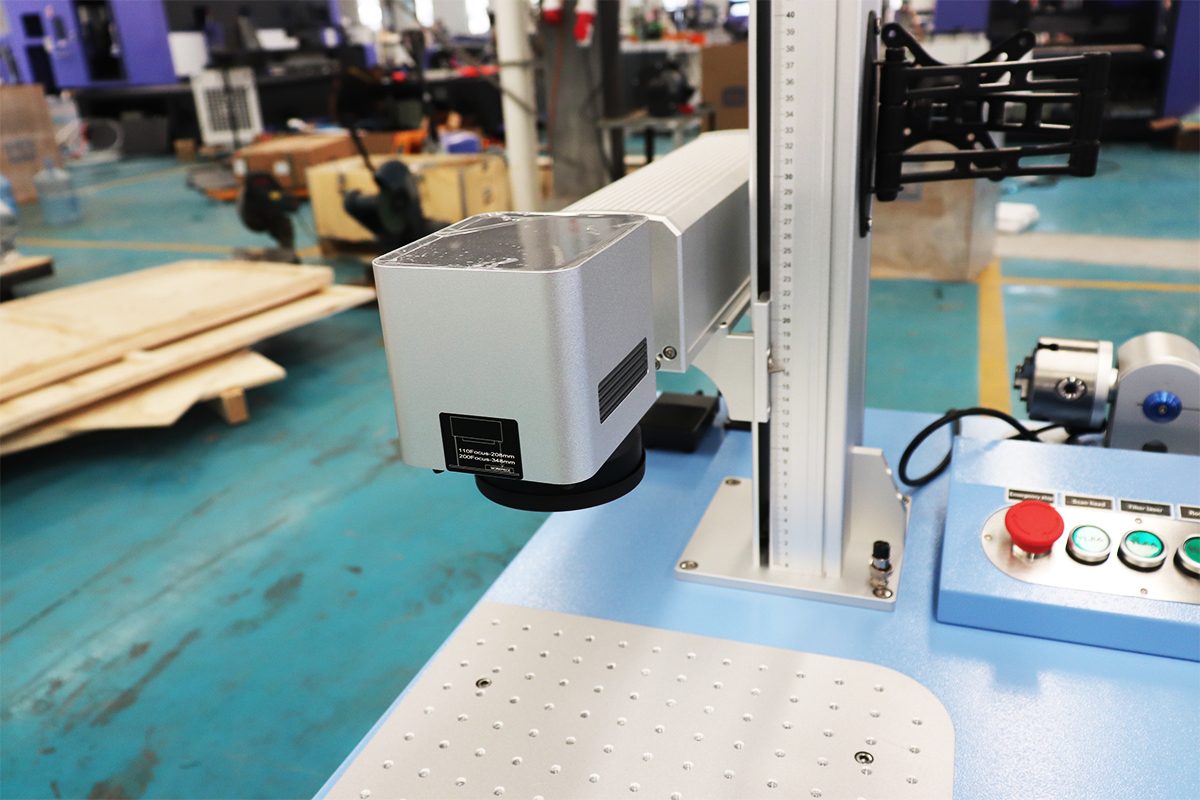
Open workbench laser marking machines are laser marking systems with an exposed working area, where the laser head and workpiece are fully accessible during operation.

  • Design and Working Characteristics: These machines are typically composed of laser sources, a scanning head (often galvo-based), and an adjustable worktable mounted on a vertical column or frame. There is no full enclosure surrounding the marking zone. The operator has direct access to the part and can manipulate it freely before and during marking. Fixtures, clamps, or custom jigs are often used to stabilize parts.
  • Typical Marking Experience: The workflow is highly interactive. Operators can quickly position parts, make adjustments, and visually monitor the marking process in real time. This makes the system particularly responsive for low-volume or custom tasks.
  • Advantages: The main advantage is maximum flexibility. Open workbench laser marking systems can accommodate large, heavy, or irregularly shaped parts that would not fit inside enclosed machines. They are also easier to adapt to custom setups and frequent changeovers. The simpler mechanical structure reduces initial cost and simplifies maintenance.
  • Disadvantages: Safety is the primary concern. These systems are classified as Class 4, meaning the laser beam is accessible and can cause serious injury to the eyes and skin. Operators must wear appropriate laser safety eyewear, and the workspace must be controlled with barriers, warning signs, and restricted access. Fume extraction must also be managed externally, as there is no built-in containment.
  • Applications: Open workbench laser marking machines are widely used in workshops, prototyping labs, repair facilities, and custom engraving businesses. They are ideal for applications where flexibility and accessibility outweigh the need for full enclosure and automation.

Enclosed Desktop Laser Marking Machines

Enclosed desktop laser marking machines are compact, fully enclosed systems designed for safe operation in controlled environments such as offices, laboratories, and small production areas.

  • Design and Working Characteristics: These machines feature a sealed enclosure with a front door and a viewing window made from laser-safe material. Safety interlocks ensure that the laser cannot operate when the enclosure is open. Many systems include integrated lighting, user-friendly software interfaces, and optional or built-in fume extraction systems. Their compact footprint allows them to be placed on standard desks or benches.
  • Typical Marking Experience: The operator loads the part into the enclosed chamber, closes the door, and initiates the marking process. The operation is fully contained, and the process can be safely observed through the viewing window. The workflow is structured, repeatable, and easy to standardize.
  • Advantages: The most significant advantage is enhanced safety. These systems are typically designed to meet Class 1 safety standards, meaning laser radiation is fully contained during normal operation. They require minimal operator training and can be safely used in shared environments. Their compact size, low noise, and clean operation make them suitable for indoor and office settings.
  • Disadvantages: The enclosed design limits the size and shape of parts that can be processed. Accessibility is reduced compared to open systems, and loading/unloading may take more time. They are not suitable for large or heavy industrial components.
  • Applications: Enclosed desktop laser marking machines are commonly used in electronics manufacturing, medical device marking, laboratories, educational institutions, and small-scale production environments where safety, precision, and cleanliness are essential.

Industrial Cabinet Laser Marking Machines

Industrial cabinet laser marking machines are large, fully enclosed systems designed for high-volume production and demanding industrial environments.

  • Design and Working Characteristics: These systems are built with heavy-duty enclosures and often include automated doors, integrated fume extraction units, and advanced control systems. They may be equipped with additional features such as rotary axes, conveyors, robotic loading systems, or multi-station configurations. The enclosure is designed to fully contain the laser while supporting continuous, high-speed operation.
  • Typical Marking Experience: Operators interact with the system at a process level rather than a manual level. Parts may be loaded manually or automatically, and once the cycle begins, the system operates with minimal intervention. The focus is on consistency, throughput, and repeatability.
  • Advantages: Industrial cabinet laser marking systems offer maximum safety, durability, and productivity. They are designed for continuous operation in harsh environments and can handle large production volumes. Automation capabilities improve efficiency and reduce human error. Integrated fume extraction enhances air quality and supports compliance with environmental regulations.
  • Disadvantages: These systems require significant floor space and involve a higher initial investment. Installation and integration can be complex, often requiring engineering support. They are less flexible for small-batch or frequently changing production tasks.
  • Applications: Industrial cabinet laser marking machines are widely used in automotive manufacturing, aerospace, electronics production, heavy machinery, and other large-scale industrial operations where high throughput and consistency are critical.

Class 1 Safety Enclosures VS Open Class 4 Systems

Laser marking machines are classified according to international safety standards based on the level of accessible laser radiation. The two most relevant categories in marking applications are Class 1 and Class 4.

Class 1 Systems (Fully Enclosed)

  • Working Characteristics: Class 1 systems are designed so that all laser radiation is fully contained within the enclosure during normal operation. Safety interlocks prevent the laser from operating if doors or panels are open. Viewing windows are engineered to block or filter the laser wavelength.
  • Advantages: Class 1 systems provide the highest level of safety and are considered safe for general use without protective eyewear. They are suitable for environments with multiple operators, including offices, labs, and production floors. Regulatory compliance is easier to achieve, and operational risk is minimized.
  • Disadvantages: The enclosure limits accessibility and restricts the size of parts that can be processed. Flexibility is reduced compared to open systems, especially for oversized or irregular components.

Class 4 Systems (Open or Partially Enclosed)

  • Working Characteristics: Class 4 systems have exposed laser beams during operation. Safety depends on external controls such as protective eyewear, controlled access areas, safety training, and warning systems.
  • Advantages: Class 4 systems offer maximum flexibility and accessibility. They are suitable for large, complex, or unconventional parts and can be adapted for specialized applications.
  • Disadvantages: They present significant safety risks if not properly managed. Strict protocols are required, including operator training and environmental controls. Compliance with safety regulations can be more complex, especially in shared or public workspaces.
Classifying laser marking machines by workstation style and safety design provides a comprehensive understanding of how these systems function in real operational environments. While laser performance determines marking capability, workstation design determines how safely, efficiently, and practically those capabilities can be used.
Open workbench systems offer unmatched flexibility and accessibility, making them ideal for custom work, prototyping, and large or irregular parts. However, their Class 4 classification requires strict safety measures and controlled environments. Enclosed desktop machines provide a balanced solution, combining compact design with Class 1 safety, making them suitable for offices, laboratories, and small-scale production. Industrial cabinet systems extend this concept to large-scale manufacturing, offering robust enclosures, automation, and high throughput for demanding industrial applications.
The distinction between Class 1 and Class 4 systems highlights a fundamental trade-off between safety and flexibility. Class 1 systems prioritize operator protection and ease of compliance, while Class 4 systems provide greater accessibility but require careful risk management.
In practice, selecting the right workstation style involves evaluating workspace conditions, operator expertise, part size and geometry, production volume, and regulatory requirements. A well-chosen system not only ensures high-quality marking results but also supports safe, efficient, and sustainable operation over the long term.

Types of Laser Marking Machines by Application Domain

Laser marking machines are often introduced by their laser source, such as fiber, CO2, or UV. However, in real industrial settings, this classification only tells part of the story. What truly determines the selection of laser marking systems is the application domain. Different industries impose very different expectations in terms of material compatibility, marking durability, production speed, precision, and regulatory compliance.
By looking at laser marking machines through their application domains, we can better understand how the same core technology is adapted and optimized for highly specific use cases. From heavy-duty traceability in metal parts to delicate marking on medical plastics, and from high-speed packaging lines to decorative surface finishing, each category reflects a unique balance of performance requirements and operational constraints.

Metal Part Traceability Laser Marking Machines

Metal part traceability represents one of the most mature and mission-critical applications of laser marking technology. In industries such as automotive, aerospace, rail transportation, and industrial machinery, every component must be identifiable throughout its lifecycle. This includes manufacturing, assembly, maintenance, and even end-of-life recycling.
Laser marking machines in this category are used to apply permanent identifiers such as serial numbers, VIN codes, Data Matrix codes, QR codes, and compliance markings. These marks are typically applied to metals like stainless steel, carbon steel, aluminum, titanium, and coated alloys.
The defining requirement here is permanence. Marks must remain legible after exposure to mechanical wear, vibration, high temperatures, chemical corrosion, and surface treatments like painting, anodizing, or shot blasting. For this reason, fiber laser marking machines are widely used. They can produce deep engraving or high-contrast annealing marks that penetrate or alter the metal surface durably.
Another important aspect is system integration. These machines are often embedded into automated production lines, working alongside robotic handling systems and machine vision cameras. Real-time verification ensures that every code is correctly marked and readable. In many cases, the marking system is linked to a central database, enabling full digital traceability and supporting quality management systems such as ISO or industry-specific standards.

Plastic and Medical Device Laser Marking Machines

Plastic materials present a different set of challenges compared to metals. They can melt, discolor, or deform under excessive heat, which means the marking process must be carefully controlled. In industries like consumer electronics, automotive interiors, and especially medical devices, surface integrity is just as important as marking visibility.
In the medical field, the requirements become significantly stricter. Laser marking machines are used on surgical instruments, implants, diagnostic devices, syringes, tubing, and pharmaceutical packaging. These applications demand markings that are precise, biocompatible, and resistant to sterilization processes such as steam autoclaving, gamma radiation, or chemical exposure.
UV laser marking machines are commonly used because they operate with minimal thermal impact. Instead of burning the material, they induce photochemical reactions that create high-contrast marks without damaging the surrounding area. This is often referred to as “cold marking.” CO2 lasers are also used for certain plastics, particularly when surface foaming or engraving effects are desired.
One of the key advantages of laser marking in this domain is the elimination of consumables like inks and labels. This reduces contamination risks and ensures long-term durability. Additionally, laser marking systems support regulatory requirements such as Unique Device Identification (UDI), which mandates clear and permanent marking for traceability in healthcare products.

Packaging Date/Batch Code Laser Marking Machines

Packaging applications represent one of the fastest-growing uses of laser marking technology. Industries such as food and beverage, pharmaceuticals, cosmetics, and fast-moving consumer goods (FMCG) require reliable systems to mark production dates, expiration dates, batch numbers, and tracking codes.
Unlike other applications, the primary challenge here is speed. Production lines can process hundreds or even thousands of items per minute, and the marking system must keep pace without interruption. Laser marking machines designed for packaging are optimized for continuous operation, minimal maintenance, and consistent output.
CO2 lasers are widely used because they are highly effective on non-metallic materials such as paper, cardboard, plastics, and glass. They can create clear, high-contrast marks by removing or altering the surface layer without physical contact. This makes them suitable for a wide range of packaging formats, including flexible films, labels, cartons, and bottles.
Another major advantage is cost efficiency. Traditional inkjet systems require regular replenishment of inks and solvents, as well as frequent maintenance. Laser marking systems eliminate these consumables, reducing operating costs and environmental impact. They also produce marks that are resistant to smudging, fading, or tampering, which is particularly important for compliance with food safety and pharmaceutical regulations.

Electronics and PCB Laser Marking Machines

The electronics industry places extremely high demands on precision and consistency. Components are often small, densely packed, and sensitive to heat, making laser marking a highly specialized process in this domain.
Laser marking machines are used for printed circuit boards (PCBs), integrated circuits, connectors, sensors, and electronic enclosures. The markings typically include micro-sized QR codes, serial numbers, logos, and traceability data. These must be readable by automated optical inspection (AOI) systems and remain intact throughout the product’s lifecycle.
UV lasers are commonly used due to their ability to produce ultra-fine marks with minimal thermal impact. Fiber lasers are also used for certain materials, especially metals and coated surfaces. The key requirement is to achieve high resolution without causing thermal stress that could damage the component or affect its performance.
Integration with digital manufacturing systems is another defining feature. Laser marking machines in this category are often connected to manufacturing execution systems (MES), allowing each component to be assigned a unique identifier. This supports full traceability, quality control, and anti-counterfeiting measures across the supply chain.

Glass/Ceramic Laser Marking Machines

Glass and ceramic materials require a delicate balance between marking quality and material integrity. These materials are brittle and sensitive to thermal shock, so improper laser settings can lead to cracks, micro-fractures, or surface defects.
Laser marking machines designed for this domain use carefully controlled energy levels to create smooth and uniform marks. Applications include beverage bottles, perfume containers, architectural glass panels, ceramic tiles, and laboratory equipment.
CO2 lasers are typically used for engraving or etching the surface, producing a frosted or matte effect that offers good contrast. UV lasers can provide finer detail and are often used for more intricate designs or thin glass substrates.
In addition to functional markings such as logos and identification codes, these machines are widely used for decorative purposes. The ability to create precise, repeatable designs makes laser marking an attractive solution for branding and product differentiation in industries such as cosmetics and home decor.

Color and Decorative Texture Laser Marking Machines

Laser marking technology has increasingly been adopted for aesthetic applications, where the goal is not just to mark but to enhance the visual appeal of a product. Color and decorative texture laser marking machines are designed to create unique surface effects that combine functionality with design.
One of the most notable capabilities in this category is color marking on metals. By precisely controlling the laser’s interaction with the surface, it is possible to create thin oxide layers that produce different colors through light interference. This technique is commonly used on stainless steel and titanium.
In addition to color, these machines can generate a wide variety of textures, including fine patterns, micro-engraving, and matte finishes. These effects are used in industries such as consumer electronics, watches, jewelry, and luxury goods, where visual differentiation is a key competitive factor.
Customization is another important aspect. Laser marking systems allow manufacturers to easily switch between designs, enabling personalized products or small-batch production without additional tooling costs. This flexibility makes them ideal for modern manufacturing trends that emphasize individuality and rapid design changes.
Understanding laser marking machines by application domain provides a more practical and industry-focused perspective than simply classifying them by laser type. Each application area reflects a distinct set of technical priorities, shaped by material characteristics, environmental conditions, production demands, and regulatory requirements.
For example, metal part traceability systems are built around durability and long-term readability, ensuring that critical information survives even the harshest operating environments. In contrast, plastic and medical device applications prioritize precision, cleanliness, and compliance, where even minimal material damage or contamination is unacceptable. Packaging applications highlight the importance of speed and efficiency, with systems designed to operate continuously in high-volume production settings while minimizing maintenance and operating costs.
Meanwhile, the electronics industry pushes the limits of precision and miniaturization, requiring marking solutions that can deliver high-resolution results without affecting sensitive components. Glass and ceramic applications demonstrate the need for careful process control to balance marking quality with material integrity. At the same time, color and decorative laser marking show how the technology is evolving beyond purely functional uses, enabling new possibilities in product design, branding, and customization.
Taken together, these application domains illustrate the versatility of laser marking technology. They show that the effectiveness of laser marking machines is not defined solely by their technical specifications, but by how well they are adapted to the specific challenges of their intended use.

How to Choose the Right Type

Selecting the right laser marking machine is not about choosing a popular model or the highest power option. It is about aligning the machine with the actual demands of your application. In many cases, two systems with similar specifications can deliver very different results depending on how well they match the material, marking purpose, and production environment.
A useful way to approach this decision is to think in layers. First, confirm that the laser can interact properly with your material. Then define what kind of mark you need and how it will be used. After that, evaluate whether the system can meet your production requirements in terms of speed and working area. Finally, consider how the machine will fit into your broader workflow, including automation and data management.
Working through these factors in a structured way reduces uncertainty and helps ensure that the system you choose will perform reliably over time, not just under ideal test conditions.

Material First (Always)

Material is the single most important factor because it determines the basic feasibility of laser marking. If the material does not respond well to a particular laser wavelength or energy profile, the result will be inconsistent at best and unusable at worst.
Metals are generally well suited to fiber lasers, which can produce a range of marking effects from light surface oxidation to deep engraving. This makes them ideal for applications that require durability, such as industrial components or tools. However, even within metals, differences matter. For example, highly reflective metals like copper or brass may require more careful parameter control than steel.
Non-metallic materials such as wood, paper, leather, glass, and many plastics typically respond better to CO2 lasers. These materials absorb the longer wavelength more efficiently, allowing for clean surface marking or engraving. However, results can vary depending on density, color, and surface finish.
Plastics are particularly complex. Two plastics that look similar can behave very differently under a laser due to differences in chemical composition. Some produce sharp, high-contrast marks, while others may melt, deform, or discolor. In critical applications, especially in medical or electronics fields, UV lasers are often chosen because they minimize heat input and reduce the risk of material damage.
It is also important to consider coatings and surface treatments. Anodized aluminum, painted surfaces, or plated materials may react differently than their base materials. In some cases, the laser interacts primarily with the coating layer, which can be useful for contrast but may not meet durability requirements if the coating wears off.
Because of these variables, practical testing is often necessary. A short trial on actual samples can reveal issues that are not obvious from specifications alone.

What Kind of Mark Do You Need

Once material compatibility is established, the next step is to clearly define the purpose of the mark. This is where many decisions become more specific, because different marking goals require different approaches.
For traceability, the main objective is readability over time. Marks such as serial numbers, barcodes, or QR codes must remain clear even after exposure to wear, chemicals, or environmental stress. This often requires deeper engraving or strong contrast, especially if the mark will be scanned by machines rather than read by humans.
For branding or product identification, visual quality becomes more important. Clean edges, consistent shading, and fine detail are key factors. In some cases, manufacturers may want to create subtle effects such as frosted finishes or even color changes on metal surfaces. These applications rely more on precise control than on high power.
There are also functional constraints that shape the marking process. For example, packaging materials must not be weakened or punctured. Medical devices must maintain sterility and structural integrity. Electronic components must not be exposed to excessive heat that could affect performance.
Another consideration is mark size and resolution. Small parts require very fine beam control and high precision, while larger components may require a wider marking field or multiple passes. The required contrast, depth, and marking speed all interact, so defining priorities early helps guide the selection.
In short, understanding the purpose of the mark ensures that the system is optimized for the right outcome, rather than simply producing a visible result.

Throughput and Work Area

Even if laser marking systems produce excellent results, they must also fit within the realities of production. Throughput and work area are key factors that determine whether a system can operate efficiently in a given environment.
Throughput refers to the number of parts that can be marked within a certain time. In high-volume industries such as food packaging or consumer goods, marking systems must operate at very high speeds and often run continuously. This requires not only fast marking capability but also consistent performance over long periods with minimal downtime.
In contrast, low-volume or custom applications may place more emphasis on flexibility. A workshop producing a variety of parts may need a system that can switch between jobs quickly, handle different designs, and allow for easy adjustments.
The work area determines the size and number of parts that can be marked at once. Systems with larger marking fields can handle bigger components or multiple smaller items in a single cycle. However, increasing the marking area may affect precision or speed, so there is often a trade-off.
Part handling is another practical consideration. Components must be positioned accurately and consistently to ensure marking quality. This may involve fixtures, jigs, or automated loading systems. In automated production lines, the marking system must synchronize with conveyors, sensors, and other equipment to maintain smooth operation.
It is also wise to think ahead. If production volume is expected to grow, or if new product types may be introduced, choosing a system with some level of scalability can prevent the need for early replacement or upgrades.

Integration and Data Handling

Modern laser marking machines are increasingly part of connected manufacturing systems rather than standalone tools. Integration and data handling capabilities can significantly influence efficiency, accuracy, and traceability.
In many applications, each marked item must carry unique information. This requires the system to support variable data marking, such as automatically changing serial numbers, batch codes, or production dates. The machine may need to retrieve data from external databases or communicate with systems such as manufacturing execution systems (MES) or enterprise resource planning (ERP) platforms.
Hardware integration is equally important. Laser marking machines often work alongside conveyors, robotic arms, sensors, and vision systems. For example, a vision system can verify that a mark is correctly applied and readable immediately after marking. This reduces the risk of defective products moving further down the production line.
Software usability is another factor that is sometimes overlooked. Operators need to be able to set up jobs, adjust parameters, and switch between tasks without unnecessary complexity. A clear interface and flexible software can reduce training time and minimize errors.
Data handling also affects quality control and compliance. Automated data input reduces the risk of manual errors, while real-time monitoring allows issues to be identified and addressed quickly. In regulated industries, reliable data tracking is essential for audits and product recalls.
Choosing the right laser marking machine requires a balanced evaluation of several interconnected factors. Material compatibility is the foundation, as it determines whether a laser can produce a stable and effective mark. Building on this, the type of mark required defines expectations for durability, precision, and visual quality, ensuring that the marking process meets its intended purpose.
Production considerations, such as throughput and work area, ensure that the system can operate efficiently within the intended environment. A suitable machine must not only deliver quality marks but also keep pace with production demands and adapt to practical constraints such as part size and handling.
At the same time, integration and data handling capabilities have become essential in modern manufacturing. As production systems become more connected and data-driven, the ability to manage variable information, communicate with other equipment, and support traceability is no longer optional.
Taken together, these factors highlight that selecting laser marking machines is not about choosing a single feature, but about finding the right balance. A well-matched system will integrate smoothly into the workflow, deliver consistent results, and remain effective as production needs evolve.

Common Laser Source Types and Their Typical Use Cases

Laser marking machines are most commonly classified by their laser source because the wavelength, pulse duration, and energy delivery method directly determine how the laser interacts with a material. These physical characteristics influence not only whether a material can be marked, but also the marking speed, contrast, depth, precision, and long-term durability.
However, in real manufacturing environments, selecting laser sources is not just a technical decision. It is a practical one. Engineers and production managers must consider how the machine performs under continuous operation, how stable it is over time, how easy it is to maintain, and whether it fits the broader production workflow.
Looking at laser sources “in practice” provides a more complete picture. It connects technical capability with real-world performance, highlighting where each type excels, where it struggles, and why certain industries consistently favor one technology over another.

Fiber Laser Marking Machines in Practice

Fiber laser marking machines are the most widely adopted systems in modern industry, particularly for metal processing. In practical terms, they are often the default choice when the application involves metallic materials and requires a balance of speed, durability, and cost efficiency.
In everyday use, fiber lasers are applied to a wide range of metals, including stainless steel, aluminum, carbon steel, titanium, and various alloys. They are capable of producing multiple marking effects by adjusting parameters such as power, frequency, and pulse duration. For example, low-energy settings can create annealed marks that preserve the surface structure while producing high contrast, while higher energy levels can achieve deep engraving for extreme durability.
This flexibility is especially valuable in traceability applications. Manufacturers can use the same machine to produce machine-readable codes, logos, and human-readable text, all within a single workflow. In industries such as automotive and aerospace, where component tracking is critical, fiber lasers are often integrated into automated lines and paired with vision systems for real-time verification.
Another key advantage in practice is operational efficiency. Fiber lasers have a solid-state design with high electrical efficiency, long service life, and minimal maintenance requirements. They do not rely on consumables, which reduces downtime and ongoing costs. This makes them particularly attractive for high-volume production.
That said, fiber lasers are not universal solutions. Their performance on non-metallic materials is limited, and they are generally not suitable for transparent materials or certain heat-sensitive plastics. In such cases, other laser types provide better results.

CO2 Laser Marking Machines in Practice

CO2 laser marking machines are the primary solution for non-metal materials and are widely used in industries where organic or polymer-based substrates dominate. In practical applications, they are especially common in packaging, food and beverage production, textiles, and general consumer goods manufacturing.
These machines perform well on materials such as paper, cardboard, wood, leather, rubber, glass, and many plastics. In a typical production setting, a CO2 laser may be installed directly on a conveyor line, marking expiration dates, batch numbers, logos, or decorative patterns on products as they move at high speed.
One of the defining characteristics of CO2 lasers in practice is their ability to maintain consistent performance in continuous operation. They are well-suited for environments that require 24/7 production, where reliability and low maintenance are critical. Their ability to mark without physical contact also makes them ideal for flexible or delicate materials.
CO2 lasers also offer versatility in marking effects. Depending on the material, they can engrave, etch, or create color contrast by surface modification. This makes them useful not only for functional marking but also for branding and design applications.
However, their limitations are clear when it comes to metals. Without special coatings or treatments, CO2 lasers cannot effectively mark most bare metal surfaces. Additionally, while they are fast and versatile, they may not achieve the same level of fine detail as UV or ultrafast lasers in micro-marking applications.

UV Laser Marking Machines in Practice

UV laser marking machines are designed for applications where precision and minimal thermal impact are critical. In real-world use, they are often selected for materials that are sensitive to heat or require extremely fine detail.
These systems are widely used in electronics, medical devices, and high-end plastic products. For example, they are commonly applied to mark micro QR codes on printed circuit boards, fine text on plastic housings, and identification marks on medical instruments and packaging.
What distinguishes UV lasers in practice is their “cold marking” mechanism. Instead of relying primarily on heat, they use high-energy photons to break molecular bonds in the material. This results in clean, sharp marks with very little thermal damage. The surrounding material remains largely unaffected, which is essential for maintaining structural integrity.
This makes UV lasers particularly effective for thin plastics, transparent materials, and multilayer substrates. They can produce high-contrast markings on surfaces that are difficult to process with other laser types.
The trade-offs are mainly related to cost and speed. UV systems typically have higher initial costs and may offer lower throughput compared to fiber or CO2 lasers in certain applications. As a result, they are often used where precision and material protection are more important than maximum production speed.

Green Laser Marking Machines in Practice

Green laser marking machines occupy a specialized position within the laser marking landscape. They are not as widely used as fiber, CO2, or UV systems, but they play a critical role in applications involving difficult or highly reflective materials.
In practice, green lasers are often chosen for marking metals such as copper, gold, and certain alloys that reflect a significant portion of the energy from other laser types. Their shorter wavelength improves absorption, resulting in more stable and consistent marking.
They are also used in industries such as electronics, photovoltaics, and precision manufacturing, where both material compatibility and marking quality are important. For example, green lasers can be used for marking fine features on components that require both accuracy and controlled energy input.
Another advantage is their relatively low thermal impact compared to longer-wavelength lasers. While not as cold as UV lasers, they still provide better control when working with heat-sensitive materials.
Despite these benefits, green lasers are typically used in niche applications. Their higher cost and more limited range of use cases mean they are usually selected only when other laser types cannot meet the requirements.

Ultrafast Laser Marking Machines in Practice

Ultrafast laser marking machines, including picosecond and femtosecond systems, represent the most advanced and precise category of laser marking technology. In practical terms, they are used in applications where even minimal thermal effects are unacceptable and where extremely fine detail is required.
These systems operate with ultra-short pulse durations, allowing material to be removed through a process that minimizes heat transfer to the surrounding area. This results in exceptionally clean edges, high precision, and virtually no heat-affected zone.
In real-world applications, ultrafast lasers are used in semiconductor manufacturing, advanced electronics, medical device production, and microfabrication. They are capable of producing micro-scale features, including fine structures, high-resolution markings, and complex surface textures.
One of their key advantages is versatility. They can process a wide range of materials, including metals, glass, ceramics, and polymers, with consistent quality. This makes them suitable for advanced applications where multiple material types are involved.
However, these capabilities come with high cost and complexity. Ultrafast systems require a higher level of technical expertise to operate and maintain, and their initial investment is substantially higher than that of other laser types. As a result, they are typically used in high-value industries where precision and performance outweigh cost considerations.
Laser marking machines can be effectively understood by examining how different laser sources perform in real-world applications. Fiber lasers have become the standard solution for metal marking due to their durability, efficiency, and adaptability in industrial environments. CO2 lasers dominate non-metal applications, particularly in high-speed production settings where reliability and continuous operation are essential.
UV lasers provide a specialized solution for precision marking and heat-sensitive materials, offering clean results with minimal thermal impact. Green lasers address niche challenges, particularly with reflective metals and materials that are difficult to process using other technologies. At the highest level, ultrafast laser marking systems deliver unmatched precision and minimal material disturbance, enabling advanced manufacturing processes that require extreme accuracy.
Together, these laser source types illustrate the range and flexibility of laser marking technology. Each type is defined not only by its technical characteristics but also by how it performs under real production conditions. Choosing the right source ultimately depends on aligning these characteristics with the specific needs of the application, balancing factors such as material compatibility, marking quality, production efficiency, and cost.

Special Features That Create “Types” in the Market

When looking at the laser marking machine market, it is easy to assume that most “types” are defined by the laser source itself. In reality, a large portion of product differentiation comes from system-level features and functional enhancements. These features are developed to address real production challenges such as positioning accuracy, part variability, cycle time pressure, and automation requirements.
In practical terms, this means that two machines equipped with the same laser source can perform very differently depending on how they are configured. A basic standalone system may be suitable for simple, repetitive tasks, while a feature-rich system can handle complex workflows, variable data, and high-speed production with minimal operator involvement.
These feature-driven variations are not just optional add-ons. In many industries, they are essential for meeting quality standards, improving efficiency, and ensuring consistent output. Understanding these special features provides a clearer picture of how laser marking machines are adapted to different manufacturing environments and why they are often categorized as distinct “types” in the market.

Vision-Guided Laser Marking Machines

Vision-guided laser marking machines are built to solve one of the most persistent issues in production: ensuring that marks are placed accurately and consistently, even when part positioning is not perfect. In traditional setups, operators rely on fixtures to hold parts in a fixed position. While effective, this approach can be inflexible and time-consuming, especially when dealing with multiple product types.
In practice, vision-guided systems use integrated cameras and image processing algorithms to detect the exact position and orientation of each part. The system identifies reference features such as edges, holes, or existing markings, and then dynamically adjusts the laser path to match the actual placement of the component.
This capability is particularly valuable in high-mix production environments, where parts may vary in shape, size, or orientation. It allows operators to load parts more freely without sacrificing accuracy, which can significantly reduce setup time and simplify fixturing requirements.
Another important benefit is in-process inspection. Vision systems can verify the presence and quality of a mark immediately after it is applied. For example, they can check whether a barcode is readable or whether a logo is correctly positioned. This real-time feedback helps catch errors early and reduces scrap rates.
In industries such as electronics, medical devices, and precision engineering, where tolerances are tight and errors are costly, vision-guided marking systems are often considered a necessity rather than a luxury.

Auto-Focus and Height Sensing Laser Marking Machines

Maintaining the correct focal distance between the laser and the workpiece is essential for achieving consistent marking quality. Even small deviations can lead to blurred marks, reduced contrast, or insufficient depth. In traditional systems, this requires manual adjustment, which can be inefficient and prone to inconsistency.
Auto-focus systems address this by automatically setting the focal position based on the height of the workpiece. Operators can load parts without needing to manually recalibrate the machine each time, which reduces setup time and improves repeatability.
Height sensing takes this concept further by actively measuring the surface profile of the part. In more advanced systems, this measurement can occur continuously during the marking process, allowing the machine to adjust in real time if the surface is uneven.
These features are especially useful when working with parts that have varying dimensions, stepped surfaces, or slight inconsistencies in manufacturing. For example, cast or molded components may not have perfectly uniform surfaces, making manual focusing unreliable.
By maintaining optimal focus automatically, these systems improve marking quality and reduce the likelihood of defects. They also make the machine more accessible to operators, as less manual intervention is required during setup and operation.

Dual-Head or Multi-Station Laser Marking Machines

As production volumes increase, efficiency becomes a key concern. Dual-head and multi-station laser marking machines are designed to address this by reducing idle time and increasing throughput.
In a dual-head configuration, two laser heads operate simultaneously. This can be used to mark two parts at once or to perform different operations on the same part. For example, one head might handle high-speed surface marking while the other performs deeper engraving in a separate area.
Multi-station systems focus on workflow optimization. They typically include multiple workstations arranged so that loading, marking, and unloading can occur in parallel. While one part is being marked, another can be prepared at a different station, ensuring that the laser is almost always in use.
In practical terms, these configurations can significantly reduce cycle times. In high-volume industries, even small time savings per part can translate into substantial productivity gains over the course of a production run.
However, these systems also require careful planning. Operators must manage multiple stations efficiently, and the workflow must be balanced to avoid bottlenecks. When implemented correctly, they provide a powerful way to scale production without compromising quality.

Robot-Integrated Laser Marking Machines

Robot-integrated laser marking machines represent a shift toward more flexible and automated manufacturing systems. By combining laser marking with robotic motion, these systems can handle tasks that would be difficult or impractical with fixed setups.
In practice, a robot can either move the workpiece under a stationary laser or guide the laser head across the surface of the part. This allows for marking on large, heavy, or complex components without the need for manual repositioning.
This capability is particularly valuable in industries such as automotive, aerospace, and heavy equipment manufacturing, where parts are often too large or irregularly shaped for traditional marking systems. A robot can follow complex paths, ensuring that markings are applied accurately across multiple surfaces.
Another advantage is flexibility. Robot-integrated systems can be reprogrammed to handle different products or marking patterns, making them suitable for environments with changing production requirements. They also support higher levels of automation, reducing manual handling and improving consistency.
The main trade-off is complexity. These systems require more advanced programming, integration, and maintenance. As a result, they are typically used in larger-scale operations where the benefits of flexibility and automation justify the investment.

Deep Laser Engraving Packages

Deep laser engraving packages are specialized configurations designed for applications that require marks to be highly durable and resistant to wear. Unlike standard marking, which often focuses on surface contrast, deep engraving removes a significant amount of material to create a physically recessed mark.
In practical use, these systems are often applied in tooling, mold manufacturing, and heavy industry. For example, molds may require deeply engraved identification marks that remain visible after repeated use, cleaning, and surface treatment.
Achieving deep engraving involves more than simply increasing laser power. It requires optimized scanning strategies, multiple passes, and careful control of heat input to maintain mark quality. The goal is to achieve the desired depth without causing excessive thermal damage or distortion.
One of the key trade-offs is processing time. Deep engraving is inherently slower than surface marking, which means it may not be suitable for high-speed production lines. However, in applications where durability is critical, the additional time is often justified.
These packages demonstrate how laser marking systems can be tailored to meet specific performance requirements, even when those requirements differ significantly from standard marking applications.
Many of the “types” of laser marking machines available in the market are defined not by their laser source, but by the features and system configurations that enhance their performance in specific scenarios. These features address practical challenges such as alignment, part variability, production speed, and automation, making them essential in modern manufacturing environments.
Vision-guided systems improve accuracy and enable real-time inspection, reducing errors and simplifying part handling. Auto-focus and height-sensing features ensure consistent marking quality across varying surfaces, minimizing setup time and operator dependency. Dual-head and multi-station configurations focus on maximizing productivity by reducing idle time and enabling parallel workflows.
Robot-integrated systems expand the capabilities of laser marking to larger and more complex components, supporting flexible and automated production processes. Meanwhile, deep laser engraving packages provide solutions for applications where marking durability and longevity are the primary concerns.
Together, these feature-driven variations highlight an important point: the true diversity of laser marking machines lies not only in the laser technology itself, but in how the system is engineered to meet specific operational needs. By understanding these features, manufacturers can make more informed decisions and select solutions that align closely with their production requirements.

Common Misunderstandings About Laser Marking Machine Types

As laser marking technology becomes more widely used, information about it has also become more simplified and, in some cases, misleading. Many buyers enter the market with assumptions that seem logical on the surface but do not reflect how laser marking systems actually perform in real production environments.
These misunderstandings often come from overgeneralizing a single success case, relying too heavily on basic specifications, or misunderstanding how lasers interact with materials. The reality is that laser marking is a process driven by multiple variables working together. Material composition, surface condition, laser wavelength, pulse characteristics, and application goals all influence the final result.
Because of this complexity, even small misconceptions can lead to poor equipment choices, reduced efficiency, or unexpected limitations during operation. Addressing these common misunderstandings helps build a more practical and accurate understanding of how different types of laser marking machines should be evaluated.

Fiber Can Mark Anything

Fiber laser marking machines have earned a strong reputation for their performance, especially in industrial metal marking. This often leads to the assumption that they are universal tools capable of marking almost any material. In reality, their effectiveness is closely tied to how their wavelength interacts with specific materials.
Fiber lasers work extremely well with metals because these materials absorb their wavelength efficiently. This allows for a wide range of marking effects, from subtle surface discoloration to deep engraving. As a result, fiber lasers are widely used for applications that require durability, such as traceability codes on industrial components.
However, this strength does not translate across all materials. Many non-metallic materials do not absorb fiber laser energy effectively. Transparent materials such as glass or clear plastics may allow the laser to pass through without producing a visible mark. Organic materials like wood or leather may react unpredictably, often resulting in uneven or low-quality markings.
There are cases where fiber lasers can be used outside their primary domain. For example, certain plastics with special additives can respond well, and coated or anodized surfaces can be marked because the laser interacts with the surface layer. But these are exceptions that depend on material preparation, not general capability.
In practice, fiber lasers should be viewed as highly optimized tools for metal marking and selected non-metal applications, rather than as universal marking solutions.

UV Is Always Better For Plastics

UV laser marking machines are often promoted as the best choice for plastics due to their ability to produce clean, high-precision marks with minimal heat. This has led to a common belief that UV lasers are always the superior option for plastic materials.
While UV lasers do offer significant advantages, especially for heat-sensitive or high-precision applications, this assumption overlooks the diversity of plastics. Plastics vary widely in composition, including differences in polymers, fillers, pigments, and additives. These variations have a major impact on how the material responds to laser energy.
In many practical situations, CO2 lasers can produce excellent results on plastics, often at much higher speeds. For example, packaging films, labels, and certain molded plastics can achieve strong contrast and clear markings using CO2 lasers, making them more suitable for high-throughput production environments.
UV lasers are particularly valuable when the application demands fine detail, minimal thermal impact, or preservation of material properties. This is common in industries such as medical devices and electronics, where even slight deformation or contamination is unacceptable.
However, UV systems are generally more expensive and may not offer the same processing speed as other laser types. Choosing UV solely based on the assumption that it is “better” can lead to unnecessary costs or reduced productivity.
The correct approach is to evaluate the specific plastic material and application requirements, rather than relying on a general rule.

Higher Power Always Means Better Marking

The idea that higher laser power automatically results in better marking is another common misunderstanding. While power is an important parameter, it is only one part of a much more complex process.
In practice, marking quality depends on how energy is delivered and controlled. Parameters such as pulse duration, repetition rate, beam quality, and scanning speed all influence the interaction between the laser and the material. Simply increasing power does not guarantee improved results and can sometimes have the opposite effect.
For example, excessive power on plastics can cause melting, charring, or bubbling, which reduces mark clarity and damages the material. On metals, too much energy can lead to rough surfaces, excessive oxidation, or unwanted color changes that affect readability.
In many applications, precise control of energy is more important than maximum output. Processes such as annealing require careful heat management to create a visible mark without removing material. In these cases, stability and repeatability are more critical than raw power.
Higher power does have clear advantages in certain scenarios, such as deep engraving or high-speed marking of large areas. However, it should be selected based on specific application needs, not as a general indicator of machine quality or capability.

Marking And Engraving Are The Same

Another frequent misunderstanding is the assumption that marking and engraving are interchangeable terms. Although they are related processes, they differ in both method and purpose, and confusing them can lead to incorrect expectations.
Laser marking typically refers to surface-level modification. This can include color change, oxidation, or slight texturing that creates contrast without significantly removing material. The process is generally fast and is often used for identification, labeling, and branding.
Engraving, by contrast, involves removing material to create a recessed mark. This results in greater depth and durability, making it suitable for applications where the mark must withstand wear, abrasion, or post-processing steps such as painting or machining.
In practical terms, engraving requires more energy and often multiple passes, which increases processing time. Machines optimized for high-speed marking may not perform efficiently when deep engraving is required, and vice versa.
Understanding the difference between these two processes is essential when defining application requirements. A mismatch between expectations and machine capability can lead to either insufficient durability or unnecessary production delays.
Many of the most common misunderstandings about laser marking machine types come from oversimplifying a complex process. Assumptions such as fiber lasers being universally applicable, UV lasers always being the best for plastics, or higher power automatically producing better results can lead to incorrect decisions when selecting equipment.
In reality, laser marking performance depends on the interaction between the laser and the material, as well as the specific requirements of the application. Each laser type has its own strengths and limitations, and no single solution is ideal for all scenarios. Similarly, understanding the difference between marking and engraving is critical for aligning expectations with actual outcomes.
A more practical approach is to evaluate laser marking systems based on real application needs, including material compatibility, marking purpose, production conditions, and required durability. By moving beyond common misconceptions and focusing on these factors, manufacturers can make more informed decisions and achieve more reliable and efficient results.

Practical “Laser Marking Machine Type Selection” Process

Selecting the right laser marking machine is not a one-time comparison of specifications. It is a structured decision-making process that balances material behavior, marking requirements, production realities, and long-term operational goals. In practice, the most successful implementations come from working through a clear sequence of steps rather than jumping directly to a specific machine type.
This process is especially important because laser marking performance depends on how multiple factors interact. A machine that performs well in one scenario may produce poor results in another if even one variable is overlooked. By following a logical progression, manufacturers can reduce risk, avoid costly rework, and ensure that the selected system delivers consistent results in real production conditions.

Identify The Main Material Group

The first and most important step is to clearly identify the material or materials that will be marked. This step sets the foundation for all subsequent decisions because the laser source must be compatible with the material’s absorption characteristics.
At a broad level, materials can be divided into categories such as metals, plastics, glass, ceramics, and organic materials. Each category interacts differently with laser energy. For example, metals typically absorb fiber laser wavelengths efficiently, while non-metallic materials often respond better to CO2 or UV lasers.
However, real-world applications require a more detailed understanding. Within each category, material composition can vary significantly. Plastics, for instance, may contain additives, fillers, or pigments that dramatically change how they respond to laser energy. Two parts made from visually similar plastics can produce completely different marking results.
Surface condition must also be considered. Coatings, anodized layers, paint, and surface treatments can alter how the laser interacts with the material. In some cases, the laser primarily affects the surface layer rather than the base material, which may influence both appearance and durability.
Because of these variables, material identification is often followed by preliminary testing. Even a small set of sample trials can provide valuable insight and help confirm whether a particular laser type is suitable.

Define The Required Mark Durability

Once material compatibility is established, the next step is to define how durable the mark needs to be. This requirement varies widely depending on the application and has a direct impact on the marking method and system configuration.
In industrial traceability applications, marks must remain readable throughout the entire lifecycle of the product. This may involve exposure to abrasion, chemicals, heat, or outdoor conditions. In such cases, deeper engraving or high-contrast marking is often required to ensure long-term visibility.
In contrast, some applications require only temporary or short-term marking. Packaging, logistics, labeling, and certain consumer goods may only need marks that last through distribution or a limited period of use. For these applications, surface-level marking is usually sufficient and allows for higher processing speeds.
It is also important to consider how the mark will be used. Machine-readable codes, such as barcodes or QR codes, require precise geometry and consistent contrast to ensure reliable scanning. Human-readable marks may allow for more variation, but still need to meet visibility standards.
Environmental factors should not be overlooked. Exposure to cleaning processes, UV light, moisture, or mechanical wear can all affect mark longevity. Defining durability requirements early helps ensure that the chosen marking method aligns with real-world conditions.

Define Part Geometry

Part geometry plays a crucial role in determining how the marking process will be implemented. Even when material and marking requirements are clear, the physical characteristics of the part can introduce additional challenges.
Simple, flat surfaces are relatively easy to mark and can be handled by standard systems. However, many industrial components feature curved surfaces, angled faces, recessed areas, or complex shapes. These features can affect focus, alignment, and overall marking quality.
For example, maintaining consistent focus across a curved surface may require auto-focus or dynamic height sensing. Without these features, parts of the mark may appear blurred or inconsistent. Similarly, small or delicate components may require precise positioning and stable fixtures to ensure accuracy.
Large or heavy parts present a different challenge. Moving these parts into position under a fixed laser head may not be practical, leading to the need for alternative solutions such as movable laser marking systems or robot integration.
Variation between parts is another consideration. In production environments where multiple product types are handled, differences in size or shape can complicate setup. Flexible fixtures, adjustable work areas, and vision-guided systems can help manage this variability.
By carefully defining part geometry, manufacturers can identify the level of system complexity required and avoid issues during implementation.

Define Throughput And Integration

Laser marking systems must not only produce high-quality marks but also operate efficiently within the production environment. This makes throughput and integration critical factors in the selection process.
Throughput refers to the number of parts that must be marked within a given time frame. In high-volume industries such as packaging, electronics, or automotive manufacturing, marking systems must operate at high speed and with minimal downtime. This may require high-speed scanning systems, automated part handling, or multi-station configurations.
In lower-volume or flexible production environments, the emphasis may shift toward ease of use and adaptability. The ability to quickly change marking programs, adjust parameters, and handle different part types can improve overall efficiency.
Integration is equally important. Modern production lines often include conveyors, robotic systems, sensors, and inspection equipment. The laser marking machine must be able to communicate and coordinate with these systems to ensure smooth operation.
Data handling is another key aspect. Many applications require variable data marking, such as serial numbers or batch codes. The system must be capable of generating and managing this data, often in connection with external databases or manufacturing execution systems.
Considering throughput and integration early in the process helps ensure that the marking system supports overall production goals rather than becoming a bottleneck.

Prototype And Validate

Even with careful planning, real-world validation is essential. Prototyping allows manufacturers to test the selected approach on actual parts and confirm that it meets all technical and operational requirements.
This step typically involves marking sample parts and evaluating the results based on criteria such as contrast, depth, readability, and overall consistency. It also provides an opportunity to optimize process parameters and identify the best settings for the application.
Validation should go beyond marking quality. Factors such as cycle time, repeatability, ease of operation, and compatibility with existing workflows should also be assessed. This helps ensure that the system performs reliably under production conditions.
In some cases, testing may reveal unexpected challenges, such as material inconsistencies or alignment issues. Identifying these early allows for adjustments before full-scale implementation, reducing the risk of costly changes later.
Prototyping is particularly important for new materials, complex geometries, or high-precision applications. It provides confidence that the selected solution will deliver consistent performance in practice.
Selecting laser marking machines is most effective when approached as a structured and methodical process. Beginning with material identification ensures that the chosen laser source is fundamentally compatible with the application. Defining mark durability then clarifies the level of performance required, from temporary surface marking to long-lasting engraved identification.
Understanding part geometry helps determine the necessary system configuration and features, while evaluating throughput and integration ensures that the machine can operate efficiently within the production environment. Finally, prototyping and validation provide a critical step for confirming that all requirements are met under real-world conditions.
Taken together, these steps form a practical framework that moves the selection process from assumptions to evidence-based decisions. By following this approach, manufacturers can reduce risk, improve efficiency, and select laser marking systems that deliver reliable performance both now and as production needs evolve.

Summary

Laser marking machines can be understood from several practical perspectives, including laser source type, application domain, system features, and real production requirements. Each perspective highlights a different aspect of how these machines are used in industry, and together they provide a more complete picture of the technology.
From the standpoint of laser sources, fiber, CO2, UV, green, and ultrafast lasers each offer distinct advantages. Fiber lasers dominate metal marking due to their durability and efficiency, while CO2 lasers are widely used for non-metal materials and high-speed applications. UV and green lasers address more specialized needs, such as precision marking and processing difficult materials, and ultrafast lasers represent the high end of performance where minimal thermal impact is critical.
Application-based classification further shows how laser marking machines are tailored to specific industries. Whether it is metal traceability, medical device marking, packaging codes, electronics, or decorative finishes, each use case places different demands on the system in terms of precision, durability, and speed.
In addition, many “types” in the market are defined by system features rather than the laser itself. Vision guidance, auto-focus, multi-station setups, robotic integration, and deep engraving capabilities all expand what a machine can do and how efficiently it can operate in real production environments.
At the same time, understanding common misconceptions is important. No single laser type is suitable for all materials; higher power does not always mean better results, and marking is not the same as engraving. Recognizing these points helps avoid costly mistakes.
Ultimately, selecting the right laser marking machine requires a structured approach. By considering material, marking requirements, part geometry, production needs, and validation testing, manufacturers can choose solutions that deliver consistent performance. The key is not just understanding the different types, but knowing how to match them to real-world applications.

Get Laser Marking Solutions

Choosing the right laser marking machine is only part of the process. What matters just as much is working with a partner who understands your application and can translate technical requirements into a practical, reliable solution. This is where Faster Laser provides real value.
As a professional manufacturer of intelligent laser equipment, Faster Laser focuses not just on delivering machines, but on delivering complete marking solutions tailored to specific production needs. Whether your application involves metal traceability, plastic components, packaging codes, or high-precision electronics, the goal is to match the right technology with the right configuration from the start.
The process typically begins with understanding your requirements in detail. This includes identifying the material, defining the type and durability of the mark, evaluating part geometry, and reviewing production volume and workflow. Based on this information, Faster Laser can recommend suitable laser sources, system features, and automation options that align with your goals.
Sample testing is a key part of this approach. By marking actual parts, it becomes possible to verify contrast, depth, readability, and overall quality before moving forward. This reduces uncertainty and ensures that the proposed solution performs as expected under real conditions.
Faster Laser also supports system integration, helping customers connect laser marking machines with existing production lines, including conveyors, robotic systems, and data management platforms. This ensures smooth operation and supports traceability, automation, and efficiency improvements.
Beyond installation, ongoing support and optimization are essential. From parameter adjustment to operator training and maintenance guidance, Faster Laser works to ensure long-term performance and reliability.
In practice, getting the right laser marking solution is not about choosing a single machine. It is about building a system that fits your materials, processes, and production environment. With the right expertise and support, laser marking becomes not just a tool, but a stable and scalable part of your manufacturing process.
Picture of Kenley Yang
Kenley Yang

Drawing upon years of deep expertise in industrial laser cutting, welding, marking, and cleaning, this article presents information based on practical experience and the latest industry insights. By providing clear and technically sound guidance, it helps readers select the right machines, understand process trade-offs, and optimize workflows.
My goal is to help engineers, shop floor managers, and production decision-makers make informed choices that perfectly combine innovation, quality, and operational efficiency.

Picture of Kenley Yang
Kenley Yang

Drawing upon years of deep expertise in industrial laser cutting, welding, marking, and cleaning, this article presents information based on practical experience and the latest industry insights. By providing clear and technically sound guidance, it helps readers select the right machines, understand process trade-offs, and optimize workflows.
My goal is to help engineers, shop floor managers, and production decision-makers make informed choices that perfectly combine innovation, quality, and operational efficiency.