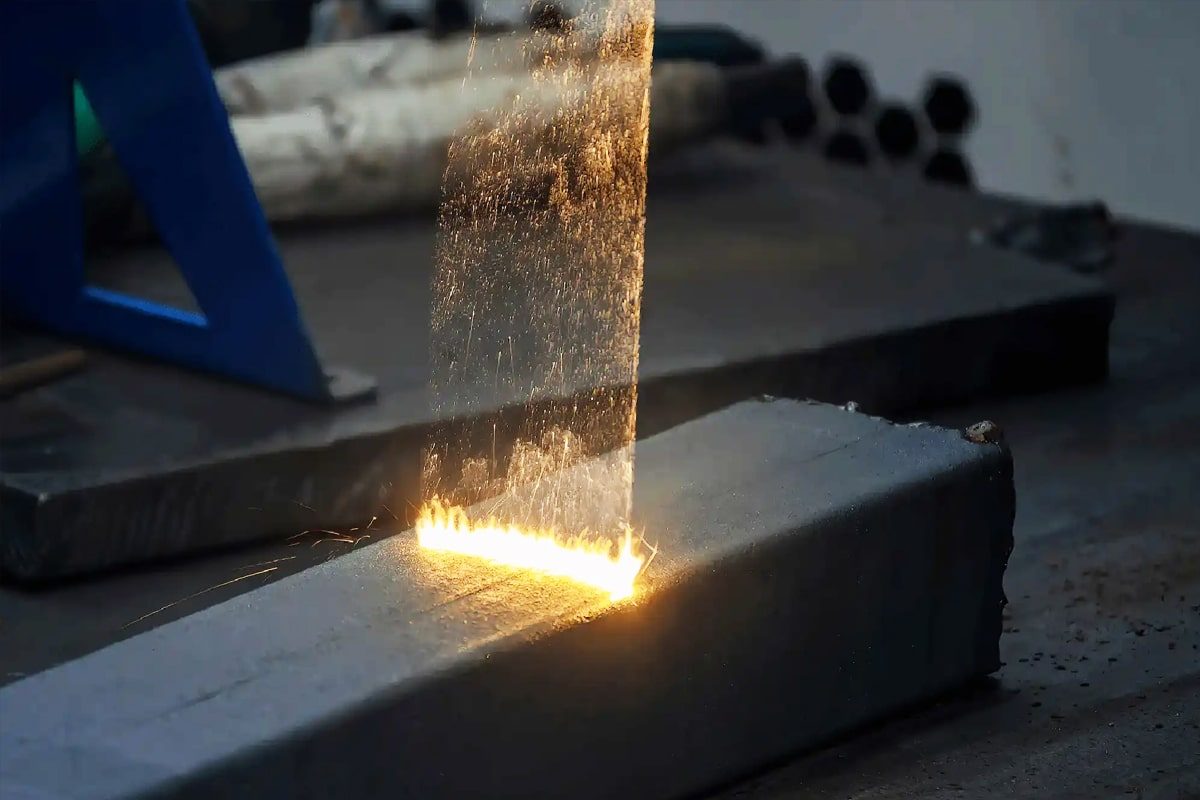
Laser cleaning is a highly controlled surface-engineering process that uses focused laser energy to remove unwanted material from a surface without mechanical contact or chemical agents. While it is often described simply as a “cleaning” method, laser cleaning is better understood as a precision material interaction technology that selectively removes contaminants while preserving the integrity of the underlying substrate.
At its core, laser cleaning relies on the interaction between laser energy and matter. When a laser beam strikes a surface, different materials absorb, reflect, or transmit that energy in different ways. Contaminants such as rust, oxides, paint, oil, or carbon deposits usually absorb laser energy more efficiently than the base material beneath them. This difference in absorption is critical. As the contaminant layer absorbs energy, it experiences rapid heating, micro-expansion, and structural breakdown. The unwanted layer is then detached through processes such as ablation, sublimation, thermal shock, or plasma formation, depending on the laser parameters used.
Unlike abrasive or chemical cleaning, laser cleaning does not rely on friction, impact, or chemical reactions. There is no physical wear on the surface, no embedding of foreign particles, and no chemical residues left behind. The process is dry, non-contact, and highly localized, meaning energy is applied only where needed. This allows laser cleaning to achieve micron-level precision, making it suitable for both heavy industrial cleaning and extremely delicate applications.
Another defining aspect of laser cleaning is process controllability. Operators can precisely adjust parameters such as laser power, pulse duration, frequency, beam size, scanning speed, and energy density. This makes it possible to tailor the cleaning process to different materials and contamination types. For example, light oxidation can be removed without altering surface roughness, while thicker rust layers or coatings can be stripped efficiently in multiple passes.
Laser cleaning also offers significant environmental and operational advantages. It eliminates the need for consumables like sand, dry ice, or chemicals, reducing waste disposal and operating costs. The removed material is typically captured by an integrated extraction system, resulting in a clean, controlled work environment. These benefits align well with modern industrial demands for sustainability, automation, and consistent quality.
Laser cleaning is not merely about removing dirt or rust—it is a precise, energy-driven surface treatment method. Its effectiveness and safety depend on how laser energy is delivered and controlled, which directly leads to the distinction between pulsed and continuous wave laser cleaning machines. Understanding the true nature of laser cleaning provides the technical foundation needed to appreciate why different laser emission modes exist and how each serves specific industrial requirements.
To clearly understand the distinction between pulsed and continuous-wave (CW) laser cleaning machines, it is important to look beyond surface-level definitions and examine how each laser mode delivers energy, how that energy interacts with contaminants and substrates, and how those interactions translate into real-world performance. While both technologies rely on laser–material interaction to remove unwanted layers, they operate on fundamentally different physical principles, leading to distinct advantages, limitations, and use cases.
Pulsed laser cleaning concentrates energy into extremely short time intervals, producing high peak power with minimal overall heat transfer. Continuous-wave laser cleaning, by contrast, applies energy steadily over time, emphasizing sustained thermal action and high processing efficiency. These differences shape everything from cleaning accuracy and thermal effects to speed and system design.
Pulsed laser cleaning machines emit laser energy in discrete pulses, often lasting nanoseconds or picoseconds. Each pulse delivers a burst of very high peak power, even though the average power remains relatively low. This high peak intensity causes contaminants to break apart rapidly through ablation, micro-explosions, and shockwave effects, rather than gradual heating.
Because the laser is active for only a fraction of a second during each pulse, heat has little time to spread into the substrate. This results in a minimal heat-affected zone, making pulsed laser cleaning ideal for applications where surface integrity, microstructure, and dimensional accuracy are critical. Thin metals, precision molds, electronic components, welded joints, and heritage surfaces all benefit from this controlled energy delivery.
Another defining advantage of pulsed systems is selectivity. By carefully tuning pulse width, repetition rate, and energy density, operators can remove surface contaminants layer by layer while leaving the base material unchanged. However, this precision comes at a cost: pulsed laser cleaning is generally slower for large areas and typically involves higher equipment costs due to more complex laser sources and control systems.
Continuous-wave laser cleaning machines emit a constant, uninterrupted laser beam during operation. Instead of relying on peak power, CW systems use sustained energy delivery to heat contaminants until they melt, decompose, or vaporize. This thermal-driven process makes CW laser cleaning exceptionally effective for removing thick rust, paint, oil, and industrial coatings.
The continuous nature of the beam allows for high scanning speeds and large-area coverage, making CW laser cleaning well-suited for heavy-duty industrial environments. Steel structures, pipelines, ship components, and large metal panels can be cleaned quickly and efficiently, often replacing traditional blasting or chemical methods.
The primary consideration with CW laser cleaning is thermal management. Since heat is continuously applied, there is a greater risk of surface discoloration, oxidation, or microstructural changes if parameters are not carefully optimized. As a result, CW systems are best matched with robust materials and applications where throughput and efficiency outweigh the need for ultra-fine precision.
Pulsed and continuous-wave laser cleaning machines represent two distinct approaches to surface treatment. Pulsed laser cleaning emphasizes precision, selectivity, and minimal thermal impact, making it ideal for sensitive or high-value components. Continuous-wave laser cleaning prioritizes speed, simplicity, and productivity, excelling in large-scale industrial cleaning tasks. Neither technology is inherently superior; the correct choice depends on material type, contamination severity, surface sensitivity, and production objectives. Understanding these fundamental differences is essential for making informed decisions when comparing pulsed vs continuous-wave laser cleaning solutions.
To fully distinguish pulsed and continuous-wave (CW) laser cleaning machines, it is essential to analyze the core physical mechanisms that control how laser energy interacts with contaminants and base materials. Although both systems rely on the same fundamental laws of optics and thermodynamics, the temporal distribution of laser energy leads to dramatically different physical outcomes. These differences govern how power is concentrated, how heat propagates, how metals absorb or reflect energy, and how plasma forms and evolves during cleaning. Pulsed laser cleaning operates in a high-intensity, short-duration regime, often far from thermal equilibrium, while CW laser cleaning operates in a steady-state thermal regime. This distinction is the root cause of their contrasting behavior in precision, thermal impact, and cleaning efficiency.
The most fundamental physics distinction is the relationship between peak power and average power. Pulsed laser cleaning compresses energy into extremely short bursts—typically nanoseconds to picoseconds—producing exceptionally high peak power at the surface. Even with relatively low average power, the instantaneous energy density can be high enough to exceed the ablation threshold of contaminants almost instantly. This causes rapid bond breaking, explosive expansion, and mechanical ejection of unwanted layers.
In contrast, CW laser cleaning delivers power continuously, meaning peak power and average power are essentially the same. The energy density is lower at any given moment, but it is applied over a longer duration. Material removal, therefore, occurs through thermal accumulation, where contaminants gradually absorb heat until they melt, pyrolyze, or vaporize. This explains why pulsed lasers are highly effective for thin, tightly bonded contaminants, while CW lasers excel at removing thick, heavily adhered layers over large areas.
The heat-affected zone (HAZ) is directly influenced by how quickly energy is deposited relative to how fast heat can diffuse. In pulsed laser cleaning, the energy deposition time is shorter than the thermal diffusion time of the substrate. As a result, most of the energy is consumed in breaking down the contaminant layer before heat can spread into the base material. This produces an extremely small HAZ, preserving microstructure, hardness, residual stress, and surface geometry.
CW laser cleaning introduces energy continuously, allowing heat to propagate deeper into the substrate via conduction. This results in a broader HAZ and a higher likelihood of thermal side effects such as discoloration, oxidation, grain growth, or phase transformation. While manageable in robust metals, this makes CW systems less suitable for heat-sensitive components.
Metals inherently reflect a large portion of incident laser energy, especially at infrared wavelengths commonly used in industrial lasers. Pulsed lasers mitigate this challenge through high instantaneous intensity, which increases effective absorption by rapidly modifying the surface and triggering nonlinear absorption mechanisms. Even highly reflective metals can absorb sufficient energy during each pulse to enable efficient cleaning.
CW lasers are more dependent on surface conditions. Oxidized, rough, or contaminated surfaces absorb energy more readily than clean, polished metal. As a result, CW laser cleaning often becomes more efficient after initial passes reduce reflectivity, reinforcing its strength in heavy contamination scenarios.
At sufficiently high energy densities, laser cleaning generates plasma, consisting of ionized vapor and particles from the ablated material. In pulsed laser cleaning, plasma forms briefly during each pulse and dissipates rapidly between pulses. This transient plasma limits shielding effects and allows precise control over energy delivery with minimal interference.
In CW laser cleaning, plasma and vapor clouds can persist above the surface due to continuous energy input. This sustained plasma can partially shield the surface from incoming laser energy, reducing efficiency and requiring higher power levels or optimized beam motion to maintain consistent cleaning performance.
The core physics differences between pulsed and continuous-wave laser cleaning machines arise from how energy is distributed in time. Pulsed laser cleaning is driven by extreme peak power, minimal thermal diffusion, enhanced absorption, and transient plasma behavior, resulting in high precision and minimal substrate impact. Continuous-wave laser cleaning relies on steady average power, deeper heat flow, surface-condition-dependent absorption, and sustained plasma effects, enabling fast and efficient large-area cleaning. These physics-based distinctions form the scientific foundation for selecting the appropriate laser cleaning technology for specific industrial requirements.
The effectiveness of both pulsed and continuous-wave (CW) laser cleaning machines is governed by a tightly linked set of technical parameters that determine how much energy reaches the surface, how quickly it arrives, and how it is distributed in space and time. Although both technologies aim to remove contaminants while preserving the substrate, their parameter priorities differ because pulsed systems operate in a transient, high-intensity regime, while CW systems function in a steady, thermally dominated regime. Understanding these parameters is essential for process optimization, surface safety, and repeatable industrial performance. Pulsed laser cleaning emphasizes precise control of energy per pulse and timing, whereas CW laser cleaning focuses on balancing continuous power with controlled heat dissipation.
Pulsed laser cleaning machines are defined by parameters that shape the temporal structure of each laser pulse. Pulse duration is one of the most critical factors. Shorter pulse widths dramatically increase peak power, enabling efficient ablation before thermal diffusion can occur. This is why nanosecond and picosecond pulsed lasers are widely used for applications requiring minimal heat input and high selectivity.
Pulse energy determines how much energy is delivered in each pulse. It must be carefully matched to the ablation threshold of the contaminant layer. Too little energy results in incomplete removal, while too much risks surface pitting or micro-damage. Repetition frequency controls how often pulses are delivered and directly affects cleaning speed and cumulative heating. Higher frequencies improve productivity but increase average power, requiring careful coordination with scanning speed.
Another key parameter is fluence (energy density), influenced by pulse energy, spot size, and focal offset. Fluence is the primary driver of ablation efficiency and must be tightly controlled to remain between the contaminant removal threshold and the substrate damage threshold. Additional parameters such as scan overlap, dwell time, and beam trajectory ensure uniform coverage and consistent results, especially on complex or contoured surfaces.
Continuous-wave laser cleaning machines are governed by parameters associated with sustained thermal input. Average output power is the dominant variable and determines the overall cleaning capability. Higher power enables rapid removal of thick rust, paint, or coatings, making CW systems ideal for large-scale industrial applications.
Scanning speed is equally critical in CW laser cleaning. Slow scanning increases localized heat input and cleaning aggressiveness, while faster scanning spreads energy across a wider area to limit excessive heating. Beam diameter and focus position further control power density and penetration depth, allowing operators to tune the process for different contamination thicknesses.
CW systems also rely heavily on thermal management parameters, such as scan path strategy, overlap ratio, and, in some configurations, quasi-CW duty cycling. These parameters help control heat accumulation and prevent unwanted surface oxidation, discoloration, or metallurgical changes. Unlike pulsed systems, CW laser cleaning performance is strongly tied to maintaining a stable thermal balance rather than peak intensity.
The key technical parameters of pulsed and continuous-wave laser cleaning machines reflect their fundamentally different operating principles. Pulsed laser cleaning parameters focus on pulse duration, energy, repetition rate, and fluence to achieve precise, low-thermal-impact cleaning, while CW laser cleaning parameters emphasize average power, scanning dynamics, and thermal control to maximize speed and productivity. A thorough understanding of these parameters allows users to fine-tune performance, protect substrate integrity, and select the most effective laser cleaning technology for their specific industrial needs.
Ultimately, the success of a laser cleaning process is judged not by specifications or theory, but by the condition of the surface left behind. Surface texture, visual appearance, and boundary definition directly influence part performance, quality acceptance, and downstream operations such as welding, coating adhesion, sealing, or dimensional inspection. The differences between pulsed and continuous-wave (CW) laser cleaning machines become especially clear when examining the workpiece at both the visible and microscopic levels. Pulsed laser cleaning produces crisp, low-thermal-impact surfaces that closely resemble the original material, while CW laser cleaning delivers thermally conditioned surfaces designed for speed and industrial robustness.
Surface roughness after cleaning reflects how the base material responded to laser energy. Pulsed laser cleaning typically maintains the original surface morphology. Because contaminants are removed through rapid ablation and shock-driven mechanisms, the substrate experiences little melting or plastic deformation. Machining marks, engineered textures, and controlled roughness profiles remain intact, which is critical for applications where surface geometry influences friction, sealing, or coating adhesion.
CW laser cleaning, on the other hand, relies on continuous heat input. As surface layers are heated, the base material may locally soften or partially melt, especially at slower scanning speeds or higher power densities. This can lead to subtle surface smoothing, waviness, or uneven roughness. In heavy industrial applications, this effect is often acceptable or even beneficial, but in precision assemblies, it can alter functional surface characteristics.
Surface coloration is one of the most immediately visible differences between the two technologies. Pulsed laser cleaning usually leaves little to no heat tint, as thermal exposure is extremely brief. Oxide layers are removed efficiently, and the underlying metal often appears clean and metallic with minimal re-oxidation.
CW laser cleaning commonly produces heat-induced coloration, particularly on steels and alloys. Straw, blue, brown, or darkened tones indicate oxide growth caused by sustained heating. While these color changes do not necessarily indicate structural damage, they can affect corrosion behavior, reflectivity, and cosmetic quality. In some cases, post-cleaning treatments such as passivation or polishing are required to restore surface appearance.
Edge quality is where pulsed laser cleaning clearly stands out. Pulsed systems offer exceptional selectivity, allowing coatings, oxides, or residues to be removed with sharply defined boundaries. Energy deposition stops almost instantly at coating edges, preventing thermal bleed or undercutting. This enables mask-free selective removal, patterned cleaning, and work near sensitive features without collateral damage.
CW laser cleaning tends to produce gradual transition zones at coating edges. Continuous heat input can cause coatings to thin, melt, or feather near boundaries, resulting in softer edge definition. While this is suitable for full-surface stripping, it limits precision when exact removal boundaries are required.
The surface results left on the workpiece provide a clear, practical distinction between pulsed and continuous-wave laser cleaning machines. Pulsed laser cleaning delivers minimal changes in surface roughness, negligible coloration, and highly defined coating edges, making it ideal for precision-critical, appearance-sensitive, and high-value components. CW laser cleaning emphasizes speed and coverage, often producing thermally influenced surfaces with visible oxide coloration and softer edge transitions. Evaluating these real, observable surface outcomes is essential when choosing the most appropriate laser cleaning technology for functional, aesthetic, and downstream processing requirements.
Although pulsed and continuous-wave (CW) laser cleaning machines are built on the same fundamental technology, their real-world effectiveness is best understood by examining how they perform on specific contaminants. Each contaminant type differs in thickness, chemical composition, bonding strength, and thermal sensitivity. These factors strongly influence whether a pulsed or CW laser will deliver cleaner results, higher efficiency, or better surface preservation. Pulsed laser cleaning excels at controlled, selective removal with minimal thermal side effects, while CW laser cleaning is optimized for fast, large-area removal of thick or strongly bonded contamination. The sections below explain how these differences appear in practice.
For light rust, flash rust, and early-stage oxidation, pulsed laser cleaning provides superior results. High peak power pulses fracture brittle iron oxides instantly, lifting them from the surface before heat can spread into the base metal. The result is clean steel with preserved surface texture and no measurable distortion—ideal for precision parts, bearing surfaces, and pre-weld preparation.
As rust becomes thicker and more layered, CW laser cleaning gains a clear advantage. Continuous heat input causes deep oxide layers to thermally expand, crack, and detach more efficiently across large areas. This makes CW systems highly effective for structural steel, pipelines, ship components, and plates. The trade-off is a higher likelihood of heat tint or surface oxidation, which may require post-cleaning treatment if appearance or corrosion resistance is critical.
Paint and coating removal highlights one of the clearest contrasts between pulsed and CW laser cleaning. Pulsed systems allow layer-by-layer stripping, enabling precise removal of topcoats while leaving primers or substrates intact. This level of selectivity is invaluable in aerospace maintenance, tooling refurbishment, and localized repair work where underlying layers must be preserved.
CW laser cleaning is better suited for complete paint stripping. Continuous heating rapidly softens and decomposes thick coatings, making it ideal for large steel structures, heavy machinery, and shipbuilding applications. However, CW stripping offers less boundary control and typically removes all coating layers in a single process.
Thin oxides, such as weld oxide and heat tint, respond exceptionally well to pulsed laser cleaning. These layers are tightly bonded but thin, making them ideal candidates for high-peak-power ablation without altering base metal metallurgy. Pulsed cleaning is therefore widely used for pre-weld and post-weld preparation in high-quality fabrication.
Mill scale, by contrast, is dense, thick, and strongly adherent. CW laser cleaning is often more efficient for mill scale removal because sustained thermal energy weakens the oxide structure over larger areas. Pulsed systems can remove mill scale, but usually at slower speeds and higher cost per unit area.
Organic contaminants absorb laser energy efficiently. Pulsed laser cleaning vaporizes thin oil films, grease residues, and light carbon deposits almost instantly, leaving clean, dry surfaces ideal for coating, bonding, or inspection. Because heat input is minimal, there is little risk of surface discoloration or residue re-deposition.
CW laser cleaning is more effective for heavy carbon and soot buildup, such as that found in exhaust components, furnaces, or industrial tooling. However, excessive heat can cause recondensation or surface darkening if parameters are not carefully controlled.
Mold cleaning is a signature application for pulsed laser cleaning systems. Rubber residues, release agents, and carbon buildup can be removed without damaging fine textures, vents, or engravings. This preserves mold geometry, extends tool life, and improves product consistency—especially in tire molds and precision tooling.
CW laser cleaning can be used for large, rugged molds, but it carries a higher risk of altering surface textures that directly affect release behavior and part finish.
For heritage restoration and architectural conservation, pulsed laser cleaning is the preferred—and often the only viable—option. Its low thermal impact allows gentle removal of soot, pollution crusts, and biological growth from stone and concrete without microcracking, color change, or material loss.
CW laser cleaning is generally unsuitable for heritage materials due to sustained heat input and the high risk of irreversible damage.
Laser cleaning performance is highly dependent on contaminant type. Pulsed laser cleaning delivers superior results for light rust, thin oxides, selective paint removal, organic residues, mold cleaning, and heritage restoration, where surface integrity and selectivity are critical. Continuous-wave laser cleaning dominates heavy rust, thick coatings, mill scale, and large-area industrial cleaning, where speed and productivity are the primary goals. Matching the laser type to the contaminant—not just the material—ensures optimal cleaning quality, efficiency, and long-term performance.
In real-world industrial environments, the value of laser cleaning machines is often measured by how much usable work they can deliver over time, not just by the cleanliness of the surface it produces. Productivity and throughput determine cycle times, labor efficiency, equipment utilization, and ultimately cost per part. Pulsed and continuous-wave (CW) laser cleaning machines approach productivity from very different angles, and these differences strongly influence where each technology fits best. Pulsed laser cleaning emphasizes controlled, repeatable output with tight process windows, while CW laser cleaning is engineered to maximize material removal rate and continuous output.
CW laser cleaning systems achieve high throughput primarily through high average power and uninterrupted energy delivery. Because the laser beam is always on, large areas can be scanned with aggressive power densities. Thick rust, heavy coatings, and mill scale can often be removed in fewer passes, which dramatically shortens cycle times. This makes CW systems well-suited for industries such as steel processing, shipbuilding, heavy equipment manufacturing, and pipeline preparation.
Pulsed laser cleaning systems, even with very high peak power, operate at lower average power. Material is removed in discrete events rather than continuously, which naturally limits area coverage per unit time. As a result, pulsed systems typically require slower scanning speeds or multiple passes when dealing with thick contamination. However, for localized cleaning or thin contamination, this limitation is less significant.
Productivity also depends on how stable cycle times remain across different parts. Pulsed laser cleaning excels in cycle time predictability. Because the process relies on well-defined pulse parameters rather than heat accumulation, results remain consistent even when contamination thickness varies moderately. This stability simplifies programming, quality control, and automation.
CW laser cleaning can deliver very short cycle times, but those times are more sensitive to surface condition. Variations in contamination thickness, reflectivity, or heat dissipation can require adjustments to scanning speed or power to maintain uniform results. Without proper control, this can introduce variability in cycle time and surface condition.
CW laser cleaning integrates naturally into high-speed, inline production systems. Continuous energy delivery aligns well with conveyor motion, rotating workpieces, and synchronized robotic paths. As power levels increase, throughput scales almost linearly, making CW systems highly attractive for mass production.
Pulsed laser cleaning is more commonly used in cell-based or robotic operations where the laser is applied only to specific regions of interest. While automation is fully achievable, scaling throughput typically requires adding more stations or parallel systems rather than simply increasing power.
Effective productivity includes not only speed but also how much usable output is achieved without rework. Pulsed laser cleaning often reduces the need for post-processing, surface correction, or quality rejections due to its low thermal impact and high repeatability. This can offset lower raw throughput in quality-critical environments.
CW laser cleaning maximizes uptime and output per hour, but excessive heat or inconsistent surface conditions may require additional downstream steps if not carefully managed.
Productivity and throughput differences between pulsed and continuous-wave laser cleaning machines are driven by their fundamental operating modes. CW laser cleaning delivers the highest throughput, shortest cycle times, and easiest scalability for large-area industrial cleaning, making it ideal for high-volume production. Pulsed laser cleaning offers lower raw throughput but superior cycle-time stability, precision, and reduced rework, which can translate into higher effective productivity for quality-critical applications. The optimal choice depends on whether speed or control is the dominant production priority.
When comparing pulsed and continuous-wave (CW) laser cleaning machines, most technical and commercial decisions ultimately hinge on one fundamental trade-off: precision versus power. This is not a marketing distinction, but a direct consequence of how laser energy is delivered and how materials respond to that energy. Understanding this trade-off is essential because it determines surface quality, risk tolerance, production speed, and long-term process stability. Pulsed laser cleaning is optimized to control interaction, while CW laser cleaning is optimized to maximize removal force and speed. Every practical difference between the two systems can be traced back to this contrast.
Pulsed laser cleaning is the preferred choice when precision, control, and surface preservation are non-negotiable. By delivering energy in ultra-short bursts with very high peak power, pulsed systems remove contaminants through rapid ablation before significant heat can flow into the substrate. This allows cleaning to occur within a narrow and predictable process window.
Pulsed systems are especially effective when selective removal is required—for example, cleaning only specific zones, stopping cleanly at coating boundaries, or working close to sensitive edges, engravings, or thin sections. This level of control is difficult to achieve with continuous energy input.
They are also favored when surface conditions directly affect performance. In applications such as aerospace components, precision tooling, molds, electronics, and pre-weld preparation, even small changes in roughness, metallurgy, or oxide state can lead to downstream defects. Pulsed laser cleaning minimizes these risks by limiting thermal exposure and maintaining repeatable surface outcomes.
Pulsed laser cleaning is often best when mistakes are expensive, tolerances are tight, and surface integrity matters as much as cleanliness.
Continuous-wave laser cleaning becomes a better solution when power, speed, and area coverage outweigh the need for fine control. CW systems deliver sustained energy that rapidly heats and breaks down thick, strongly bonded contaminants such as heavy rust, paint, and mill scale. This enables aggressive cleaning with high material removal rates and fewer passes.
CW laser cleaning excels in large-scale, industrial environments where surfaces are robust and some thermal influence is acceptable. Structural steel, pipelines, ship sections, frames, and heavy machinery components benefit from the speed and efficiency of continuous energy delivery.
CW systems also shine in high-throughput production settings. Their continuous operation supports long duty cycles, straightforward automation, and linear scalability with increased power. When production targets demand maximum output per hour, CW laser cleaning often delivers the lowest cost per square meter cleaned.
CW laser cleaning is often best when time is the constraint and surface sensitivity is not.
The key to this trade-off is recognizing that precision and power cannot be maximized simultaneously. Increasing power and speed inevitably increases thermal influence and reduces selectivity. Conversely, reducing thermal impact and increasing control limits how quickly material can be removed.
Many advanced users address this by using both technologies strategically—employing CW laser cleaning for bulk removal and pulsed laser cleaning for final, high-precision surface conditioning.
The precision-versus-power trade-off is the central factor behind most laser cleaning decisions. Pulsed laser cleaning offers superior control, selectivity, and minimal thermal impact, making it ideal for sensitive, high-value, and quality-critical applications. Continuous-wave laser cleaning delivers unmatched power, speed, and throughput, making it the preferred choice for large-area, heavy-contamination industrial cleaning. Selecting the right technology depends on whether operational success is defined by control or force, accuracy or speed, and surface integrity or sheer productivity.
When evaluating pulsed vs continuous-wave (CW) laser cleaning machines, substrate sensitivity is one of the most decisive technical factors. A laser may remove contamination successfully, yet still compromise part performance if the base material reacts negatively to heat, rapid expansion, or surface chemistry changes. Different substrates respond differently due to variations in reflectivity, thermal conductivity, melting point, oxide behavior, and structural composition. This is where the choice between pulsed and CW laser cleaning becomes critical. Pulsed laser cleaning provides finer thermal control and is safer for sensitive or high-value substrates, while CW laser cleaning favors robust materials that can tolerate sustained heat for faster processing.
Carbon steel and cast iron are among the most laser-tolerant substrates. Once oxidized, they absorb laser energy efficiently and can withstand moderate heat without structural damage. CW laser cleaning performs exceptionally well for heavy rust, mill scale, and thick industrial coatings, as continuous thermal input promotes cracking and delamination of oxide layers over large areas.
Pulsed laser cleaning is often chosen when surface condition matters beyond cleanliness—such as pre-weld preparation, fatigue-sensitive parts, or components requiring consistent surface roughness. Pulsed systems remove oxides cleanly while minimizing heat tint and microstructural change, improving weld consistency and coating adhesion.
Stainless steel is far more sensitive to thermal exposure and oxide chemistry. Even when no distortion occurs, excessive heat can create heat tint, alter the chromium-rich passive layer, and reduce corrosion resistance. CW laser cleaning can be effective for large stainless surfaces, but it requires careful parameter control to avoid discoloration and oxide thickening.
Pulsed laser cleaning is widely preferred for stainless steel because it removes weld oxides, heat tint, and surface contamination with minimal heat diffusion. This makes it ideal for food-grade equipment, pharmaceutical components, architectural finishes, and precision fabrication where appearance and corrosion performance are critical.
Aluminum poses a dual challenge: it is highly reflective and has very high thermal conductivity. CW lasers may initially struggle with energy coupling on clean aluminum, and once heat is absorbed, it spreads rapidly—raising the risk of smearing, warping, or surface softening, especially on thin sections.
Pulsed laser cleaning is generally the safer option. High peak power pulses overcome reflectivity and remove oxide layers before heat can spread into the bulk material. CW systems can work on thick aluminum structures with heavy contamination, but the usable process window is narrower, and surface finish must be closely monitored.
Copper and brass are among the most challenging substrates for laser cleaning due to extreme reflectivity and excellent heat conduction. CW laser cleaning often suffers from low energy absorption on clean surfaces and increased reflected energy, which complicates safety and efficiency.
Pulsed laser cleaning is typically more effective. High peak intensity improves absorption and enables controlled oxide and residue removal without excessive heating. This is especially important in electrical and electronic applications, where maintaining surface integrity and conductivity-related properties is essential.
Titanium is highly sensitive to surface chemistry changes. Sustained heating in air can rapidly thicken oxide layers and produce visible coloration, which may compromise fatigue performance, bonding behavior, or biocompatibility. CW laser cleaning, therefore, carries a higher risk unless carefully controlled.
Pulsed laser cleaning is usually preferred for titanium components. Short pulses limit thermal exposure while effectively removing oxides, oils, and fingerprints, resulting in predictable and repeatable surface conditions for aerospace, medical, and high-performance applications.
Plastics and composites are inherently heat-sensitive. Even modest thermal input can cause melting, warping, discoloration, fiber damage, or resin degradation. For these materials, pulsed laser cleaning is typically the only practical option. Short pulses allow selective removal of contamination or thin coatings while keeping bulk temperatures low.
Painted plastics can sometimes be cleaned selectively, but risks include gloss change, pigment damage, or substrate softening. CW laser cleaning is generally unsuitable for plastics and composites because continuous heating dramatically increases the likelihood of permanent damage.
Substrate sensitivity plays a defining role in selecting between pulsed and continuous-wave laser cleaning machines. Carbon steel and iron tolerate both approaches, with CW favored for speed and pulsed for controlled surface preparation. Stainless steel and titanium typically benefit from pulsed cleaning to minimize heat tint and preserve surface chemistry. Aluminum, copper, and brass often favor pulsed systems due to reflectivity and rapid heat spread. Plastics and composites almost always require pulsed laser cleaning because of their low thermal tolerance. Aligning laser mode with substrate behavior—not just contamination type—is essential for achieving safe, effective, and repeatable laser cleaning results.
When comparing pulsed vs continuous-wave (CW) laser cleaning machines, the laser source often gets the most attention—but beam delivery is just as decisive in real-world performance. How the laser beam is moved across the surface determines cleaning uniformity, achievable speed, operator dependence, automation potential, and overall process reliability. The two dominant delivery methods—handheld cleaning and galvo scanner-based cleaning—serve very different operational needs. Handheld beam delivery prioritizes flexibility and access, while scanner-based beam delivery prioritizes precision, speed, and repeatability. The choice can significantly amplify—or limit—the advantages of pulsed or CW laser sources.
Handheld laser cleaning uses a manually operated cleaning head that the operator sweeps across the surface. This approach is valued for its mobility and adaptability, especially in environments where parts are too large, heavy, or irregular to move into a fixed station. Bridges, ship hulls, molds installed in presses, pipelines, and maintenance tasks in confined spaces all benefit from handheld operation.
Handheld laser cleaning systems are most commonly paired with CW lasers for heavy rust removal, paint stripping, and large-area cleaning, where absolute precision is less critical than coverage and speed. The operator can intuitively adjust angle, distance, and motion to navigate complex geometries. However, this flexibility comes at a cost: process consistency depends heavily on operator skill. Variations in travel speed, overlap, and standoff distance can lead to uneven cleaning results, especially over long shifts.
From a productivity standpoint, handheld laser cleaning excels in low-to-medium volume work, field service, and repair applications. It also allows rapid deployment with minimal setup. That said, fatigue, safety management (reflections, fumes), and repeatability are ongoing considerations, particularly at higher power levels.
Galvo scanner-based laser cleaning systems use high-speed, motor-driven mirrors to steer the laser beam across the surface in precisely defined patterns. This method delivers exceptional control over beam position, dwell time, overlap, and scan geometry, enabling highly uniform energy distribution.
Scanner-based delivery is most often associated with pulsed laser cleaning, where precision and selectivity are critical. Applications such as mold cleaning, selective coating removal, pre-weld preparation, battery and electronics manufacturing, and surface conditioning benefit greatly from scanner control. Cleaning patterns can be programmed, stored, and repeated with minimal variation, making this approach ideal for quality-critical and regulated industries.
Scanner systems also integrate naturally with robotic arms, CNC systems, and inline production lines, supporting high throughput with consistent results. The trade-offs are higher initial cost, increased system complexity, and the need for proper fixturing and programming. However, once set up, scanner-based systems deliver superior long-term efficiency and reproducibility.
The effectiveness of laser cleaning systems is often defined by the combination of laser type and beam delivery. CW lasers paired with handheld delivery maximize speed and flexibility for industrial maintenance and heavy cleaning. Pulsed lasers paired with galvo scanners maximize precision and consistency for advanced manufacturing. In some facilities, both approaches coexist—handheld systems for bulk or field work, and scanner-based systems for precision finishing.
Beam delivery is a critical factor in laser cleaning performance. Handheld laser cleaning offers unmatched flexibility, accessibility, and rapid deployment, making it ideal for large structures, maintenance, and on-site applications. Galvo scanner-based cleaning provides superior precision, speed control, and repeatability, making it the preferred choice for automated, high-quality, and high-volume processes. Selecting the right beam delivery method—alongside the right laser source—ensures that the full potential of pulsed or CW laser cleaning technology is realized.
As laser cleaning transitions from a supporting process to a core manufacturing operation, automation and production integration become decisive factors. In modern factories, laser cleaning must align with takt time, robotics, quality systems, and digital manufacturing infrastructure. The differences between pulsed and continuous-wave (CW) laser cleaning machines strongly influence how easily they integrate into automated environments and what role they ultimately play in the production chain. Pulsed laser cleaning integrates best into precision-driven, feature-specific automation, while CW laser cleaning integrates most naturally into continuous-flow, high-throughput production lines. These integration characteristics often matter as much as raw cleaning capability.
Pulsed laser cleaning is inherently suited to high-precision automated cells where the laser acts on defined areas rather than entire surfaces. Because pulsed laser cleaning systems deliver discrete, repeatable energy packets, they pair exceptionally well with galvo scanners, multi-axis robots, and CNC platforms. Cleaning paths can be programmed with micron-level accuracy, enabling the laser to follow weld seams, battery tabs, bonding zones, sealing surfaces, or mold features with consistent results.
In automated environments, pulsed laser cleaning offers excellent process stability and validation capability. The outcome is largely independent of cumulative heat effects, making the process less sensitive to moderate variations in contamination thickness or surface condition. This predictability simplifies process qualification, statistical process control (SPC), and traceability—critical requirements in aerospace, medical devices, electronics, and battery manufacturing.
Although pulsed laser cleaning systems typically have lower raw throughput than CW laser cleaning systems, they often improve overall line efficiency by reducing rework, scrap, and downstream failures. In automation, pulsed laser cleaning is commonly treated as a quality-critical step, not merely a cleaning operation.
Continuous-wave laser cleaning is optimized for inline, high-throughput automation. Its constant energy output aligns naturally with conveyors, rollers, rotating fixtures, and continuous material flow. CW laser cleaning systems are frequently integrated into steel processing lines, pipe manufacturing, shipyard modules, and large fabrication lines where components move continuously, and surfaces must be cleaned at production speed.
Automation with CW laser cleaning focuses on throughput optimization and scalability. Average power can be increased to match line speed, and cleaning width can be expanded using scanning optics or multiple heads. This makes CW laser cleaning systems highly effective where cost per square meter cleaned and overall line capacity are key performance indicators.
However, CW automation requires more attention to thermal control and process monitoring. Variations in contamination thickness, reflectivity, or material mass can influence heat accumulation and surface results. As a result, automated CW laser cleaning systems often incorporate PLC integration, temperature monitoring, adaptive scanning strategies, or feedback loops to maintain consistent quality during long production runs.
In practice, automation success depends on how laser cleaning fits into the entire production ecosystem. Pulsed laser cleaning systems integrate more easily with inspection, metrology, and closed-loop quality systems, while CW laser cleaning systems integrate more naturally with material handling and continuous processing. Many advanced facilities deploy hybrid automation strategies, using CW laser cleaning upstream for bulk removal and pulsed laser cleaning downstream for final, precision surface conditioning.
Automation and production integration reveal the complementary roles of pulsed and continuous-wave laser cleaning machines. Pulsed laser cleaning excels in precision-oriented automated cells where repeatability, validation, and surface integrity are critical, making it ideal for quality-sensitive manufacturing. CW laser cleaning thrives in inline, high-throughput automation where continuous operation, scalability, and speed are essential. Selecting the right laser technology—and integrating it appropriately—ensures that laser cleaning supports both productivity goals and quality standards in modern automated production environments.
Laser cleaning is a powerful industrial process, not a benign “wipe-down.” Whether pulsed or continuous-wave (CW), these systems concentrate enough energy to cause instant eye injury, skin burns, ignition of contaminants, and hazardous airborne emissions. The safety profile differs between pulsed and CW machines because of how energy is delivered—short, high-peak bursts versus sustained output—and those differences matter when designing controls, training operators, and integrating systems into production. Pulsed laser cleaning concentrates risk into very intense, short events, while CW laser cleaning spreads risk over time through continuous exposure and heating. Both require layered protection and disciplined procedures.
Eyes are the primary concern. Direct exposure is catastrophic, but in cleaning applications, the greater everyday risk is often reflections from metallic surfaces.
Skin is more tolerant than the eyes, but burns can occur from direct exposure, reflections, or prolonged dwell. CW laser cleaning systems raise risk through continuous heating; pulsed laser cleaning systems can cause localized burns from peak intensity and hot ejecta.
Laser cleaning converts surface contamination into airborne particulate and fumes. The plume composition depends on what’s being removed and must be controlled at the source.
Fire risk is real because laser cleaning can deliver enough energy to ignite organics and accumulated debris.
Oil and grease films, thick paints, adhesives, rubber residues, accumulated dust, and contaminants trapped in seams or lap joints.
Safety in laser cleaning depends on recognizing how pulsed and CW machines stress hazards differently. Optical hazards and reflections are paramount for both pulsed laser cleaning systems, which produce intense, short flashes; CW laser cleaning systems create sustained exposure and heating. Fumes and particulate must be captured at the source; CW often yields a steadier plume, while pulsed produces bursty ejection that still demands strong LEV. Fire risk rises sharply with organic contaminants and poor dwell control—often higher with CW due to continuous heating, but still present with pulsed due to hot ejecta. The safest operations use layered protection: engineered controls (enclosures, interlocks, LEV), disciplined procedures (controlled zones, reflection management, parameter control), and correct PPE—especially eye protection—to keep risk predictable and manageable.
Laser cleaning delivers precision and consistency—but only if the process is verified, not assumed. One of the most common mistakes in adopting pulsed or continuous-wave (CW) laser cleaning is relying on appearance alone. A surface can look bright, uniform, and “laser-cleaned,” yet still fail in service due to microscopic contamination, altered surface chemistry, or unintended texture changes. True quality control (QC) focuses on functional cleanliness, not cosmetic appeal. Pulsed laser cleaning tends to produce predictable, low-thermal surfaces that are easier to qualify, while CW laser cleaning can introduce subtle thermal and chemical effects that require more deliberate verification. In both cases, robust QC combines inspection, testing, and process discipline.
Because pulsed laser cleaning systems fail mainly through under-coverage, and CW laser cleaning systems fail mainly through over-heating or chemistry drift, QC must confirm outcomes—not trust assumptions.
You know you’re cleaning correctly only when the surface is verified—not when it merely looks clean. Visual inspection alone cannot detect invisible films, subtle oxide changes, redeposition, or over-/under-cleaning. Reliable quality control combines standardized visual criteria with objective verification methods—magnified inspection, water-break or surface-energy tests, texture checks where relevant, adhesion validation, and disciplined parameter control. Treat laser cleaning as a controlled surface-engineering process, and both pulsed and CW laser cleaning systems will deliver surfaces that perform consistently in welding, coating, bonding, and long-term service.
When companies compare pulsed vs continuous-wave (CW) laser cleaning machines, cost is often framed too narrowly around the purchase price. In reality, laser cleaning economics are defined by total cost of ownership (TCO)—a combination of capital investment, operating expenses, throughput, and quality-related consequences over the life of the system. In many cases, the system with the lowest sticker price ends up being the most expensive in production. CW laser cleaning tends to minimize cost per square meter through speed and power, while pulsed laser cleaning often minimizes long-term cost by reducing risk, rework, and process variability. Understanding this distinction is key to making a financially sound decision.
CAPEX includes more than just the laser source—it encompasses the full, usable system.
Pulsed laser cleaning systems typically have a higher upfront investment. Short-pulse laser sources, high-speed scanners, advanced control electronics, and tighter optical tolerances all add cost. These systems are engineered for precision, repeatability, and selectivity, which is why they are commonly deployed in aerospace, electronics, medical, and high-value manufacturing. You are paying not just for cleaning capability, but for process control.
CW laser cleaning systems generally deliver more cleaning power per dollar. Their laser architecture is simpler, and scaling the average power is relatively cost-effective. Handheld CW units, in particular, offer a low barrier to entry for maintenance, shipyards, steel fabrication, and infrastructure work. On paper, CW laser cleaning systems often look far cheaper.
High-power CW laser cleaning systems often require larger extraction systems and more robust shielding, which can significantly narrow the apparent price gap with pulsed laser cleaning systems once fully installed.
Over time, OPEX often exceeds CAPEX, especially in production environments.
Energy consumption differs in profile rather than magnitude. CW laser cleaning draws high average power continuously, which increases hourly energy use. However, because cleaning is fast, the energy cost per square meter can be very low. Pulsed laser cleaning uses lower average power, but longer cycle times on large areas can increase per-part energy cost.
Labor costs are a major differentiator. Handheld CW cleaning is typically labor-intensive and operator-dependent, making the cost per square meter sensitive to skill, fatigue, and consistency. Pulsed laser cleaning systems integrated into scanner-based automation can dramatically reduce labor input per part and stabilize costs over time.
Maintenance and consumables also matter. Both systems require optics maintenance and fume-filter replacement. CW laser cleaning systems operating at high power often load filters faster due to higher material removal rates, while pulsed laser cleaning systems demand more precise optical alignment and calibration. Crucially, both eliminate ongoing consumables like abrasives, chemicals, or blasting media—one of the biggest long-term savings compared to traditional cleaning.
The most underestimated—and often most expensive—cost is quality risk.
Pulsed laser cleaning generally carries a lower quality risk in precision and performance-critical applications. Minimal thermal impact, excellent selectivity, and consistent energy delivery reduce the chance of adhesion failure, weld porosity, corrosion creep, or surface chemistry drift. In industries where a single failure is costly, this risk reduction has measurable financial value.
CW laser cleaning, while extremely productive, can introduce hidden costs if aggressive thermal input causes oxidation, heat tint, surface chemistry changes, or inconsistent coverage that requires rework or additional inspection. These costs rarely appear in initial ROI calculations but show up quickly in real production metrics.
In practice, the true cost per square meter is not the fastest-cleaned area—it is the area that passes inspection, performs correctly, and does not return as scrap or warranty work.
Cost considerations for pulsed vs continuous-wave laser cleaning machines must go beyond purchase price. CW laser cleaning often achieves the lowest cost per square meter for large-area, heavy-contamination removal, driven by high throughput and power efficiency. Pulsed laser cleaning typically requires higher CAPEX but delivers lower quality-related risk, reducing rework, scrap, and downstream failures in precision and high-value applications. The most economical choice is the one that minimizes total cost of ownership, balancing CAPEX, OPEX, throughput, and quality risk over the full lifecycle—not just the initial investment.
The most reliable way to understand the difference between pulsed and continuous-wave (CW) laser cleaning machines is to examine how they behave in specific production scenarios with real constraints. Each case below highlights how material sensitivity, contaminant thickness, surface-function requirements, and downstream processes determine which technology delivers correct—not just fast—results. Pulsed laser cleaning is chosen when surface condition directly affects performance, while CW laser cleaning is chosen when volume, speed, and robustness dominate the decision.
Thin stainless steel sheets are unforgiving. Even minor thermal input can cause heat tint, distortion, or changes in the passive oxide layer, all of which negatively affect weld quality and corrosion resistance.
Pulsed laser cleaning is strongly favored here because it removes light rust and oxide films using high peak power without allowing heat to diffuse into the sheet. The cleaned area remains flat, bright, and chemically stable. This produces more consistent weld penetration, reduced porosity, and minimal post-weld finishing.
Using CW laser cleaning in this scenario increases risk. Continuous heating can discolor the stainless surface or locally warp thin sections, turning a simple prep step into a rework problem.
Fabrication shops frequently deal with thick, multi-layer paint systems on large welded frames. These structures are thermally robust, and the goal is full removal as fast as possible—not selective finesse.
CW laser cleaning is ideal. Sustained high power rapidly breaks down paint layers across large areas, delivering excellent throughput and low cost per square meter. Minor thermal effects are irrelevant because parts are typically recoated.
Pulsed laser cleaning can technically strip the paint, but would require multiple slow passes. The added precision provides no value here and only increases cost and cycle time.
Injection molds, tire molds, and precision tooling depend on exact surface polish, sharp edges, and open micro-vents. Any rounding, melting, or texture change directly affects product quality and release behavior.
Pulsed laser cleaning is the clear solution. It removes carbon buildup and releases residues through controlled ablation while preserving mirror finishes and fine features. Vents remain open, engraved details stay crisp, and mold life is extended.
CW laser cleaning introduces unacceptable risk. Sustained heat can soften the surface, alter polish, or partially close vents—leading to sticking, flash, and inconsistent molding results.
Shipbuilding and offshore fabrication involve thick, layered rust over massive steel components. Surface finish is secondary; productivity and scale are everything.
CW laser cleaning dominates this application. High average power allows rapid rust removal over wide areas with fewer passes, making it practical for plates, beams, and sections measured in meters, not centimeters.
Pulsed laser cleaning can remove heavy rust, but the removal rate is too slow for shipyard economics. Here, power clearly outweighs precision.
Aluminum bonding requires oxide removal without overheating or smearing, as surface chemistry directly affects adhesive strength. Aluminum’s high reflectivity and thermal conductivity make this challenging.
Pulsed laser cleaning is usually preferred. High peak power improves energy coupling, while short interaction times prevent bulk heating. The result is a clean, chemically consistent surface that supports repeatable, high-strength adhesive bonds.
CW laser cleaning may struggle with energy coupling on clean aluminum and can introduce excess heat once coupling occurs, increasing the risk of bond-weakening surface changes.
These scenarios demonstrate why there is no universal “best” laser cleaning machine—only the right choice for a given application. Pulsed laser cleaning excels in thin stainless weld prep, mold cleaning, and aluminum bonding, where surface integrity and downstream performance are critical. Continuous-wave laser cleaning excels in thick paint stripping and heavy rust removal on large steel structures, where speed, power, and scale dominate. The correct decision is not about preference—it is about matching laser behavior to material sensitivity, contamination severity, and functional requirements.
Laser cleaning is often introduced as a “drop-in replacement” for blasting or chemical cleaning. That assumption causes more failures than any technical limitation of pulsed or continuous-wave (CW) laser cleaning systems. In reality, laser cleaning is a surface-engineering process with a narrow optimal window. When that window is missed, results may look acceptable at first—but fail later in welding, bonding, coating, corrosion resistance, safety audits, or operating cost. Most mistakes come from oversimplification: assuming power equals performance, assuming one setup works for everything, and assuming lasers are inherently safe or environmentally harmless.
One of the most expensive mistakes is choosing a laser by headline wattage. Power affects removal rate, but it does not determine selectivity, thermal control, surface chemistry, or consistency. Many high-power CW laser cleaning systems are later run at a fraction of their capacity because full output causes oxidation, distortion, or safety issues. Conversely, pulsed laser cleaning systems are often underestimated because average power looks low—even though peak intensity does the real work.
Laser cleaning converts contamination into airborne particulate, vapors, and hot debris. If extraction is inadequate, quality and safety degrade quickly: redeposited residue hides defects, optics foul faster, fire risk increases, and operators are exposed to unnecessary hazards.
A single raster or spiral scan may look neat in software, but it rarely works across different geometries, materials, and contaminants. Flat plates, weld seams, corners, edges, and cavities all respond differently to energy distribution.
Overlap is often increased “just to be safe,” but excessive overlap is one of the fastest ways to cause damage. Overlap multiplies energy input without improving removal efficiency. CW laser cleaning systems suffer from cumulative heating; pulsed laser cleaning systems can still overheat when pulses stack repeatedly in one area.
Paints, primers, sealants, adhesives, and residues vary enormously in composition. Some ablate cleanly; others char, smear, or decompose into hazardous byproducts. CW lasers are especially prone to charring organics, while pulsed lasers can redeposit degraded material if parameters are poorly chosen.
CW laser cleaning systems often deliver higher raw throughput—but speed alone is not productivity. On thin oxides, light rust, or selective cleaning, pulsed laser cleaning systems can be just as fast or faster because they avoid overheating, rework, and post-clean correction.
Pulsed laser cleaning reduces heat diffusion, but it does not eliminate heat. High peak power, excessive repetition rate, or slow scanning can still melt surfaces, alter microstructure, or change oxide chemistry.
Beyond the optimal window, more power increases risk, not performance. Oxidation, micro-pitting, heavy fume generation, and fire hazards rise sharply—especially with organic contaminants.
Laser cleaning eliminates abrasives and chemicals, but it is not inherently safe or impact-free. High-energy radiation, reflections, fumes, hot particles, and ignition sources are all present. Assuming lasers are “clean and safe by default” leads to weak controls.
Most laser cleaning failures are self-inflicted. Buying based on power alone, undersizing extraction, using generic scan patterns, overlapping, ignoring coating chemistry, and assuming lasers are heat-free, fast by default, or automatically safe all lead to preventable problems. The solution is to treat laser cleaning as a tuned, validated surface-engineering process, not a brute-force tool. When selection, testing, parameter control, and safety are handled deliberately, both pulsed and CW laser cleaning machines deliver reliable, predictable, and high-quality results.
Choosing between pulsed and continuous-wave (CW) laser cleaning machines is ultimately a systems decision, not a single-parameter comparison. The right choice emerges only when you evaluate what the surface must do, how tolerant it is to heat and change, and how the process fits into real production. This framework is designed to prevent the most common failure mode in laser adoption: buying a technically impressive machine that is poorly aligned with the actual job. Pulsed laser cleaning is selected when surface condition defines performance and risk, while CW laser cleaning is selected when scale, speed, and material robustness dominate economics. The steps below guide you from requirements to a defensible decision.
Begin with function, not appearance. Ask: What must this surface reliably do after cleaning?
Examples include forming a sound weld, achieving long-term adhesive bonding, accepting a coating without delamination, maintaining corrosion resistance, or preserving a polished or textured surface.
If cleaning quality directly affects structural integrity, adhesion strength, fatigue life, electrical performance, or corrosion behavior, the process is quality-critical. In these cases, repeatability and selectivity outweigh raw speed—often pointing toward pulsed laser cleaning.
If the goal is bulk removal—for example, stripping paint for rework, removing rust before machining, or cleaning structural parts before recoating—then CW laser cleaning often provides better productivity and cost efficiency.
The contaminant determines how energy must be delivered.
Thin, tightly bonded layers (light rust, oxides, oils, residues) respond best to short, intense energy delivery that breaks bonds without heating the substrate—an inherent advantage of pulsed lasers.
Thick, layered contaminants (heavy paint systems, mill scale, deep corrosion) require sustained energy to crack, lift, and decompose material efficiently—where CW lasers excel.
Also consider whether selectivity matters. If you must remove one layer while preserving another (for example, paint over primer, oxide over metal), pulsed laser cleaning offers far more control. If everything must be removed, CW cleaning is usually more economical.
Heat sensitivity is often underestimated—and it is where many laser projects fail quietly.
Thin sections, stainless steels, aluminum, copper alloys, titanium, plastics, and composites can all suffer from heat tint, distortion, surface chemistry changes, or microstructural effects, even when damage is not obvious visually. These changes often reveal themselves later as weld defects, adhesion failures, or corrosion problems.
Pulsed laser cleaning limits thermal diffusion and provides a wider safe operating window for heat-sensitive parts. CW laser cleaning is best suited to thermally robust components such as thick carbon steel plates, beams, and frames, where sustained heating is acceptable.
Scale strongly influences economics.
Pulsed laser cleaning excels at small to medium areas, defined zones, and feature-specific tasks such as weld prep, bonding areas, mold cavities, or selective coating removal. Scanner-based or robotic pulsed laser cleaning systems deliver excellent consistency in these cases.
CW laser cleaning shines when surface area dominates cost. Large plates, frames, pipes, and continuous production lines benefit from higher removal rates and lower cost per square meter.
Crucially, evaluate real cycle time, not just laser-on time. Include part handling, repositioning, inspection failures, rework, downstream correction, and operator variability. The fastest beam is not always the fastest process.
Ask how much the surface finish can change—if at all.
If the surface includes polished areas, sealing faces, mold cavities, vents, precision textures, or bonding zones, even small changes in roughness or melting can cause functional failure. Pulsed laser cleaning is preferred because it removes contamination while preserving the underlying texture.
If the surface will be fully recoated, machined, or otherwise reprocessed, CW laser cleaning’s higher thermal input and roughness change may be acceptable—or even beneficial for speed.
Finally, ensure the laser fits the environment it will operate in.
Field work, maintenance, shipyards, and large fixed structures favor handheld or semi-automated CW laser cleaning systems for flexibility and access.
Controlled factory environments favor pulsed laser cleaning systems with scanners, enclosures, robotics, recipe control, and documented validation.
Also consider safety infrastructure, fume extraction capacity, available power, operator skill, automation maturity, and regulatory requirements. A technically ideal laser that doesn’t fit the environment will underperform in practice.
Choosing between pulsed and continuous-wave laser cleaning machines requires a structured, application-first decision framework. Define the true cleaning goal, understand contaminant type and thickness, respect material heat sensitivity, evaluate area size and effective cycle time, clarify surface finish requirements, and ensure compatibility with the operating environment. Pulsed laser cleaning is the right choice when precision, selectivity, and surface integrity define success, while CW laser cleaning is the right choice when speed, scale, and heavy material removal drive value. The correct decision is the one that delivers repeatable, functional surfaces—not just fast removal.
After all the technical comparisons, physics explanations, and cost discussions, the real buying decision comes down to one practical question: which laser cleaning machine will reliably produce the right surface for your operation, every day, with the least risk and lowest total cost over time?
This is where many buyers go wrong. They choose based on power, price, or marketing claims instead of aligning the laser with their dominant operational risk—whether that risk is quality failure, production bottlenecks, or uncontrolled cost growth. Pulsed laser cleaning buys you control and confidence, while CW laser cleaning buys you speed and scale. The correct choice depends on which of those matters most in your reality, not in theory.
You should buy pulsed laser cleaning machines if your business cannot tolerate surface-related failures—even if they occur infrequently.
Pulsed laser cleaning rarely wins on headline speed, but it often wins on first-pass yield. Fewer rejects, less rework, reduced downstream inspection, and more predictable results usually outweigh the higher upfront cost. If a single surface failure can scrap a part, delay a build, or cause field issues, pulsed is usually the safer long-term purchase.
You should buy a continuous-wave (CW) laser cleaning machine if productivity and cost per square meter dominate your economics.
CW laser cleaning delivers exceptional productivity where surface finesse is not critical. When the job is fundamentally about moving material fast and cheaply, CW laser cleaning systems often produce the lowest cost per cleaned area.
Many experienced users eventually realize that no single laser is ideal for every task.
This hybrid approach maximizes throughput and minimizes quality risk—often delivering the best total return on investment.
A technically impressive laser that does not fit your process, environment, or quality expectations will underperform. A well-matched laser with disciplined integration will outperform expectations—even if it looks less powerful on paper.
The best decision is not about owning the strongest laser—it’s about owning the laser that produces correct, repeatable, functional surfaces with the lowest total risk and cost over the life of your process.
Pulsed and continuous-wave (CW) laser cleaning machines are not competing versions of the same tool—they are fundamentally different solutions designed for different priorities. Understanding that distinction is the key to making the right technical and economic decision.
Pulsed laser cleaning is defined by control. Short, high-peak-energy pulses remove contamination through precise, localized ablation while limiting heat diffusion into the base material. This makes pulsed laser cleaning systems ideal for heat-sensitive substrates, selective layer removal, fine features, and quality-critical processes such as pre-weld preparation, adhesive bonding, mold cleaning, electronics, aerospace components, and precision manufacturing. Pulsed laser cleaning systems typically carry a higher upfront cost and lower raw throughput, but they reduce quality risk, rework, and downstream failures—often lowering the total cost of ownership where surface integrity truly matters.
Continuous-wave laser cleaning, by contrast, is defined by power and productivity. CW laser cleaning systems deliver sustained energy that excels at thick rust removal, heavy paint stripping, mill scale removal, and large-area cleaning. They are well-suited to thermally robust materials like carbon steel plates, frames, beams, and shipbuilding components. CW lasers often provide the lowest cost per square meter and the highest throughput, especially in fabrication, infrastructure, and heavy industry, where minor surface finish changes are acceptable or irrelevant.
Throughout this comparison, one theme remains constant: laser cleaning is a process, not a button. Performance depends on parameter control, scan strategy, extraction capacity, safety management, and quality verification—not just laser power. Common mistakes such as buying based on wattage alone, ignoring fume extraction, or assuming lasers are automatically safe can quickly undermine results.
For many mature operations, the optimal answer is not choosing one technology over the other, but using both strategically—CW lasers for bulk removal upstream, and pulsed lasers for precision preparation downstream.
In the end, the right laser cleaning machine is the one that delivers correct, repeatable, functional surfaces at the lowest total risk and lifecycle cost. Speed matters. Power matters. But surface integrity, consistency, and downstream performance matter most.
Choosing between pulsed and continuous-wave laser cleaning machines is only meaningful when it leads to a solution that works reliably in real production. Power ratings, pulse types, and technical specifications matter—but what matters more is how the laser performs on your materials, your contaminants, and your production line. That is why working with an experienced, application-focused manufacturer is essential.
Faster Laser is a professional manufacturer of intelligent laser equipment, specializing in end-to-end laser cleaning solutions for both pulsed and continuous-wave technologies. Faster Laser does not approach laser cleaning as a catalog product, but as a process-engineering challenge that must be tailored to each customer’s requirements.
The solution process begins with understanding your application in detail: substrate material, contamination type and thickness, surface finish requirements, heat sensitivity, cycle time targets, automation level, and operating environment. Based on this analysis, Faster Laser recommends the most suitable laser cleaning technology—pulsed for precision and selectivity, CW for speed and heavy-duty removal—or a hybrid strategy when both are required.
Beyond equipment delivery, Faster Laser supports customers with process testing, parameter optimization, safety system integration, and quality validation, helping ensure fast commissioning and stable long-term operation. The goal is not just clean surfaces—but correct, repeatable, production-ready surfaces.
If you are evaluating pulsed vs continuous-wave laser cleaning machines, Faster Laser offers the technical depth, application experience, and intelligent equipment needed to turn laser cleaning into a reliable and high-value manufacturing solution.