
What is Laser Cleaning?
Definition and Basics
Working Principle
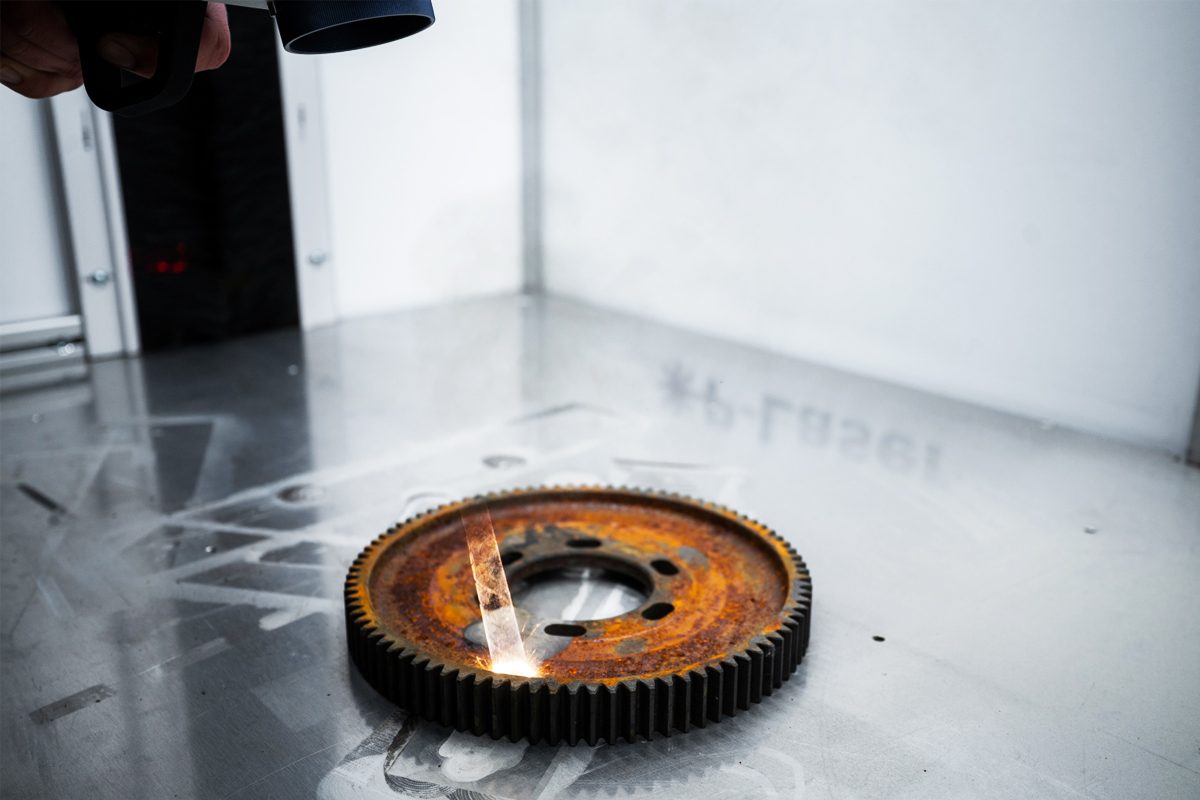
The exact outcome depends on various factors, including the intensity and wavelength of the laser, the type of contaminant, and the surface material. The laser system is calibrated to ensure that the surface material absorbs as little energy as possible to avoid overheating or damage. This precise control allows laser cleaning to be used on sensitive materials, such as electronic components or artworks, where traditional cleaning methods may risk causing damage.
- Vaporization: When the contaminant absorbs enough energy from the laser, it reaches its boiling point, turning into a vapor. This occurs most commonly with light layers of coatings, oil, or paint. The vapor is expelled from the surface, leaving the substrate clean.
- Ablation: For thicker contaminants, such as rust, corrosion, or heavy coatings, the laser energy may cause the material to disintegrate or break apart. This ablation process results in the removal of the contaminant through mechanical ejection, effectively cleaning the surface without causing harm to the underlying material.
- Thermal Expansion and Ejection: As the contaminants rapidly heat up, they may experience thermal shock, expanding quickly and creating a physical pressure that dislodges them from the surface. This process allows for the removal of materials without direct mechanical contact.
Types of Lasers Used in Cleaning
Continuous Wave (CW) Lasers
CW lasers produce a continuous, steady stream of light. These lasers provide a consistent energy output, making them suitable for applications where a uniform, low-intensity laser beam is needed to clean thin layers of contamination or to perform gentle cleaning tasks. They are typically used for large surfaces where the contaminants are evenly distributed, such as the removal of light dirt, soot, or coatings.
- Characteristics: CW lasers are typically low in intensity compared to pulsed lasers and are better for prolonged cleaning of delicate parts.
- Common Uses: Removing light oxidation, surface coatings, oils, and soot from larger surfaces.
Pulsed Lasers
Pulsed lasers emit laser energy in short bursts (or pulses), with each pulse delivering a high peak power. These pulses can be very brief (from nanoseconds to femtoseconds), which allows pulsed lasers to clean thicker, more stubborn contaminants such as heavy rust, paint, or corrosion. Pulsed lasers generate great thermal shock, which is effective in breaking down thick layers of contamination and ejecting them from the surface.
- Characteristics: The high peak power of pulsed lasers makes them more suitable for aggressive cleaning, especially for tougher, deeper contaminants.
- Common Uses: Cleaning rust, heavy coatings, and corrosion from metal surfaces or removing stubborn residues.
Components of Laser Cleaning Systems
Laser cleaning systems are made up of several interconnected components, each of which plays a vital role in the overall performance of the system. These components include:
- Laser Source: The laser source is responsible for generating the laser beam. The type of laser source chosen depends on the cleaning requirements and material. Sources can range from diode lasers and fiber lasers to more specialized sources like CO2 lasers for specific applications.
- Beam Delivery System: This component ensures that the laser beam is accurately directed at the target surface. It consists of mirrors, optical fibers, lenses, and beam-shaping devices, which are used to focus and manipulate the laser light for precise applications.
- Scanning Head: The scanning head is responsible for moving the laser beam across the surface in a controlled and systematic manner. It ensures uniform cleaning by following a programmed path or by adjusting in real-time for specific requirements. This system may include galvanometers, robotic arms, or gantries to facilitate the movement of the laser.
- Cooling System: Lasers generate a significant amount of heat during operation, especially in industrial applications. A cooling system—typically involving air or liquid cooling—is necessary to maintain the laser’s efficiency and prevent overheating.
- Control System: The control system allows the operator to adjust the various parameters of the laser cleaning process, such as laser power, frequency, pulse duration, and scanning speed. Modern laser cleaning systems often include automated software controls that optimize these parameters in real-time for efficiency and safety.
- Safety Systems: Since laser systems can be hazardous to the eyes and skin, modern laser cleaning systems are equipped with safety features, such as protective enclosures and interlock systems, to ensure operator safety.
Advantages of Laser Cleaning
Laser cleaning offers several advantages over traditional cleaning methods:
- Non-Contact and Non-Abrasive: Laser cleaning does not physically touch the surface, eliminating the risk of abrasion or mechanical wear. This feature is especially valuable for delicate parts, where traditional cleaning methods like abrasive blasting may cause damage.
- Environmentally Friendly: Unlike traditional methods that use harsh chemicals or generate waste, laser cleaning is chemical-free and produces minimal waste. The process also doesn’t require solvents or other hazardous materials, making it much safer for both the environment and the operators.
- High Precision and Selectivity: The laser can be precisely focused and controlled, allowing for highly selective cleaning. Laser cleaning can target only the contaminant, leaving the substrate material unaffected. This makes it ideal for cleaning complex parts with intricate geometries or sensitive surfaces.
- Minimal Surface Damage: Due to its non-contact nature and precision, laser cleaning can clean surfaces without altering the substrate or causing damage. This is crucial for industries like aerospace, electronics, and heritage conservation, where maintaining the integrity of the surface is essential.
- Cost-Effective in the Long Term: While the initial investment in laser cleaning systems may be high, the long-term benefits, including reduced chemical usage, lower maintenance costs, and fewer labor-intensive steps, can result in significant cost savings over time.
Disadvantages of Laser Cleaning
Despite its many advantages, laser cleaning does have some drawbacks:
- High Initial Cost: The upfront cost of laser cleaning systems, including the laser source, beam delivery system, and other components, can be quite high. This may limit its adoption, especially in smaller companies or industries with limited budgets.
- Limited Depth of Cleaning: Laser cleaning is primarily effective for surface-level contaminants. It may not be able to clean deeply embedded contaminants or heavily corroded surfaces unless additional steps are taken.
- Energy Consumption: High-powered lasers can consume significant amounts of energy, especially for continuous or large-scale cleaning applications. This may contribute to higher operational costs compared to more traditional cleaning methods.
- Material Sensitivity: While the precision of laser cleaning can minimize surface damage, some materials are more sensitive to heat and may require careful parameter tuning. Overheating could lead to thermal damage, especially on thin or heat-sensitive materials.
Applications of Laser Cleaning
Laser cleaning has numerous applications across a variety of industries, where its precision, eco-friendliness, and efficiency are highly valued:
- Aerospace Industry: Laser cleaning is used to remove corrosion, rust, and paint from sensitive aerospace components such as turbine blades, engines, and landing gear. The precision of the laser allows for cleaning even the most intricate parts without damaging the material.
- Automotive Industry: Laser cleaning is employed to remove rust, oils, and other contaminants from automotive parts, ensuring clean surfaces for welding, painting, or further processing. Its ability to clean complex shapes and delicate components is particularly valuable.
- Electronics Manufacturing: Laser cleaning is ideal for cleaning delicate electronic components like circuit boards, connectors, and microchips. It removes contaminants such as solder residues, dust, and flux without damaging the sensitive components.
- Cultural Heritage Conservation: Laser cleaning is increasingly used in the restoration and conservation of historical artifacts and artwork. It allows conservators to safely remove dirt, soot, old paint, and other contaminants without damaging the original surface.
- Welding and Coating: Laser cleaning is used to prepare metal surfaces for welding or coating by removing oxides, oils, and other residues that can affect the bonding process. This ensures stronger welds and better coating adhesion.
What is Ultrasonic Cleaning?
Definition and Basics
Working Principle
There are several stages involved in the ultrasonic cleaning process:
- Generation of Ultrasonic Waves: An ultrasonic transducer, usually made of piezoelectric materials, is placed in the cleaning bath to convert electrical energy into high-frequency sound waves.
- Cavitation: The ultrasonic waves cause pressure changes in the cleaning liquid, resulting in the formation of tiny, vacuum bubbles.
- Bubble Collapse: The bubbles implode or collapse due to high-pressure zones, generating intense heat and microscopic shockwaves, which dislodge contaminants from the surfaces of the parts.
- Detachment of Contaminants: As the cavitation bubbles collapse, they create a scrubbing effect on the surfaces of the parts, loosening dirt, oils, and other particles. The particles are then suspended in the cleaning solution or washed away by fluid flow.
Components of an Ultrasonic Cleaning System
An ultrasonic cleaning system consists of several key components that work together to generate and control the ultrasonic waves. These components include:
- Ultrasonic Transducer: The transducer is the heart of the ultrasonic cleaning system. It converts electrical energy into mechanical ultrasonic waves. Made from piezoelectric crystals or ceramics, the transducer vibrates at high frequencies when an electrical signal is applied to it. This vibration generates the sound waves in the cleaning solution.
- Cleaning Tank: The cleaning tank or bath is the container where the items to be cleaned are submerged. The tank is usually filled with a water-based cleaning solution or solvent, and the ultrasonic waves pass through the liquid to create the cavitation effect. The size of the tank is adjusted based on the items being cleaned, ranging from small, compact units for delicate components to large industrial tanks for cleaning bulk items.
- Generator: The generator provides electrical power to the ultrasonic transducer. It converts the standard electrical current into a high-frequency signal that drives the transducer. The generator controls the frequency and intensity of the ultrasonic waves, which in turn determine the effectiveness of the cleaning process.
- Cleaning Solution: Ultrasonic cleaning typically uses water-based cleaning solutions or solvents that enhance the cleaning process. These solutions are designed to loosen and dissolve contaminants, aiding in their removal. In some cases, specialized detergents, solvents, or acids may be added to the solution depending on the type of contaminants and the material of the object being cleaned.
- Control Unit: The control unit allows the operator to adjust various parameters, such as the temperature, cleaning duration, and power output. This unit may also include timers and automatic shutdown functions for ease of operation and safety.
- Filtration System: Some advanced ultrasonic cleaning systems are equipped with filtration systems that help remove contaminants from the cleaning solution, ensuring that the solution remains effective for longer periods and preventing the redeposition of dirt on the cleaned parts.
Advantages of Ultrasonic Cleaning
- Highly Effective for Delicate Parts: Ultrasonic cleaning is particularly effective for cleaning delicate or intricate items that may be damaged by traditional abrasive cleaning methods. The gentle action of cavitation ensures that even small crevices, holes, and delicate surfaces can be thoroughly cleaned.
- Non-Abrasive: Since ultrasonic cleaning does not use brushes or abrasive materials, it is less likely to cause scratches, wear, or surface damage. This makes it ideal for cleaning sensitive materials such as metals, glass, ceramics, and plastics without harming them.
- Access to Complex Geometries: Ultrasonic cleaning is effective at cleaning parts with complex shapes, holes, or narrow spaces. The cavitation bubbles can reach areas that would be inaccessible to mechanical cleaning methods, making it ideal for cleaning intricate parts such as medical instruments, jewelry, and aerospace components.
- No Need for Harsh Chemicals: Many ultrasonic cleaning systems use water-based cleaning solutions, which are less harmful to both the environment and the operators compared to chemical-based cleaning methods. The process can also be used with biodegradable or eco-friendly solutions.
- Quick and Efficient: Ultrasonic cleaning is a relatively fast process compared to other methods, as it can clean a variety of contaminants in a matter of minutes. This makes it ideal for high-throughput applications, such as in manufacturing or healthcare.
- Versatility: Ultrasonic cleaning systems can be used to clean a wide range of materials, including metals, plastics, glass, ceramics, and rubber, making them a versatile solution for many different industries.
Disadvantages of Ultrasonic Cleaning
- Limited Penetration for Large Parts: While ultrasonic cleaning is effective for small to medium-sized parts, it may not be as effective for larger objects with complex shapes or thick layers of contaminants. The cavitation effect may not penetrate deeply enough in some cases, especially with large or heavily contaminated items.
- Requires Cleaning Solution: While ultrasonic cleaning can be done using water or solvents, the choice of cleaning solution is crucial for effective results. In some cases, specialized detergents or solvents may be required to break down specific types of contaminants. These solutions may need to be replaced periodically, which adds to operational costs.
- Potential for Damage to Fragile Parts: Although ultrasonic cleaning is generally safe for delicate parts, high-frequency sound waves can still cause damage to very fragile items. The process can be too aggressive for certain materials, such as soft plastics, thin glass, or vintage components, especially if the parameters (such as frequency and power) are not properly calibrated.
- Energy Consumption: Ultrasonic cleaning systems can consume a significant amount of energy, especially when used in large-scale industrial operations or for long cleaning cycles. This could increase operational costs, particularly in energy-intensive applications.
- Noise and Vibrations: Ultrasonic cleaning systems can generate significant noise and vibrations during operation. In some settings, this may require noise mitigation measures to ensure a comfortable working environment.
Applications of Ultrasonic Cleaning
Ultrasonic cleaning has widespread applications across various industries, thanks to its ability to clean complex and delicate components with high efficiency and precision:
- Medical and Healthcare: Ultrasonic cleaning is extensively used in the healthcare sector to clean surgical instruments, dental tools, and laboratory equipment. It is effective in removing blood, tissue, and other contaminants from delicate medical tools without causing damage.
- Jewelry and Watchmaking: Ultrasonic cleaning is ideal for cleaning jewelry, watches, and other intricate items. It can remove dirt, oils, and tarnish from even the smallest crevices, making it a popular choice in jewelry maintenance and restoration.
- Automotive Industry: Ultrasonic cleaning is used in automotive manufacturing to clean small components, such as gears, engine parts, and fuel injectors. It is also used for cleaning automotive parts with complex geometries or tight spaces that require careful attention.
- Electronics Manufacturing: In the electronics industry, ultrasonic cleaning is used to clean circuit boards, components, and other delicate electronic parts. It effectively removes soldering flux, dust, and other contaminants without causing any damage.
- Aerospace Industry: Aerospace components, including turbine blades and engine parts, require precision cleaning to ensure optimal performance. Ultrasonic cleaning is ideal for removing oils, dirt, and other contaminants from these complex parts.
Comparison of Laser Cleaning and Ultrasonic Cleaning
Mode of Action
Mobility and Integration
Speed and Efficiency
Precision and Effectiveness
Surface Integrity and Damage
Safety
Operational Skill Requirements
Cost and Investment
Maintenance and Operational Costs
Environmental Impact
Scalability
Factors Affecting the Choice of Cleaning Method
Material Compatibility
Surface Considerations
Scale of Operation
Safety Considerations
Cost-Benefit Analysis
Long-Term Durability and ROI
Comparison of Practical Application Scenarios
Aerospace Industry
Automotive Industry
Electronics Industry
Medical Device Manufacturing
Cultural Heritage Preservation
Choosing Between Laser Cleaning and Ultrasonic Cleaning
Conditions for Choosing Laser Cleaning
Laser cleaning is a highly precise, high-efficiency cleaning technology that is well-suited for specific conditions where speed, precision, and surface-level cleaning are critical. The following conditions should be considered when choosing laser cleaning:
- Surface-Level Contaminants and Coating Removal: Laser cleaning excels when it comes to removing surface-level contaminants such as rust, paint, coatings, and oil. If the task involves cleaning metal surfaces or preparing parts for further processes like welding, painting, or coating, laser cleaning is often the preferred method. The ability of lasers to remove contaminants without damaging the underlying material is particularly valuable for metal components like automotive parts, turbine blades, and electronics housings.
- Precision and High-Quality Finish: Laser cleaning provides high precision and controlled energy delivery, making it ideal for applications that demand intricate cleaning with no risk of surface damage. For tasks involving fine features, such as cleaning aerospace components, microelectronics, or delicate parts with thin coatings, laser cleaning ensures that only the contaminant is removed, and the surface remains intact. It is especially effective when high cleanliness standards are required.
- Large-Scale Cleaning Operations: When dealing with large parts or high-volume production, laser cleaning can offer significant speed and efficiency. For instance, in industries like automotive or construction, where large components need to be cleaned rapidly, laser cleaning can be applied to remove paint or rust from metal surfaces quickly, with minimal downtime and no need for consumables like abrasive materials. In such cases, the automated nature of laser systems allows for continuous, efficient cleaning without human intervention.
- Non-Contact Cleaning and No Wear: The non-contact nature of laser cleaning makes it ideal for delicate parts or components that could be damaged by mechanical contact. For instance, fine or soft materials such as plastic, ceramic, or thin metal layers can be cleaned without any risk of mechanical abrasion. This is particularly important in industries like electronics manufacturing, where maintaining the integrity of delicate parts is essential.
- Cleaning Without Chemicals or Waste: Laser cleaning is a chemical-free process, making it an excellent choice for environments that require eco-friendly solutions. The ability to avoid chemical solvents and abrasives can be beneficial in industries that are committed to sustainability, such as aerospace, automotive, and cultural heritage preservation. Additionally, because laser cleaning generates little secondary waste, it reduces disposal costs and environmental impact.
- Material Compatibility: Laser cleaning works best with materials that can withstand high-energy light pulses without being damaged. Materials such as metal, stone, and certain ceramics are ideal candidates for laser cleaning, as these materials can effectively absorb and dissipate the laser energy without negative effects. However, heat-sensitive materials, such as plastics or delicate composites, may require careful adjustment of laser parameters or may not be suitable for this method.
Conditions for Choosing Ultrasonic Cleaning
Ultrasonic cleaning is a more versatile cleaning method, especially for smaller parts, delicate materials, and components with complex geometries. It is ideal for situations where precision cleaning is required, and contaminants are difficult to remove through conventional or abrasive methods. The following conditions should be considered when choosing ultrasonic cleaning:
- Cleaning Intricate Geometries and Small Parts: Ultrasonic cleaning is highly effective for small parts with intricate geometries or complex internal features. The cavitation process creates microscopic bubbles that reach into small crevices, holes, and fine details that would otherwise be difficult to clean. This makes ultrasonic cleaning an excellent choice for cleaning electronic components, medical instruments, jewelry, and small automotive parts with complex internal passages or delicate features.
- Non-Abrasive Cleaning of Sensitive Parts: When cleaning fragile or delicate materials, ultrasonic cleaning provides a gentle yet thorough approach. Since there is no physical contact between the parts and the cleaning solution, ultrasonic cleaning does not pose a risk of scratching, abrasion, or surface damage. This makes ultrasonic cleaning particularly well-suited for plastics, glass, soft metals, and sensitive materials like medical devices and jewelry.
- Highly Effective for Removing Oils, Grease, and Contaminants: Ultrasonic cleaning is particularly effective at removing oils, grease, dirt, and greasy residues from parts that may have been exposed to lubricants, hydraulic fluids, or other oily substances. The cavitation bubbles effectively break down and lift contaminants from surfaces, making ultrasonic cleaning ideal for cleaning engine parts, fuel injectors, and mechanical components used in industries like automotive, aerospace, and manufacturing.
- Cleaning Without Harsh Chemicals: Ultrasonic cleaning systems often use water-based solutions or mild detergents, making them an environmentally friendly choice compared to methods that rely on chemicals or solvents. For industries that prioritize sustainability, such as pharmaceuticals, food processing, and medical device manufacturing, ultrasonic cleaning offers a cleaner and more safe alternative to abrasive or chemical-based cleaning techniques.
- Batch Processing and Small-Scale Cleaning: Ultrasonic cleaning systems are ideal for batch processing or small-scale cleaning tasks. Parts can be submerged in the cleaning bath, and the ultrasonic waves will clean them effectively. This is particularly advantageous for tasks involving multiple small parts, such as medical instruments or small components in the electronics industry. The process can be done in batches, making it efficient for mass cleaning of intricate parts.
- Cleaning Parts with Thin Coatings or Coatings That Are Not Easily Removed: While ultrasonic cleaning is excellent for thorough cleaning, it is generally not suited for removing thick coatings, such as heavy rust or paint, unless combined with more aggressive solutions. For parts with thin coatings, microelectronic components, or delicate materials, ultrasonic cleaning is ideal as it can effectively clean parts without affecting or damaging the coatings.
- Material Compatibility: Ultrasonic cleaning is effective for a wide range of materials, including metal, plastic, glass, ceramic, and rubber. However, the cleaning process can be less effective for heavily contaminated or rusted parts where more intensive cleaning methods are needed. Additionally, ultrasonic cleaning is best for materials that do not suffer from cavitation effects or chemical reactions during cleaning.
Summary
Get Laser Cleaning Solutions
Drawing upon years of deep expertise in industrial laser cutting, welding, marking, and cleaning, this article presents information based on practical experience and the latest industry insights. By providing clear and technically sound guidance, it helps readers select the right machines, understand process trade-offs, and optimize workflows.
My goal is to help engineers, shop floor managers, and production decision-makers make informed choices that perfectly combine innovation, quality, and operational efficiency.
Drawing upon years of deep expertise in industrial laser cutting, welding, marking, and cleaning, this article presents information based on practical experience and the latest industry insights. By providing clear and technically sound guidance, it helps readers select the right machines, understand process trade-offs, and optimize workflows.
My goal is to help engineers, shop floor managers, and production decision-makers make informed choices that perfectly combine innovation, quality, and operational efficiency.