
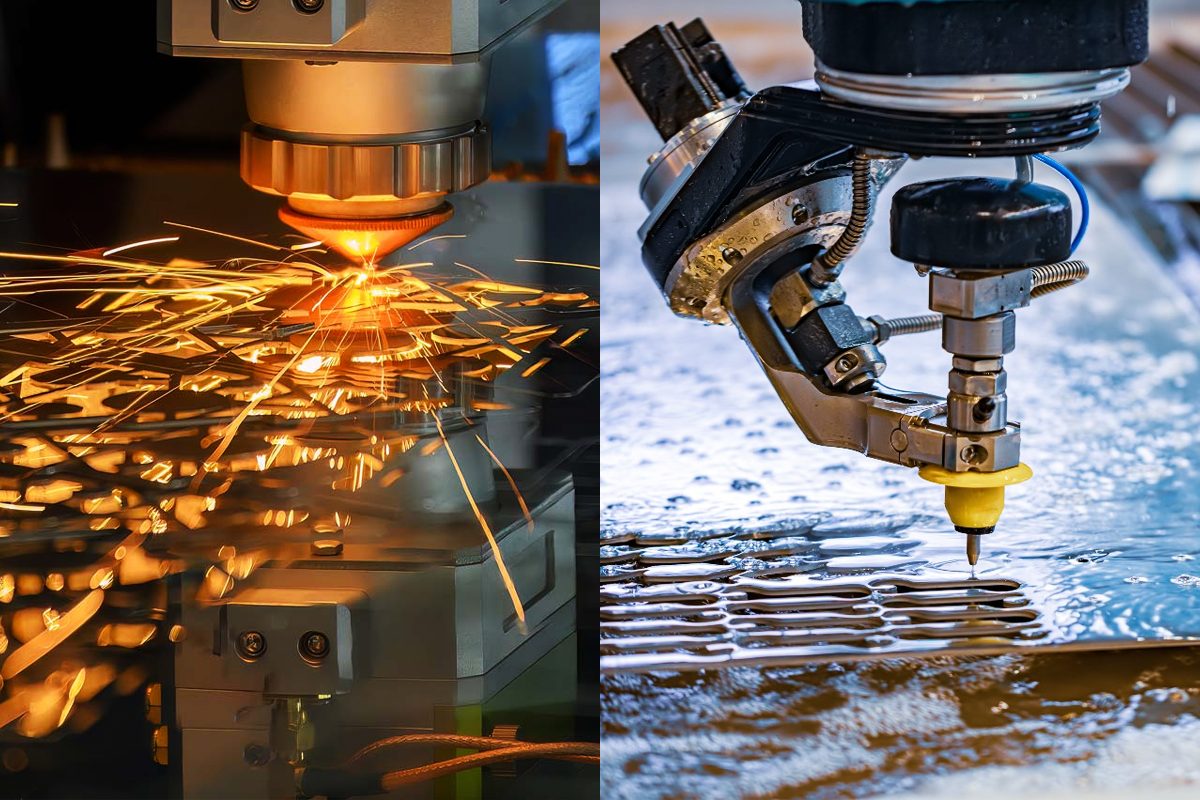
Quick Definitions
Laser Cutting
Key features of laser cutting include:
- High Precision and Accuracy: Excellent for detailed work and complex geometries.
- Speed: Faster than many other cutting methods, particularly for thin to medium-thick materials.
- Material Compatibility: Works well with metals (steel, stainless steel, aluminum), wood, acrylic, plastics, and some fabrics.
- Heat-Affected Zone (HAZ): Since it uses heat, surrounding areas may experience slight thermal distortion, making it less suitable for heat-sensitive materials.
Waterjet Cutting
Key features of waterjet cutting include:
- Cold Cutting: Ideal for materials sensitive to heat, such as composites, plastics, glass, and certain metals.
- Versatility: Can cut virtually any material, including thick metals, stone, ceramics, and laminates.
- No Material Hardening or Warping: Preserves the integrity of the material.
- Slower Speed: Generally slower than laser cutting, especially for thin materials.
- Consumable Requirements: Requires abrasive materials for harder substances, increasing operational costs.
How Each Process Works
Laser Cutting
Physics Behind the Process
- The concentrated light beam delivers a massive amount of heat energy to a very small area, causing rapid localized heating.
- Depending on the material, this heat either melts, burns, or vaporizes the substrate.
- An assist gas—typically oxygen, nitrogen, or compressed air—is simultaneously directed at the cut zone to blow away molten material, reduce oxidation, and improve cutting speed and edge quality.
- When oxygen is used, it also creates a combustion reaction, adding extra thermal energy that helps accelerate the cutting of metals like carbon steel.
Practicalities of Laser Cutting
- Precision and control: Computer Numerical Control (CNC) systems guide the laser head with extreme accuracy, allowing for intricate patterns, sharp corners, and detailed engraving.
- Speed: Thin to medium-thick materials can be cut extremely quickly, making it ideal for high-volume production.
- Material limitations: While excellent for metals, plastics, and wood, the heat generated can cause Heat-Affected Zones (HAZ). This may lead to discoloration, warping, or microstructural changes in sensitive materials.
- Thickness constraints: Laser cutting is most efficient for thinner materials. Cutting very thick metal (over 1 inch / 25 mm) requires higher-powered lasers and slows the process considerably.
Waterjet Cutting
Physics Behind the Process
- Water is pressurized to 30,000–90,000 psi (pounds per square inch) using a specialized pump.
- This pressurized water is forced through a small nozzle, creating a jet stream that travels at speeds up to Mach 3 (three times the speed of sound).
- For softer materials like rubber or foam, pure water is sufficient.
- For harder materials like metal, stone, or glass, an abrasive material such as garnet is mixed into the water. These microscopic abrasive particles act like millions of tiny cutting tools, enabling the waterjet to slice through virtually anything.
Practicalities of Waterjet Cutting
- Cold cutting advantage: Since there’s no heat involved, there is no Heat-Affected Zone (HAZ). This preserves the material’s structural integrity and prevents warping or hardening.
- Versatility: Waterjet cutting can process almost any material, from soft textiles to thick metals, ceramics, and composites.
- Thickness capacity: Waterjets can cut extremely thick materials—up to 10 inches (25 cm) or more—without loss of quality.
- Slower speeds and higher costs: Compared to laser cutting, waterjet cutting tends to be slower, especially on thin materials. The need for consumable abrasives and pump maintenance also increases operating costs.
What They Cut Well
Laser Cutting Material Compatibility
Materials That Laser Cutting Handles Well
- Metals
- Carbon Steel and Stainless Steel: Laser cutting is highly effective for these materials, producing clean edges and high precision.
- Aluminum: Works well, but requires higher laser power because aluminum reflects heat. Nitrogen assist gas is often used to prevent oxidation.
- Titanium and Copper: Specialized fiber lasers can handle these, although reflectivity remains a challenge.
- Plastics and Acrylics
- Acrylic (PMMA): Laser cutting produces smooth, polished edges with no need for secondary finishing.
- Plastics like ABS, polycarbonate, and PET: These are workable, but some plastics may release toxic fumes when heated. Proper ventilation and material selection are essential.
- Wood and Organic Materials
- Perfect for plywood, MDF, veneers, and natural wood, especially in the decorative or furniture industries.
- Ideal for engraving detailed patterns and lettering.
- Thin Fabrics and Paper
- Works exceptionally well for textiles, leather, and paper products, especially in the fashion or packaging industries.
Materials That Are Challenging for Laser Cutting
- Thick Metals: Cutting metals over 1 inch (25 mm) is possible but requires extremely high-powered lasers, which can be costly and slow.
- Heat-Sensitive Materials: Certain plastics, composites, and laminated materials may melt, warp, or emit dangerous fumes.
- Reflective Surfaces: Highly reflective metals like copper and brass can reflect the laser beam, risking equipment damage without specialized setups.
- Stone, Glass, and Ceramics: These are generally unsuitable for laser cutting because they can crack or shatter due to rapid thermal expansion.
Waterjet Cutting Material Compatibility
Materials That Waterjet Cutting Excels At
- Metals
- Can cut carbon steel, stainless steel, aluminum, titanium, and exotic alloys with ease—even at extreme thicknesses up to 10 inches (25 cm).
- No heat-affected zones, preserving metallurgical properties. This is critical for the aerospace and medical industries.
- Stone, Tile, and Ceramics
- Ideal for cutting granite, marble, ceramics, and porcelain without cracking.
- Widely used in architectural design and countertop fabrication.
- Glass
- Can cut glass without causing thermal stress or shattering, even on intricate designs like stained glass or tempered glass.
- Composites and Laminates
- Perfect for carbon fiber, Kevlar, and layered materials, which might otherwise delaminate under heat.
- Essential in industries like aerospace and automotive manufacturing.
- Soft Materials
- When using pure water (no abrasive), waterjets can cleanly cut rubber, foam, gaskets, and textiles without fraying or damage.
Materials That Are Challenging for Waterjet Cutting
- Very Thin Materials: Extremely thin sheets (e.g., aluminum foil) may deform under the force of the high-pressure jet.
- Porous Materials: Sponge-like or very soft porous materials may not cut cleanly with abrasive jets.
- Operational Costs: While not a material limitation, abrasive cutting consumes materials like garnet, increasing production costs compared to laser cutting for thin metals.
Typical Thickness Range
Laser Cutting
Typical Thickness Ranges by Material
- Metals
- Carbon Steel: Typically up to 1 inch (25 mm) with high-powered industrial fiber or CO2 lasers.
- Stainless Steel: Optimal up to 0.75 inches (19 mm). Beyond this, cutting becomes slower and less efficient.
- Aluminum: Generally limited to 0.5 inches (12–15 mm) due to its high reflectivity and heat conductivity, which require specialized laser setups.
- Copper and Brass: Often limited to thin sheets (up to 0.25 inches / 6 mm) unless specialized anti-reflective fiber lasers are used.
- Non-Metallic Materials
- Plastics and Acrylic: Up to 1 inch (25 mm) for acrylic with excellent polished edges.
- Wood and MDF: Usually up to 0.75 inches (19 mm) for clean cuts without charring.
- Textiles, Leather, Paper: Extremely thin materials can be cut with high speed and precision.
Factors Affecting Laser Thickness Capability
- Laser Power: Standard industrial lasers range from 1 kW to 20 kW. Higher wattage allows cutting thicker materials, but increases costs.
- Assist Gas Type: Oxygen assists in cutting thicker steel by adding a combustion effect, while nitrogen produces cleaner, oxidation-free cuts for thinner materials.
- Cutting Speed vs. Quality: As material thickness increases, cutting speed drops significantly, and edge quality may require secondary finishing.
Waterjet Cutting
Typical Thickness Ranges by Material
- Metals
- Carbon Steel and Stainless Steel: Can cut cleanly up to 10 inches (250 mm) or more, depending on pump power and nozzle configuration.
- Aluminum and Titanium: Easily cuts up to 6–8 inches (150–200 mm) with precision.
- Hardened Alloys: Extremely hard metals like Inconel or tungsten can also be cut, though at slower speeds.
- Non-Metallic Materials
- Stone and Granite: Frequently cut in thicknesses from 2–6 inches (50–150 mm) for countertops, monuments, and architectural features.
- Glass and Ceramics: Can cut fragile materials like tempered glass at various thicknesses without cracking.
- Composites and Laminates: Effective for multi-layered materials that might delaminate under thermal stress.
Factors Affecting Waterjet Thickness Capability
- Pump Pressure: Standard industrial waterjets operate at 60,000–90,000 psi. Higher pressure increases cutting speed and thickness capacity.
- Abrasive Use: Abrasives like garnet greatly increase cutting power, enabling clean cuts in extremely hard materials.
- Cutting Speed vs. Quality: Thicker materials require slower cutting speeds to maintain precision, which impacts production timelines and costs.
Edge Quality, HAZ, and Downstream Finishing
Laser Cutting
Edge Quality
- Laser cutting produces sharp, smooth, and precise edges, especially on thin to medium-thick metals, plastics, and wood.
- For materials like acrylic, the heat of the laser can create a polished edge, reducing the need for additional finishing.
- On metals, nitrogen as an assist gas can produce clean, oxide-free edges, while oxygen may leave slight discoloration or oxidation that needs removal.
HAZ Considerations
- The HAZ varies depending on laser power, cutting speed, and material type.
- Common issues include hardening of metals, microcracks, discoloration, or minor warping.
- In industries like aerospace or medical devices, even small changes to the material structure can be critical, requiring careful control or alternative cutting methods.
Downstream Finishing
- Most thin materials cut by lasers need minimal post-processing, especially for decorative or consumer goods.
- For thicker metals or oxidized cuts, secondary steps such as grinding, sanding, or cleaning may be required.
- Painted or coated surfaces may need rework after cutting due to localized burning around the edges.
Waterjet Cutting
Edge Quality
- Produces smooth, uniform edges with no discoloration or burn marks.
- Abrasive waterjets can create extremely fine finishes, often eliminating the need for secondary polishing or grinding.
- Ideal for cutting brittle materials like glass, ceramics, or composites, where thermal stress from a laser could cause cracking or delamination.
HAZ Considerations
- No Heat-Affected Zone is created, preserving the material’s original properties.
- This makes waterjet cutting particularly valuable for aerospace, defense, and high-precision engineering industries where material integrity is crucial.
- Complex composites and laminated materials remain intact, with no risk of thermal damage.
Downstream Finishing
- Most parts come off a waterjet ready for assembly or use, dramatically reducing downstream finishing time.
- For highly critical applications, minimal edge deburring might be done, but overall, finishing needs are far lower compared to laser cutting.
- Reduced need for secondary operations translates into lower labor costs and faster production cycles.
Accuracy, Tolerances, and Feature Size
Laser Cutting
Accuracy
- Modern industrial laser cutting machines can achieve cutting accuracies within ±0.001 to ±0.003 inches (±0.025 to ±0.076 mm), depending on the material and machine calibration.
- Fiber lasers are particularly effective for high-precision work because of their tighter beam focus and faster, more stable motion control compared to CO2 lasers.
- The accuracy remains consistent across thin and medium-thick materials, though cutting thicker metals may reduce precision due to beam divergence and slower cutting speeds.
Tolerances
- Typical tolerances for laser cutting are in the range of ±0.002 to ±0.005 inches (±0.05 to ±0.13 mm).
- These tolerances are ideal for industries like aerospace, electronics, medical devices, and automotive manufacturing, where even the smallest dimensional discrepancies can affect performance.
- However, tolerances can be affected by material type, thermal expansion, and the presence of a Heat-Affected Zone (HAZ), especially in heat-sensitive materials.
Feature Size
- The laser beam’s narrow kerf (cutting width) allows for extremely fine, detailed features.
- Holes as small as 0.010 inches (0.25 mm) can be created with remarkable precision.
- Ideal for cutting complex patterns, sharp corners, thin lettering, and micro components.
Waterjet Cutting
Accuracy
- Modern waterjet cutting machines can achieve cutting accuracies of ±0.003 to ±0.005 inches (±0.076 to ±0.127 mm) under optimal conditions.
- For very thick materials, accuracy may decrease slightly as the cutting stream widens and diverges over distance.
- CNC controls help maintain consistent accuracy, even on complex shapes.
Tolerances
- Typical tolerances for waterjet cutting fall in the range of ±0.003 to ±0.010 inches (±0.076 to ±0.25 mm), depending on material thickness and machine setup.
- Tighter tolerances are possible when cutting thinner materials with a fine abrasive mix.
- Waterjets are highly valued in industries like aerospace, construction, and art fabrication, where high precision is important but micro-level tolerances are not always necessary.
Feature Size
- The cutting stream of a waterjet is slightly wider than a laser beam, limiting the size of intricate features.
- The smallest practical hole diameter is typically about 0.030 inches (0.76 mm), which is larger than what lasers can achieve.
- While not ideal for ultra-fine details, waterjets excel in cutting complex, large-scale parts with smooth curves and varying thicknesses.
Speed, Throughput, and Part Complexity
Laser Cutting
Speed and Throughput
- Thin Materials: Laser cutting excels at processing thin sheet metal, plastics, wood, and other materials with remarkable speed.
- For sheet metal under 0.25 inches (6 mm), laser cutting is often 5–10 times faster than waterjet cutting.
- Industrial fiber lasers can cut at speeds of 100–400 inches per minute (IPM), depending on material type and power level.
- Automation Compatibility: Laser cutting machines integrate seamlessly with CNC systems, robotics, and automated loading/unloading equipment, making them ideal for mass production and 24/7 operation.
- Limitations on Thick Materials: As material thickness increases, cutting speed drops dramatically. For example, cutting 1-inch (25 mm) steel is possible, but significantly slower, which can reduce throughput and increase energy costs.
Part Complexity
- The narrow beam and kerf width (as small as 0.004 inches / 0.1 mm) allow for intricate, highly detailed designs with tight tolerances.
- Complex features like sharp corners, micro holes, and fine lettering are easily achieved without the need for additional tooling.
- CAD/CAM integration makes it simple to switch between complex patterns, reducing setup time for custom or small-batch projects.
Waterjet Cutting
Speed and Throughput
- Cutting Speed: Waterjet machines cut more slowly because they rely on mechanical erosion rather than thermal energy.
- Typical speeds range from 10–60 inches per minute (IPM), depending on material type, thickness, and pump pressure.
- For very thick materials, speeds are even slower to maintain cut quality.
- Setup Time and Versatility: Although slower, waterjets require minimal setup when switching between materials, making them ideal for job shops or custom fabrication environments where diverse materials are processed.
- Production Considerations: Because of their slower speed, waterjets are often used for low- to medium-volume production or for cutting parts that cannot be processed by other methods.
Part Complexity
- Waterjets can cut virtually any shape, including intricate patterns, curved lines, and complex profiles.
- The stream diameter is slightly wider than a laser beam, so micro-level details or extremely small holes may not be as sharp.
- For large, complex assemblies made from thick or mixed materials, waterjets excel because they don’t generate heat or cause structural changes.
- Multiple cutting heads can be added to increase throughput, but this significantly raises operational costs.
Kerf Width and Nesting Efficiency
Laser Cutting
Kerf Width Details
- Typical kerf widths range from 0.004 to 0.010 inches (0.1–0.25 mm), depending on laser type, material thickness, and focal settings.
- Fiber lasers generally produce tighter, more concentrated beams than CO2 lasers, resulting in slightly narrower kerfs.
- For thin sheet metals and plastics, the kerf is often so fine that almost no material is wasted.
Impact on Nesting Efficiency
- The extremely small kerf allows parts to be nested very closely together, reducing scrap and optimizing raw material usage.
- For industries like electronics, jewelry, or aerospace, where material cost is high, laser cutting’s nesting efficiency can yield substantial savings.
- Narrow kerfs also allow for precision interlocking parts such as tabs, slots, or puzzle-like assemblies without excessive clearance.
- When combined with CAD/CAM software, laser cutting can automatically generate optimized layouts for mass production.
Considerations
- On very thick materials, the kerf may widen slightly due to beam divergence, but it remains narrower than most alternative methods.
- Because the laser uses heat, some edge tapering may occur, requiring precise parameter adjustments to maintain consistent quality.
Waterjet Cutting
Kerf Width Details
- Typical kerf widths range from 0.030 to 0.040 inches (0.76–1.02 mm), depending on nozzle size, pressure, and abrasive type.
- Smaller nozzles can produce slightly narrower kerfs, but this slows cutting speed and increases wear on the machine.
- The kerf remains consistent across different material types, whether cutting metal, glass, stone, or composites.
Impact on Nesting Efficiency
- Because the kerf is wider, parts must be spaced slightly farther apart in nesting layouts.
- This results in slightly higher material waste compared to laser cutting, especially for projects with many small or intricate parts.
- However, waterjet cutting’s ability to handle extremely thick or multi-layered materials offsets this drawback in many industries, where versatility is more important than material efficiency.
- Advanced waterjet software can still optimize nesting, though not to the same degree of density as lasers.
Considerations
- For premium materials like titanium or aerospace alloys, the wider kerf may require careful planning to minimize waste.
- Multiple cutting heads can be used to improve throughput, but they do not reduce the kerf size.
Piercing Behavior
Laser Cutting
How Laser Piercing Works
- The laser beam focuses intense energy on a single point, rapidly heating the material until it melts or vaporizes.
- An assist gas (oxygen, nitrogen, or compressed air) blows away molten material, creating a small, clean hole that acts as the starting point for the cut.
- For thicker materials, the machine may perform a pulse or drill piercing cycle, gradually increasing power to prevent excessive spatter or distortion.
Performance and Speed
- Thin Materials (Under 0.25 inches / 6 mm): Piercing is almost instantaneous—often completed in fractions of a second.
- Medium to Thick Materials (0.5–1 inch / 12–25 mm): Piercing can take several seconds, increasing cycle time and reducing throughput.
- Reflective Metals (Aluminum, Copper, Brass): Specialized fiber lasers and coatings are often required to prevent beam reflection during piercing.
Potential Issues
- Spatter and Micro-Burrs: Rapid heating can cause molten metal to splatter around the pierce point, requiring secondary cleaning.
- HAZ Formation: The intense localized heat creates a Heat-Affected Zone (HAZ) around the pierce, which may harden or discolor the material.
- Pierce Delay: Multiple pierces on a single sheet can add significant cycle time for high-volume production.
Waterjet Cutting
How Waterjet Piercing Works
- The pump generates pressures of 30,000–90,000 psi, which is focused into a narrow jet through a precision nozzle.
- The jet, often mixed with abrasive particles, strikes the material with extreme velocity, gradually eroding a small entry hole.
- Once the initial pierce is complete, the machine transitions into the programmed cutting path.
Performance and Speed
- Pierce Time: Slower than laser piercing because the material is eroded rather than melted. A typical pierce may take 1–5 seconds, depending on thickness and hardness.
- Thick Materials: Waterjets excel at piercing very thick metals, stone, and composites without damage, though pierce times increase as thickness grows.
- No Thermal Delay: Since there’s no heat, waterjet piercing does not require preheating or cooldown periods, making it safer for delicate materials like glass or ceramics.
Specialized Piercing Techniques
- Low-Pressure Piercing: Used for fragile materials like glass to avoid cracking during the initial entry.
- Dynamic or Wiggle Piercing: The nozzle moves slightly while piercing to distribute the cutting force and reduce wear on the nozzle and material.
Potential Issues
- Abrasive Splashback: The force of the jet can cause abrasives to bounce back during piercing, potentially damaging the top surface if not properly controlled.
- Nozzle Wear: Frequent piercing accelerates nozzle wear, increasing maintenance costs.
Workholding and Fixturing
Laser Cutting
Workholding Requirements
- Flat Bed Systems: Most laser cutting machines use flat cutting beds with metal slats or a honeycomb table to support the material. Gravity alone is often sufficient to hold the sheet in place because there is no cutting pressure.
- Minimal Clamping: Clamps or edge stops are only needed to prevent slight material movement during rapid head acceleration or when processing lightweight sheets such as thin aluminum or plastic.
- Focus Stability: Because the laser relies on a precise focal distance, the material must remain flat and stable to avoid defocusing or inconsistent cut depth.
Advantages
- Quick Setup: Minimal fixturing allows for rapid changeovers between jobs, ideal for high-volume production.
- Low Risk of Damage: No direct contact reduces the chance of scratching or marring sensitive surfaces.
- Automation Friendly: Easily integrates with robotic loading and unloading systems for continuous production.
Challenges
- Thermal Effects: Warping from heat buildup can cause sheets to lift slightly off the bed, reducing cut quality.
- Reflective Materials: Highly reflective metals like copper or brass may require specialized fixtures to prevent beam reflection and equipment damage.
Waterjet Cutting
Workholding Requirements
- Secure Clamping: The high-pressure jet—often exceeding 60,000–90,000 psi—creates enough force to shift or vibrate the material. Heavy-duty clamps or bolted fixtures are essential to hold parts firmly in place.
- Submerged Cutting Beds: Many waterjets use tanks filled with water to absorb energy, reduce splashback, and minimize noise. Fixturing must be corrosion-resistant and stable under submerged conditions.
- Support Grates or Slats: The material rests on sacrificial slats or grids that allow the jet to pass through without damaging the main machine bed.
Advantages
- Stability for Thick Materials: Secure fixturing makes it possible to cut extremely thick or heavy materials like granite, steel blocks, or multi-layered composites.
- Custom Fixture Designs: Fixtures can be tailored for irregular shapes, pipes, or curved surfaces, increasing waterjet versatility.
Challenges
- Setup Time: Clamping and aligning heavy materials takes longer, increasing labor and reducing throughput for frequent job changes.
- Abrasive Splashback: The force of the jet can cause abrasive particles to bounce back during piercing, potentially damaging the material if fixturing does not fully restrain them.
- Fixture Wear: Prolonged exposure to high-pressure water and abrasives causes gradual wear, requiring regular inspection and replacement.
Cost Structure
Laser Cutting
Capital Expenditures (CapEx)
- Machine Purchase Price:
- Entry-level fiber lasers: $20,000–$150,000
- Industrial-grade high-power lasers: $250,000–$500,000 or more, depending on power and automation features.
- Support Systems:
- Chillers, fume extractors, and assist gas systems add to initial costs.
- Automated loading/unloading equipment further increases upfront investment but boosts production efficiency.
- Infrastructure Requirements:
- Minimal structural reinforcement is needed since the cutting process exerts no mechanical force.
- Requires electrical upgrades for high-powered industrial units.
Operational Expenditures (OpEx)
- Consumables:
- Mainly limited to assist gases (oxygen, nitrogen, or compressed air).
- Cutting optics and nozzles need occasional replacement but are relatively inexpensive.
- Power Consumption:
- Fiber lasers are highly energy-efficient compared to waterjets.
- Typical consumption: 8–260 kW depending on power rating and usage.
- Maintenance:
- Regular cleaning and calibration are required, but overall maintenance is straightforward.
- Fewer moving parts than waterjets mean lower long-term repair costs.
- Cost Per Part: Extremely low for thin and medium-thick materials, especially in high-volume production.
Waterjet Cutting
Capital Expenditures (CapEx)
- Machine Purchase Price:
- Basic models: $100,000–$200,000
- Large industrial multi-head waterjets: $250,000–$400,000 or more.
- Support Systems:
- Abrasive delivery and water recycling systems increase costs.
- Reinforced foundations are often necessary due to heavy weight and cutting forces.
- Facility Requirements: Proper drainage, water filtration, and space for abrasive storage are needed, adding to setup costs.
Operational Expenditures (OpEx)
- Abrasives:
- The single largest cost driver. Garnet abrasive must be continuously supplied and disposed of properly.
- Typical usage: 0.5–1.5 pounds of abrasive per minute, significantly adding to operating costs.
- Pump Maintenance:
- High-pressure pumps and nozzles experience rapid wear due to extreme pressures (60,000–90,000 psi).
- Frequent maintenance and part replacements are required.
- Water and Filtration: A Continuous water supply is necessary, along with filters to prevent clogging and contamination.
- Power Consumption: Waterjets consume more power than lasers due to high-pressure pumping systems.
- Cost Per Part: Generally higher than laser cutting, especially for thin materials or high-volume production, but competitive for thick, exotic, or heat-sensitive materials.
Maintenance, Reliability, and Uptime
Laser Cutting
Maintenance Requirements
- Optics Care:
- Laser lenses and mirrors must be cleaned regularly to prevent contamination from smoke, dust, or spatter.
- Occasional replacement of optics is necessary, but parts are relatively inexpensive and quick to swap.
- Assist Gas System: Regular checks for leaks and proper gas flow are essential for clean cuts and safety.
- Cooling Systems: High-powered lasers require water chillers to maintain temperature stability. Routine inspection and cleaning prevent overheating issues.
- Calibration: Periodic alignment of the laser beam and motion systems ensures continued accuracy and cut quality.
Reliability and Uptime
- High Uptime: Because there are fewer moving parts in the cutting process, laser cutting machines typically have excellent uptime, often exceeding 95–98% availability in well-maintained facilities.
- Consistent Performance: Wear and tear are minimal, so cut quality remains stable over time with proper calibration.
- Predictable Maintenance: Most maintenance tasks are routine and can be scheduled during planned downtime, minimizing disruption.
Challenges
- Heat Management: Overheating or improper cooling can cause unexpected downtime, especially in high-power systems.
- Optics Damage: If protective windows or lenses are neglected, contamination can quickly degrade cutting performance.
Waterjet Cutting
Maintenance Requirements
- High-Pressure Pumps:
- Operating at 60,000–90,000 psi, the pump is the most critical and maintenance-intensive component.
- Seals, check valves, and plungers wear quickly and require frequent inspection and replacement.
- Nozzles and Orifices: The abrasive stream causes constant erosion of the nozzle and mixing tube. These parts often need replacing weekly or monthly, depending on usage.
- Abrasive Handling Systems: Continuous cleaning of abrasive delivery and removal systems is essential to prevent clogging and downtime.
- Water Filtration:
- Proper filtration prevents contaminants from damaging the pump and cutting head.
- Filters must be changed regularly to maintain system health.
Reliability and Uptime
- More Frequent Downtime:
- Due to higher wear rates, waterjets require more frequent maintenance stops.
- Uptime typically ranges from 85–92%, lower than that of laser cutting machines.
- Unexpected Failures: Seal or nozzle failures can occur suddenly, halting production until repairs are made.
- Operator Skill Dependence: Skilled operators are crucial for troubleshooting, maintenance, and minimizing unplanned downtime.
Challenges
- Consumable Costs: The constant replacement of wear parts significantly increases operational expenses.
- Maintenance Labor: Waterjets require more skilled labor hours for upkeep compared to lasers.
- Production Planning: Frequent planned and unplanned stops must be accounted for in production scheduling.
Safety and Environmental Considerations
Laser Cutting
Safety Considerations
- Laser Radiation:
- Industrial lasers are classified as Class 4, the highest hazard level.
- Direct or reflected exposure to the beam can cause severe eye damage or skin burns.
- Enclosures, interlocks, and protective goggles are mandatory safety measures.
- High Temperatures and Fire Risk:
- The intense heat from the laser can ignite flammable materials or cause molten metal splatter.
- Proper ventilation and flame-resistant work surfaces are essential.
- Operators must be trained to handle emergencies such as flash fires.
- Fume and Gas Emissions:
- Vaporized materials can release toxic fumes, especially when cutting plastics, coatings, or treated wood.
- Assist gases like oxygen or nitrogen are stored under high pressure and must be handled carefully.
- Fume extraction systems and filters are required to maintain air quality and worker health.
- Mechanical Hazards:While rare, the rapid movement of the CNC gantry poses a pinch or crush hazard during maintenance.
Environmental Considerations
- Energy Efficiency: Fiber lasers are relatively energy-efficient compared to many industrial machines, reducing environmental impact.
- Waste Management:
- No abrasives are used, so solid waste is minimal.
- Scrap metal can be collected and recycled.
- Air Emissions: Proper fume filtration minimizes environmental contamination, but emissions from vaporized materials must be monitored for compliance.
Waterjet Cutting
Safety Considerations
- High-Pressure Water Hazards:
- Waterjets operate at pressures up to 90,000 psi, powerful enough to cut through skin, bone, or protective gear instantly.
- Direct exposure is extremely dangerous, so operators must never be near the jet stream during operation.
- High-pressure systems require regular inspection to prevent catastrophic hose or fitting failures.
- Abrasive Materials:
- Garnet abrasives create a respirable dust hazard if not handled properly.
- Workers need protective masks and dust control systems when handling or disposing of used abrasives.
- Noise Levels:
- Waterjet machines are extremely loud, often exceeding 90–100 dB.
- Hearing protection is mandatory to prevent long-term hearing damage.
- Slips and Splash Hazards: Water overspray and splashback create slippery surfaces around the machine, requiring non-slip flooring and proper drainage.
Environmental Considerations
- Water Usage:
- Waterjets consume large amounts of water, which must be filtered and recycled to reduce environmental impact.
- Wastewater may contain fine particles and must be treated before disposal to comply with environmental regulations.
- Abrasive Waste:
- Spent abrasive mixed with cutting debris creates solid waste that must be collected and disposed of properly, adding to environmental and operational costs.
- Some abrasives can be recycled, but this requires specialized systems.
- Energy Consumption: High-pressure pumps consume significant electricity, making waterjets less energy-efficient than laser cutting machines.
Lead Time, Throughput, and Automation
Laser Cutting
Lead Time Advantages
- Fast Start-up:
- Minimal setup time is required because laser cutting relies on simple workholding and non-contact cutting.
- Job changes are rapid, as switching between designs only involves loading a new program into the CNC system.
- Quick Prototyping and Production Runs: The ability to handle complex geometries without specialized tooling makes lasers perfect for both prototypes and full-scale production.
Throughput Performance
- Exceptional Cutting Speed:
- Thin sheet metal can be cut 5–10 times faster than with a waterjet, especially when using high-powered fiber lasers.
- Multiple parts can be cut simultaneously on large-format machines, dramatically increasing output.
- Reduced Secondary Processing: Clean edges and minimal post-cut finishing reduce total production time per part.
Automation Capabilities
- Laser cutting systems easily integrate with robotic arms, material handling conveyors, and automated loading/unloading stations, enabling lights-out manufacturing.
- Advanced nesting software automatically arranges parts for optimal material utilization and faster job sequencing.
- Automation makes laser cutting ideal for industries like automotive, electronics, and aerospace, where consistent, high-volume production is required.
Waterjet Cutting
Lead Time Considerations
- Moderate Setup Time: While waterjets can switch between materials quickly, fixturing and clamping for heavy or irregular parts take more time than with lasers.
- Custom Fabrication Advantage:
- For low-volume, custom jobs or specialty materials, waterjets reduce lead time by eliminating the need for custom tooling.
- Particularly beneficial in industries such as stone fabrication, aerospace, and art installations.
Throughput Performance
- Slower Cutting Speeds:
- Cutting speed is significantly slower than lasers, especially for thin materials.
- For thick metals or hard materials like granite, cutting must be done at a controlled pace to maintain precision and prevent nozzle wear.
- Multi-Head Systems: Adding multiple cutting heads can improve throughput, but also raises operating and maintenance costs.
- Post-Cut Processing: While edge quality is excellent, abrasive residue must be cleaned, adding to total production time.
Automation Capabilities
- Waterjet cutting can be automated, but it is less automation-friendly than laser cutting due to its high-pressure systems and abrasive handling requirements.
- Automation is typically limited to material loading and unloading rather than fully lights-out production.
- Advanced CAD/CAM integration helps optimize nesting and job sequencing, but physical throughput remains slower.
Quality Control and Metrology
Laser Cutting
Key Quality Factors
- Heat-Affected Zone (HAZ):
- Overheating can cause warping, edge hardening, or discoloration, especially in metals like steel and titanium.
- Regular monitoring ensures the HAZ stays within acceptable limits for critical industries such as aerospace and medical devices.
- Edge Smoothness and Oxidation:
- Improper assist gas settings or dirty optics can create rough, oxidized edges.
- Nitrogen cutting is often used for stainless steel to produce clean, oxide-free edges.
- Precision and Alignment:
- Even slight misalignment in the laser optics can affect cut accuracy, especially on fine features.
- Regular calibration of the laser head and motion control systems is essential for maintaining dimensional accuracy.
Metrology Techniques
- Optical Measurement Systems: Laser scanners and vision systems quickly verify part dimensions without physical contact.
- Coordinate Measuring Machines (CMMs): Used for detailed dimensional analysis, especially in industries requiring very tight tolerances.
- Real-Time Monitoring: Some advanced laser cutting systems use sensors to track beam focus, temperature, and gas flow, automatically adjusting parameters during production.
Waterjet Cutting
Key Quality Factors
- Taper Control:
- As the waterjet stream penetrates the material, it naturally widens slightly, creating a tapered cut.
- Modern dynamic cutting heads compensate for this by tilting during cutting to achieve perfectly square edges.
- Nozzle and Abrasive Wear:
- Worn nozzles or inconsistent abrasive feed can cause variations in kerf width and edge smoothness.
- Frequent inspection and maintenance are essential to avoid dimensional inaccuracies.
- Material Integrity: Since there is no heat, waterjet cutting preserves the original mechanical properties of the material, which is critical for aerospace, medical, and defense applications.
Metrology Techniques
- Precision Gauges and Fixtures: Used to measure taper and flatness in thick or complex parts.
- Surface Roughness Measurement: Profilometers measure surface quality to ensure the cut meets finishing requirements.
- In-Process Monitoring: Sensors can track abrasive flow rate and water pressure to maintain cutting consistency.
Common Pitfalls
Assuming Laser Cutting Can Do “Everything” Faster
Laser cutting is known for its speed and precision, especially on thin to medium-thick materials. However, it’s a mistake to assume that lasers are always the most efficient solution.
- The Pitfall: Businesses often default to lasers for all projects, including those involving very thick, reflective, or heat-sensitive materials. While lasers excel at rapid cutting of thin sheet metal, they slow dramatically when material thickness exceeds 1 inch (25 mm). Moreover, materials like tempered glass, composites, or copper can be difficult—or even impossible—to process with lasers without specialized equipment.
- The Solution:
- Use waterjet cutting for thick or brittle materials where thermal distortion or heat damage could compromise the workpiece.
- Conduct a material and process analysis before production to determine which cutting technology best meets quality, speed, and cost requirements.
- Consider hybrid workflows—lasers for high-speed sheet cutting, waterjets for specialty or oversized parts.
Ignoring Gas Strategy (Laser Cutting)
Assist gases are essential for laser cutting, influencing speed, edge quality, and overall cost per part.
- The Pitfall: Using the wrong gas—or incorrect gas pressure—can lead to problems like oxidized edges, slow cutting speeds, or excessive spatter. For instance, cutting stainless steel with oxygen instead of nitrogen will create discoloration and require extra finishing steps.
- The Solution:
- Oxygen: Best for mild steel, where the combustion effect increases cutting speed.
- Nitrogen: Essential for stainless steel or aluminum to create clean, oxide-free cuts.
- Compressed Air: A cost-effective option for less critical applications where slight oxidation is acceptable.
- Regularly inspect gas delivery systems to ensure consistent flow and pressure.
- Train operators to select the correct gas type for each material and cut specification.
Underestimating Abrasive Cost (Waterjet Cutting)
Waterjets rely on abrasive materials, like garnet, to cut hard materials—but these are a major ongoing expense.
- The Pitfall: Many companies fail to account for abrasive costs when estimating project budgets. In some cases, abrasives can represent 50–60% of total operating costs, especially in high-volume production.
- The Solution:
- Calculate abrasive consumption rates for each job during the quoting stage.
- Invest in an abrasive recycling system to reuse material and reduce waste.
- Negotiate bulk purchasing agreements with suppliers to lower costs.
- Optimize cutting parameters (pressure, nozzle size, feed rate) to minimize abrasive use without compromising cut quality.
Neglecting Maintenance
Both cutting technologies require consistent maintenance to operate at peak efficiency.
- The Pitfall:
- Laser Cutting Machines: Dust, smoke, or spatter can build up on optics, reducing beam power and cut quality. Misaligned lenses or dirty nozzles lead to inconsistent results.
- Waterjet Cutting Machines: High-pressure pumps, seals, and mixing tubes wear quickly due to extreme forces and abrasive erosion. If not replaced on schedule, these failures can cause unexpected downtime.
- The Solution:
- Implement a preventive maintenance schedule, including daily, weekly, and monthly tasks.
- Keep a stock of essential spare parts—like nozzles, seals, and lenses—to minimize downtime during repairs.
- Train operators to recognize early warning signs such as fluctuating cut quality, unusual noises, or reduced pressure.
- Maintain detailed maintenance logs to track trends and predict failures before they occur.
Poor Fixturing on Small Parts
Proper workholding is essential for accuracy and safety in both laser and waterjet cutting.
- The Pitfall:
- In laser cutting, lightweight parts may shift due to assist gas pressure or vibration from the machine’s rapid movement.
- In waterjet cutting, the powerful jet stream can move parts or cause them to vibrate, leading to inaccurate cuts or damaged components.
- The Solution:
- Use micro-tabs or holding tabs to keep small pieces connected to the main sheet until the job is complete.
- Invest in custom fixtures or clamping systems designed for lightweight or delicate parts.
- For waterjets, consider submerged cutting to minimize splashback and part movement.
Not Planning for Waste Handling
Both cutting processes generate waste, but the type and handling methods differ significantly.
- The Pitfall:
- Laser cutting produces scrap metal that, if unmanaged, clutters the workspace and slows production.
- Waterjet cutting generates abrasive sludge mixed with material debris, which is heavy, messy, and potentially hazardous if improperly disposed of.
- The Solution:
- Establish a recycling program for laser scrap to recover material costs and reduce environmental impact.
- Install abrasive removal and filtration systems for waterjet machines to automate waste collection.
- Follow environmental regulations to ensure proper disposal of abrasive waste and wastewater.
Choosing the Right Process
Material Type and Thickness
The type of material and its thickness are primary drivers in determining which cutting process to use.
- Laser Cutting:
- Ideal for thin to medium-thick materials, typically up to 1 inch (25 mm) for mild steel, 0.75 inches (19 mm) for stainless steel, and 0.5 inches (12 mm) for aluminum.
- Works extremely well with metals, plastics, wood, and thin fabrics.
- Less effective on brittle or highly reflective materials like glass, stone, or copper unless specialized equipment is used.
- Waterjet Cutting:
- Unmatched for very thick materials, capable of cutting steel up to 10 inches (250 mm) or more with consistent edge quality.
- Can cut virtually any material, including metals, composites, ceramics, glass, and stone, without cracking or thermal stress.
- Perfect for jobs involving mixed-material laminates or specialty substrates.
Precision Requirements
Accuracy and feature complexity play a critical role in selecting a cutting process.
- Laser Cutting:
- Offers extremely tight tolerances, often within ±0.001–0.003 inches (±0.025–0.076 mm).
- The narrow kerf width enables highly intricate patterns, fine holes, and sharp corners.
- Ideal for electronics, medical devices, aerospace components, and decorative designs requiring microscopic detail.
- Waterjet Cutting:
- Provides excellent accuracy, generally within ±0.003–0.010 inches (±0.076–0.25 mm).
- Not quite as precise as lasers for very small features due to the slightly wider jet stream.
- Well-suited for larger parts where extreme precision isn’t critical but consistency and edge quality matter.
Budget and Ongoing Costs
The economics of cutting involve both initial investment (CapEx) and operating costs (OpEx).
- Laser Cutting:
- Higher upfront cost for the machine, especially for high-powered fiber lasers.
- Lower ongoing costs, with consumables mostly limited to assist gases and occasional optics replacement.
- Extremely cost-effective for high-volume production, where speed and low cost per part offset the initial investment.
- Waterjet Cutting:
- Moderate initial machine cost, often less than a comparable laser system.
- High operating costs due to abrasive consumption, pump maintenance, and water filtration.
- Best for specialty projects or lower production volumes where material versatility outweighs operating expenses.
Heat Sensitivity
The way each process interacts with material heat is a critical consideration.
- Laser Cutting:
- A thermal cutting process, which generates a Heat-Affected Zone (HAZ).
- Some materials may experience warping, hardening, or discoloration, requiring extra finishing.
- Not suitable for highly heat-sensitive materials like certain plastics, composites, or tempered glass.
- Waterjet Cutting:
- A cold cutting process, introducing no heat into the material.
- Perfect for heat-sensitive or layered materials where preserving structural integrity is crucial, such as aerospace composites, medical devices, or delicate glass.
Production Scale
The volume of production directly affects which cutting method is more efficient.
- Laser Cutting:
- High-speed cutting makes it ideal for the mass production of thin sheet materials.
- Easy integration with automation systems for lights-out manufacturing.
- Faster setup times make it perfect for industries like automotive, electronics, and consumer goods.
- Waterjet Cutting:
- Slower cutting speeds limit throughput, making it better suited for custom, low- to medium-volume production.
- Excels in job shops and specialty fabrication environments where versatility matters more than speed.
Summary
Get Laser Cutting Solutions
Drawing upon years of deep expertise in industrial laser cutting, welding, marking, and cleaning, this article presents information based on practical experience and the latest industry insights. By providing clear and technically sound guidance, it helps readers select the right machines, understand process trade-offs, and optimize workflows.
My goal is to help engineers, shop floor managers, and production decision-makers make informed choices that perfectly combine innovation, quality, and operational efficiency.
Drawing upon years of deep expertise in industrial laser cutting, welding, marking, and cleaning, this article presents information based on practical experience and the latest industry insights. By providing clear and technically sound guidance, it helps readers select the right machines, understand process trade-offs, and optimize workflows.
My goal is to help engineers, shop floor managers, and production decision-makers make informed choices that perfectly combine innovation, quality, and operational efficiency.